
Financial inclusion is a cornerstone of socio-economic development. Despite growth, millions of people, particularly in rural areas and among micro and small enterprises, remain excluded from essential services such as credit, savings, insurance, and digital payments.
This gap restricts economic potential and hinders progress toward broader development goals, with numerous challenges still to be addressed before financial inclusion becomes a reality for many South Africans.
Kennedy Bungane, Group CEO of African Bank and a GIBS alumnus, said if he had to choose one challenge, it would be the willingness to turn intent into action, particularly from a policy-making point of view.
“There are too many self-imposed barriers. From a National Credit Regulator and National Credit Act perspective to the lack of access to business credit, our legislation and regulations lag the rest of the world when it comes to enabling small and medium-sized enterprises.”
Bungane spoke at the recent Driving Financial Inclusion for the Next Generation event at GIBS. The event served as a call to action, bringing together leaders from across sectors to address barriers to financial access and equity and to foster collaborative solutions for a more inclusive financial future.
“When you speak to lawmakers or regulators, you often get what I call nodding-dog syndrome, plenty of agreement but very little actual change. It’s the same with financial institutions. We all talk a good game, but the hard work required to deliver real impact often isn’t done. Hopefully, we’re doing a little bit to shift that.”
Bungane said there is a lot of good discussion about the importance of SMEs in South Africa, and rightly so. They have the potential to move the dial on employment, poverty, and inequality. But if you look at some of the smaller, structural issues such as our liquidation, sequestration, and bankruptcy laws, or even our cultural attitudes towards failure, you start to see the deeper challenges.
Here, when entrepreneurs fail, we don’t view it as a badge of honour or a valuable learning experience, as it’s often seen elsewhere. We view it simply as failure. That mindset needs to change, he said.
“There needs to be a fundamental reset in how we, as a country, think about SMEs and entrepreneurship. Ours is an economy built on mining and large conglomerates, but we must start to recognise and appreciate the contribution of the small men and women who drive innovation and resilience every day,” he said.
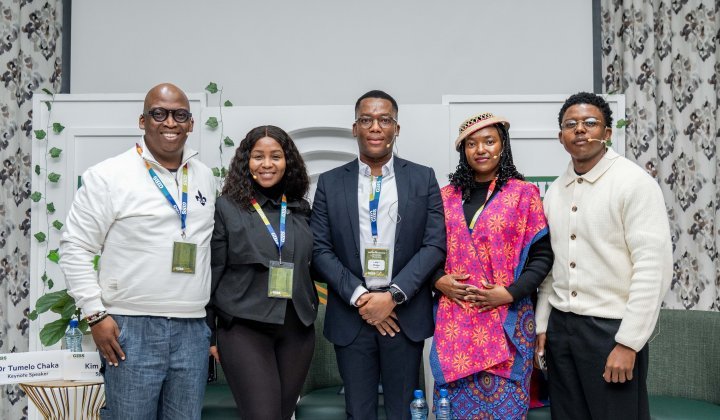
Bungane was joined by a panel including moderator Prof. Morris Mthombeni, GIBS Dean; Darlene Menzies, FinFind CEO; Edna Sathekga-Montse, African Bank Group chief transformation and sustainability officer; and Zizipho Mqwala, African Bank’s divisional head for strategic partnerships and growth initiatives.