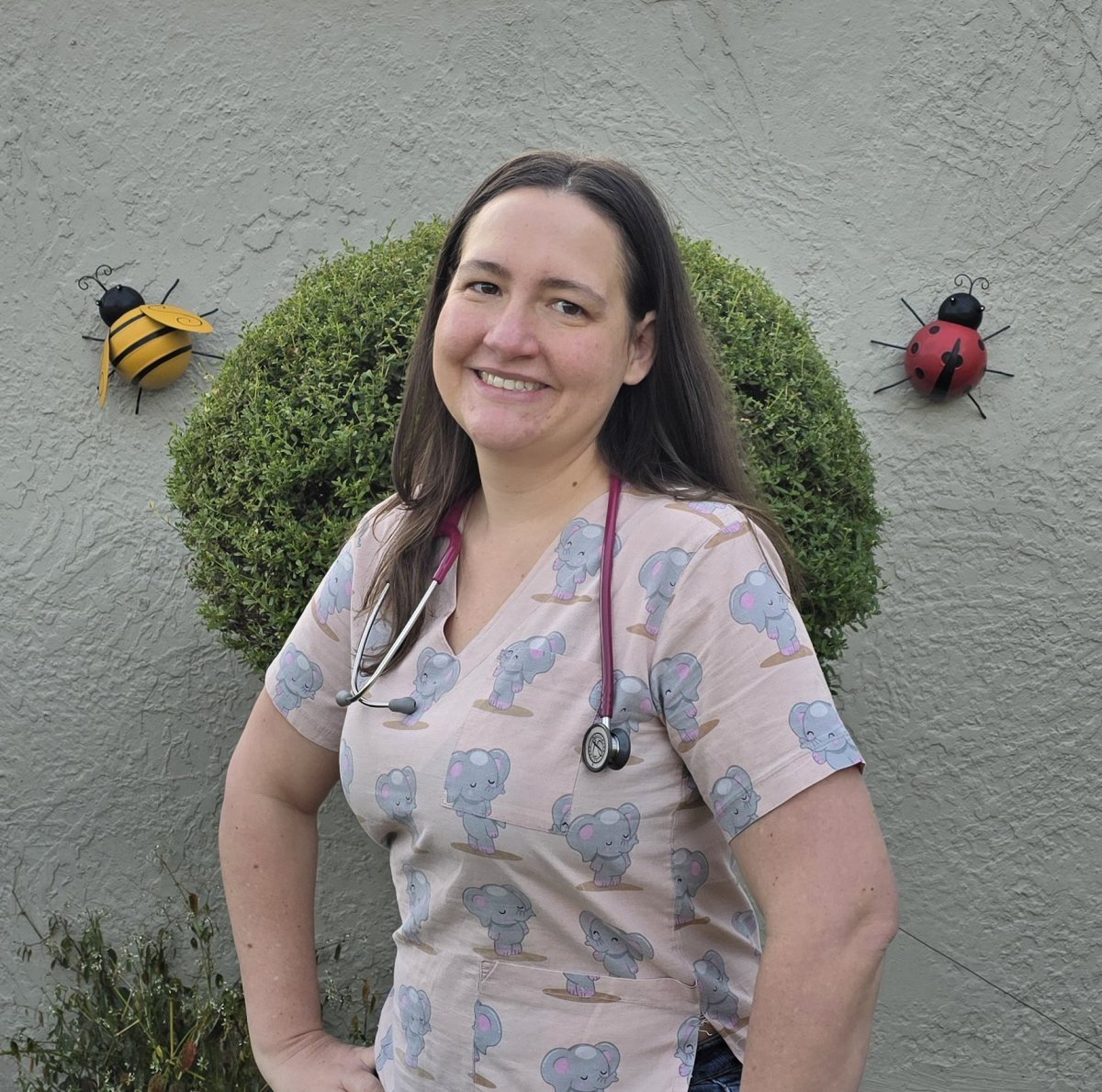

In December, Georgi’s blood pressure hit 160/100. What had been a slow upward creep over the course of a year suddenly felt urgent, especially when her doctor suggested reconsidering holiday travel. With rest, medication and monitoring, the readings were mostly better. Some days they sat comfortably under the target of 120/80. On others, they edged higher. Was that normal variation, or a sign something was still wrong? The follow-up appointment was weeks away.
So, Georgi did something increasingly common. She pasted her readings into ChatGPT, seeking reassurance, context, and “someone to talk to” through the fluctuations while she waited. The response was calm, conversational, and immediate.
“It was great to have someone to talk to about it,” she reflects now. “I wasn’t replacing my doctor. I just had too many questions.”
Around the world, commentators are calling this shift “Dr. Me” – patients taking charge of their health. In a London Business School article on 2026 business trends, Helen Edwards, adjunct associate professor of marketing, notes, “People are ditching their passive deference towards the medical profession and taking health matters into their own hands. And they have good reason to.”
However, publicly accessible generative AI models don’t have a strong safety record in medical contexts. For example, a 60-year-old man with no history of psychiatric illness was admitted to hospital after developing severe hallucinations and paranoia, convinced his neighbour was poisoning him. Doctors later discovered he had been ingesting sodium bromide daily after ChatGPT suggested it as a substitute for table salt. The industrial chemical can build up in the body, causing bromism, a toxic condition associated with neurological symptoms including hallucinations and impaired coordination.
What’s driving the shift?
Edwards points out that while demand for healthcare is surging, health systems are failing to keep up.
According to Prof. Tivani Mashamba-Thompson, professor of diagnostics research and founding director of the Centre for Development and Implementation of Point-of-Care Diagnostics at the Faculty of Health Sciences, University of Pretoria, people choose to place their trust in AI for several reasons:
- Accessibility and immediate feedback: Digital health tools offer rapid feedback at home or at the point of care.
- Perceived accuracy and decision support: Users may view AI as more consistent than human judgement.
- User-friendliness and connectivity: Intuitive, connected tools foster confidence.
- External endorsements and system integration: Institutional endorsement confers legitimacy.
Mashamba-Thompson believes this trust reflects both empowerment and frustration. In underserved settings, digital tools can feel like a way around infrastructure gaps. Research suggests this can strengthen people’s sense of control.
At the same time, uptake is often driven by dissatisfaction with traditional systems. Where delays, limited resources, and poor communication are common, AI tools can appear more responsive and reliable. In some cases, the mere fact that a system is digitally connected becomes a proxy for trustworthiness. In this sense, turning to AI reflects not only agency, but also disenchantment with healthcare systems that struggle to deliver consistently.
How AI affects the patient/clinician relationship
Dr Emma Davel, Johannesburg-based specialist paediatrician, says there are pros and cons to patients’ AI use. “Sometimes patients come in with a set idea of what we’re going to diagnose, which can be challenging,” she says, explaining that these tools often present worst-case scenarios prominently, which can escalate anxiety. Asking AI about a recurring headache, for example, may surface serious conditions first, when the underlying cause could be far more mundane. Davel suggests this could be an attempt on the part of AI companies to protect themselves legally but says AI also does not stratify symptoms the way a clinician would.
Patients may input incomplete or misunderstood information, such as describing a normal temperature as a fever, and the system will respond on that basis without probing further. “We also have patients requesting extensive tests suggested by AI, many of which are either unavailable locally or prohibitively expensive,” she says. This requires careful explanation and recalibration within the realities of the South African healthcare context.
The human (error) in the loop
A recent study published in Nature Medicine, led by the Oxford Internet Institute and the Nuffield Department of Primary Care Health Sciences at the University of Oxford, found a stark gap between what AI can do on its own and how it performs in real-world use: while the models identified conditions with 94.9% accuracy on their own, that figure fell to just 34.5% when ordinary users were tasked with using the models to identify appropriate next steps in the medical scenarios provided.
The researchers analysed the conversation transcripts to understand where the interactions went wrong. “LLMs often did mention the correct condition during the chat, but users frequently failed to recognise it or include it in their final decision,” they wrote. “When correct conditions were not suggested, there was often incomplete information provided by the user and/or insufficient investigation by the model. However, we also found cases where the models hallucinated (for example, suggesting the Australian 000 emergency number for a patient in the UK), or provided dangerously incorrect advice.”
Useful or harmful?
Mashamba-Thompson argues that AI-linked diagnostics have the potential to strengthen health systems, but only if their limits are understood.
On the positive side, she notes faster, intelligible results can support “improved health-seeking behaviour”, with patients more likely to seek care earlier or follow up consistently when they receive clear guidance on next steps. Real-time connectivity can also enhance surveillance and continuity of care, improving data flow across health systems and strengthening monitoring, particularly in settings with high burdens of infectious or chronic disease. In her view, the “democratisation of robust diagnostic insight” can empower both individuals and frontline workers, supporting better self-management and more informed conversations with clinicians.
However, she cautions that these gains are not automatic. There is a risk of overreliance if users treat AI outputs as definitive and delay seeking professional care in complex cases. “If connectivity, electricity, or device access remain uneven, trust in AI could deepen divides between connected and unconnected populations,” she says.
There’s also the issue of the normalisation of algorithmic advice. “Over time, users may adopt AI-based recommendations without sufficiently questioning them, especially in the absence of transparent, explainable AI models. This can unintentionally reinforce biases or pattern misclassification if the underlying systems aren’t routinely evaluated or updated,” she says.
Adapting to AI, rather than avoiding it
The truth, Davel points out, is that patients and doctors are both using AI tools. Many of the everyday programs doctors interact with now come with AI features baked in, and Davel says she has found AI helpful in structuring documents where she has inputted (appropriately anonymised) medical information. “Where AI is also useful to me, as a doctor, is in making me think differently. If you’re seeing tonsillitis all day, every day, that’s probably the first thing you’re going to think of, but when a patient comes with a list of possible diagnoses from AI, it can make you pause and consider other options.”
However, she cautions that AI does not operate with a patient’s best interests at heart in the way a clinician is trained to. “Doctors spend years learning how to weigh evidence, interpret research, prioritise hard data over anecdote, and tailor decisions to the individual in front of us,” she says.
AI, by contrast, responds to inputs without interrogating gaps, context, or motive. It may appear authoritative, but it is not accountable. Patients may also over-share, making their sensitive data available with little idea of where it may end up.
In paediatrics, Davel argues, the stakes are even higher. Children cannot advocate for themselves, and worried parents may arrive with conclusions shaped by alarming outputs. Age matters enormously in medicine: the same symptom can signal very different conditions in a three-month-old, a toddler, or a teenager. That developmental nuance, she suggests, is not always adequately factored into generic AI responses. For her, this makes it essential that any AI-generated information be brought into a conversation with a clinician, rather than treated as a substitute for one.
This advice is repeated by Dr Adam Rodman, director of AI programs for the Carl J. Shapiro Center for Education and Research at Beth Israel Deaconess Medical Center in Boston in a guest essay for The New York Times. “As an AI researcher, I believe that when used appropriately, these large language models are the greatest tool for empowering patients since the invention of the internet,” Rodman writes. “But they also carry new and barely understood risks, like degrading the relationship that patients have with doctors, or pulling people into spirals of anxiety as they pepper a chatbot with questions.”
His advice for patients on using AI wisely is to stick to generating questions, organising thoughts, understanding terminology, and exploring “what if” scenarios – but not to use AI for replacing clinical judgement.
This echoes Georgi’s experience. ChatGPT did not diagnose her. It did not prescribe her treatment. It did not replace the follow-up appointment she knew she needed. What it did offer was something far less clinical but no less powerful: a patient, conversational space in which to process her anxiety while she waited. Plus, she was very aware of its limitations. “It doesn’t replace real, human, qualified expertise,” she says. “Remember – it’s been known to make mistakes.”
Practical takeaways for patients
- Use AI to prepare, not to decide: Draft questions. Clarify terminology. Avoid using it to determine diagnosis or treatment.
- Check your inputs: Ensure readings, medication names, and symptoms are accurate before asking for interpretation.
- Treat outputs as prompts, not prescriptions: If something concerns you, seek professional advice rather than self-medicating.
- Watch for worst-case framing: Serious conditions are often listed prominently. Discuss alarming suggestions with a clinician.
- Protect your privacy: Avoid sharing identifying information.
- Know when to bypass AI: Chest pain, breathing difficulty, neurological symptoms or concerns about infants require immediate professional care.
- Bring AI into the conversation: Tell your clinician what you have read. It can improve the discussion.


Gallery