Unbelievably, two prominent surveys carried out in the past few years indicate that, yes, the majority of businesses are doing just that.
According to the UK-based Chartered Management Institute (CMI), 82% of managers can be categorised as “accidental” in that they have not been trained in management. “They are great IT people, they are great finance people, or marketers, and then suddenly someone taps them on the shoulder and says: ‘Congratulations, you’re leading the team and the budgets. Good luck with that’,” Ann Francke, CEO of the CMI, told the James Reed podcast.
The CMI’s research found that accidental managers are often promoted for the wrong reasons, with nearly half of respondents (46%) believing their colleagues won promotion based on internal relationships and profile, rather than ability and performance. A 2024 European survey of business professionals, conducted by global recruitment firm Robert Walters, adds to this picture by noting that “27% of managers say they have not received any management training”.
The European survey also concluded that the 65% of professionals who become accidental managers often lacked the support or training needed to succeed in these roles. As a result, many battle with imposter syndrome (30%) and feelings of overwork (24%).
What’s the situation in South Africa?
Aldrin “Buzz” Beyer, executive coach and GIBS adjunct faculty, is keenly aware of how prevalent imposter syndrome is among ill-equipped managers, many of whom rail against asking for help and instead internalise anxiety and uncertainty. In an economy in which roles and opportunities are already in short supply, and where a lack of management experience is often a significant constraint for future career progression, Beyer says reluctant would-be managers might feel pushed into a role they are not ready for and where meaningful organisational support may be lacking.
“I have a client who is acting as the head of a business unit while also having a role in another business unit,” says Beyer. After coaching, this client is planning to approach her employer about integrating the roles to improve synergy and add value. The move would also look good on her CV, although Beyer is concerned this client could stretch herself too thin, which could ultimately put her and her organisation under pressure.
This problem is not only the preserve of big corporates. Beyer also works with several established African organisations that are scaling rapidly and expanding their management capacity. As these companies grow, and leaders need individuals they already trust to step up, many loyal workers and specialists find themselves taking on managerial responsibilities before proper training and systems have been put in place to support them.
In Nigeria’s fast-paced fintech sector it’s not uncommon for specialists to be pushed into leadership roles, reports Techpoint Africa. As one manager explained, “I am one of those young people whose Nigerian parents warned against working at a private-owned company, worse still an even smaller version of that group – start-ups. But they were happy to hear about how much I’ve climbed up the professional ladder in six years. But was I ready for it? The honest response is ‘No’.”
While research into accidental managers in South Africa is, regrettably, lacking, there was a glimpse into the current state of leadership preparedness at government level in 2022. During a parliamentary Q&A session it emerged that 25.9% of senior managers in South Africa did not have the experience or the formal qualifications to fill their roles.
While this is worrying, there may be green shoots on the horizon. South Africa’s training and development sector is showing strong and sustained growth, which points to demand. Valued by Ken Research at around R20.7 billion (about $1.2 billion), some of the drivers include the rise of digital learning platforms and the National Skills Development Strategy’s focus on the very leadership training that should help to weed out bad managers and replace them with skilled professionals.
Bad managers and the bottom line
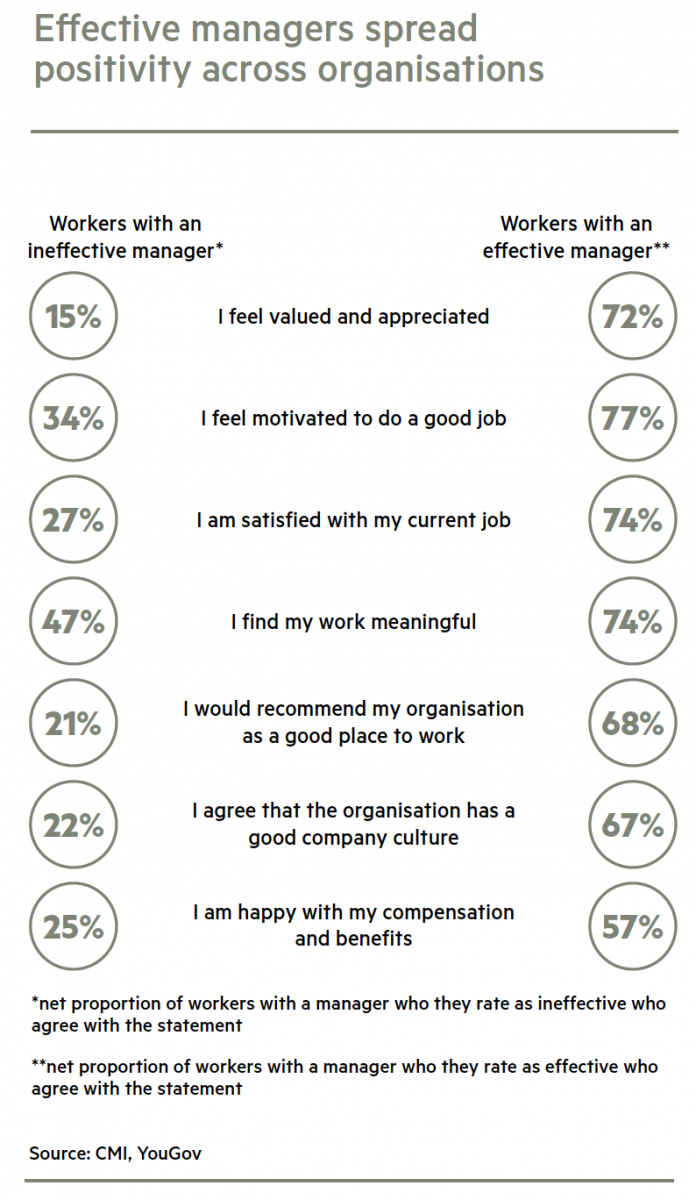
According to Francke, “If you are a bad line manager, one out of every two people who work for you is going to leave in the next 12 months.” That’s a problem for manager and company alike, and reiterates the CMI finding that populating managerial structures with accidental managers is tied to poor organisational culture and higher staff turnover, since overwhelmed accidental managers often lack the capability to call out toxic behaviour or manage conflict effectively.
Beyer explains this trap in the context of what he calls the “Four Cs”: capability, capacity, commitment, and courage. “Say there’s a capacity problem. We need to determine the root cause and a lot of it has to do with courage, or the lack thereof. If you work at a corporate you will always have work to do, that’s the nature of the beast, so at some point you have to call it and say, ‘Time’s up for today.’ When you don’t do that, the system will take as much as you give it and, over time, this becomes normal and you convince yourself you can’t get out of it.”
While Beyer works with individuals to help them put boundaries in place and stick to their time commitments, he also helps business leaders take a critical look at their organisational culture and how to reshape existing processes into a more systemic and human approach.
How do companies shift the dial?
While the easy answer for companies is to send employees to leadership courses and programmes, Beyer believes the fundamentals of people management need to change. Not only how we manage, but who we hand the reins over to and what support we give these organisational lynchpins needs to change.
“We created a system, but now the system is running us. In order to create a sustainable system that serves our people … we need to know what our companies are growing towards and what we need to help people flourish,” he says. “If you are a farmer and your orange tree isn’t thriving, then you need to look at the context: the sun, shade, water, soil, temperature. All you can do is create a context in which the orange can flourish. Similarly, if the context is right, people flourish.”
Creating a conducive environment for managers and their teams to thrive starts early and begins with personal development interventions that increase self-awareness towards self-management. Structured learning helps to build self-knowledge and authenticity, while encouraging social awareness, relationship management and behavioural understanding.
“Accidental managers should not emerge if effective talent development systems are in place,” says Beyer. “In practice, this means not throwing people in at the deep end, because that will make some people and break some people.
“It’s about identifying people and talking to them. Identifying if they think of themselves as management material and if this something they would like to do. If you get someone with capacity and commitment, then it’s about systematically giving them roles and responsibilities that enable them to practice what they’ve learned.”
As for organisations, its crucial to remember that managers across all levels are human beings, not artificial intelligence algorithms. That means less hiding behind targets, more listening, and getting back to basics of finding leadership talent early, then nurturing it.
The generation that won’t be bossy
James Reed, CEO of global recruitment agency Reed, believes strongly in the professionalisation of management. He holds that “with more professionalised managers, our companies will perform better, people will have better experiences at work, and the economy will do better”.
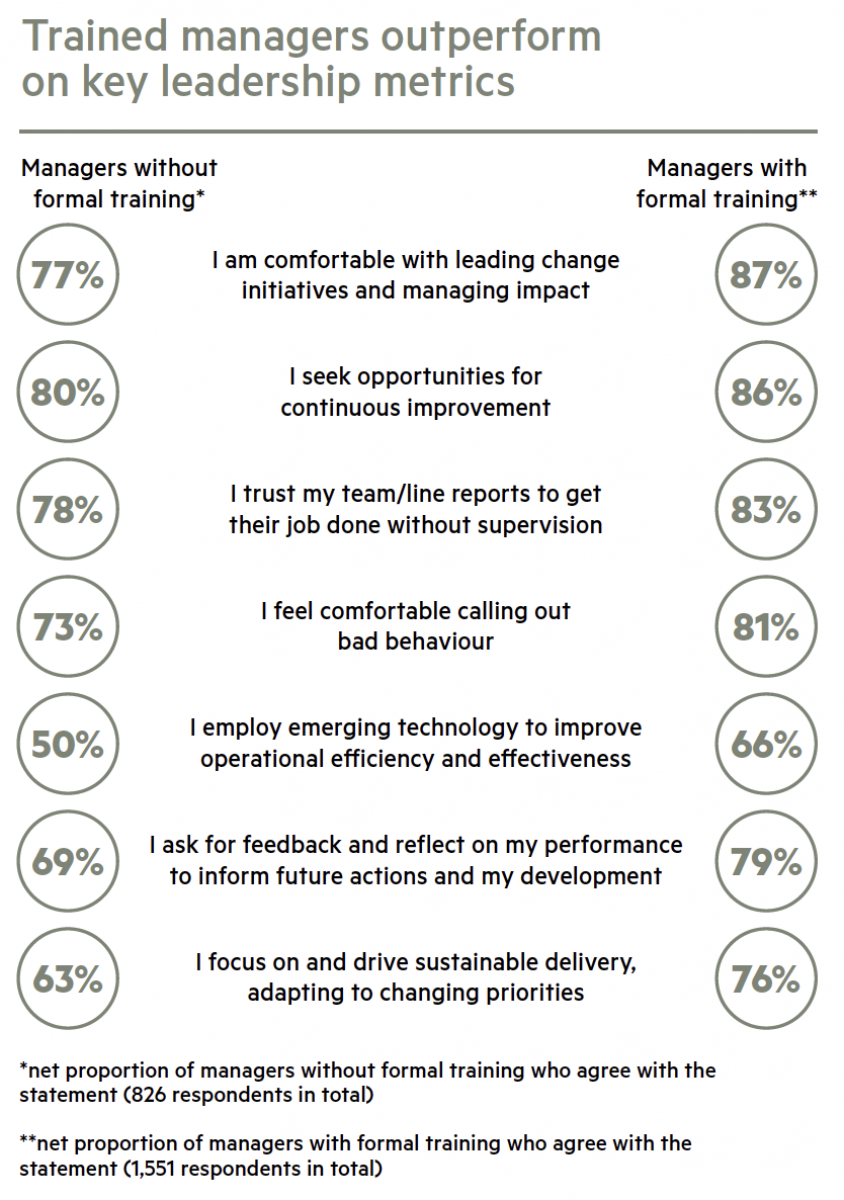
The ingredients required to turn “amateur” managers into competent professional managers starts, says the Chartered Management Institute’s Ann Francke, with skills training that builds managerial muscle. “If you are muddling through as a manager,” she says, “chances are you are improvising; you may not be communicating clearly – if at all; you may not be giving feedback.”
Fortunately these and other essential competencies can be taught to ensure more effective management and less frustrated staff. Failing to do so can lead to staff attrition, and also dissuade younger professionals from considering their own future in management.
This is already happening among professionals under the age of 30, the so-called Generation Z (Gen Z) cohort, who are consciously uncoupling from bosses. Not only do Gen Z workers not want to be managed through control, they also don’t fancy taking on the responsibility themselves. When they do, they expect to follow a structured and personalised career path with training, mentorship, feedback, and recognition baked in.
“Conscious unbossing” is a global Gen Z phenomenon, according to research from Robert Walters. The recruitment group’s 2024 survey noted that 52% of Gen Z professionals did not want to take on the role of middle manager and a notable 72% would prefer to advance through their own work and based on an individual career advancement trajectory.
This reticence to manage, believes Francke, might also have something to do with a lack of respect for a role that often seems too stressful, unrelenting, and unsupported. Bad experiences with their own managers might also be playing a role, she feels. As a result, while 89% of employers regard middle management as “a lynchpin of any organisation”, the very people who should be moving up the management pipeline are turning their backs on being the boss.
You start to fix this, says executive coach Aldrin “Buzz” Beyer, by shifting executive mindsets towards building sustainable systems that enable managers and teams to flourish. He adds, “Investing in management capability through sound and contextually aligned practices is what creates enduring, human-centred performance.”
There are myriad studies and reports on the subject of manager development that bear this out, such as McKinsey’s 2023 assertion that “top-performing middle managers create strong relationships that enhance team performance and drive effective operations”. Or, more recently, Gallup’s 2025 State of the Global Workplace report that tells us how disengaged workers cost the global economy $438 billion in productivity potential in 2024 – with managers showing the most significant drop in interest.
From these insights it is clear that investing in managers, and helping to nurture their skills through sound and considered management practices, helps companies develop sustainable and flourishing corporate ecosystems, says Beyer. This, in turn, becomes a selling point for organisations that practise this approach to human development as they can leverage attractive leadership development incentives as a motivator to renew interest in management as a viable career move for young professionals.
Another must for corporate leaders is, of course, listening. Instead of sending would-be managers or junior leaders on inspirational programmes, only to ignore their ideas when they return to the office, Beyer suggests making space to explore new ideas that could benefit the business and that also keep young talent engaged and motivated.
KEY TAKEAWAYS
- Accidental managers haven’t been trained in the art of management. Instead they are thrust into management without the skills or know-how to manage teams and execute strategy.
- This can lead to feelings of inferiority, anxiety, and being overwhelmed.
- Leadership training certainly helps, but that’s not the full story.
- Potential managers must be identified early, and their personal development and emotional intelligence must be nurtured.
- This might be the only way to tempt younger generations into exploring management as an attractive career option.


Gallery