
Silicon Valley operates on exponential curves. The rest of the world operates on culture. This tension sits at the heart of how businesses should think about AI as it moves from experimental technology to core infrastructure.
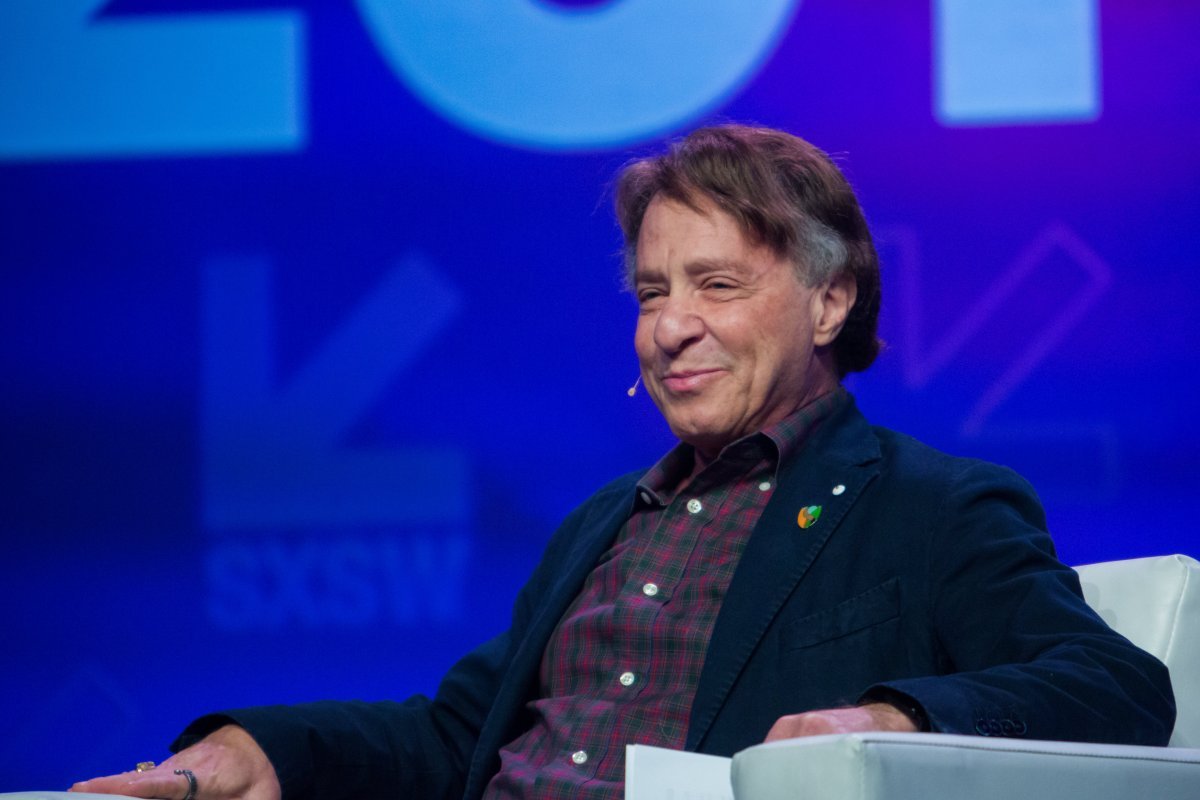
“Artificial general intelligence (AGI) will be here by 2029 and the lines between technology and humans are beginning to blur,” says Ray Kurzweil, a computer scientist, author, entrepreneur, futurist, and inventor with more than 60 years in the field. Kurzweil has watched computational performance grow exponentially, regardless of wars or economic shifts, from 0.007 calculations per second per constant dollar in 1939 to more than half a trillion today with Nvidia chips.
“That’s a 75 quadrillion-fold increase in the amount of computation you get for the same price,” he explains. “We also have software gains on top of that.”
In 1999, Kurzweil used this data to predict that computers would reach human-level intelligence by 2029. At Stanford’s 2002 conference, he was the only person among several hundred AI experts who believed it would happen within 30 years. Today, some say it will happen sooner.
Global companies need global perspectives
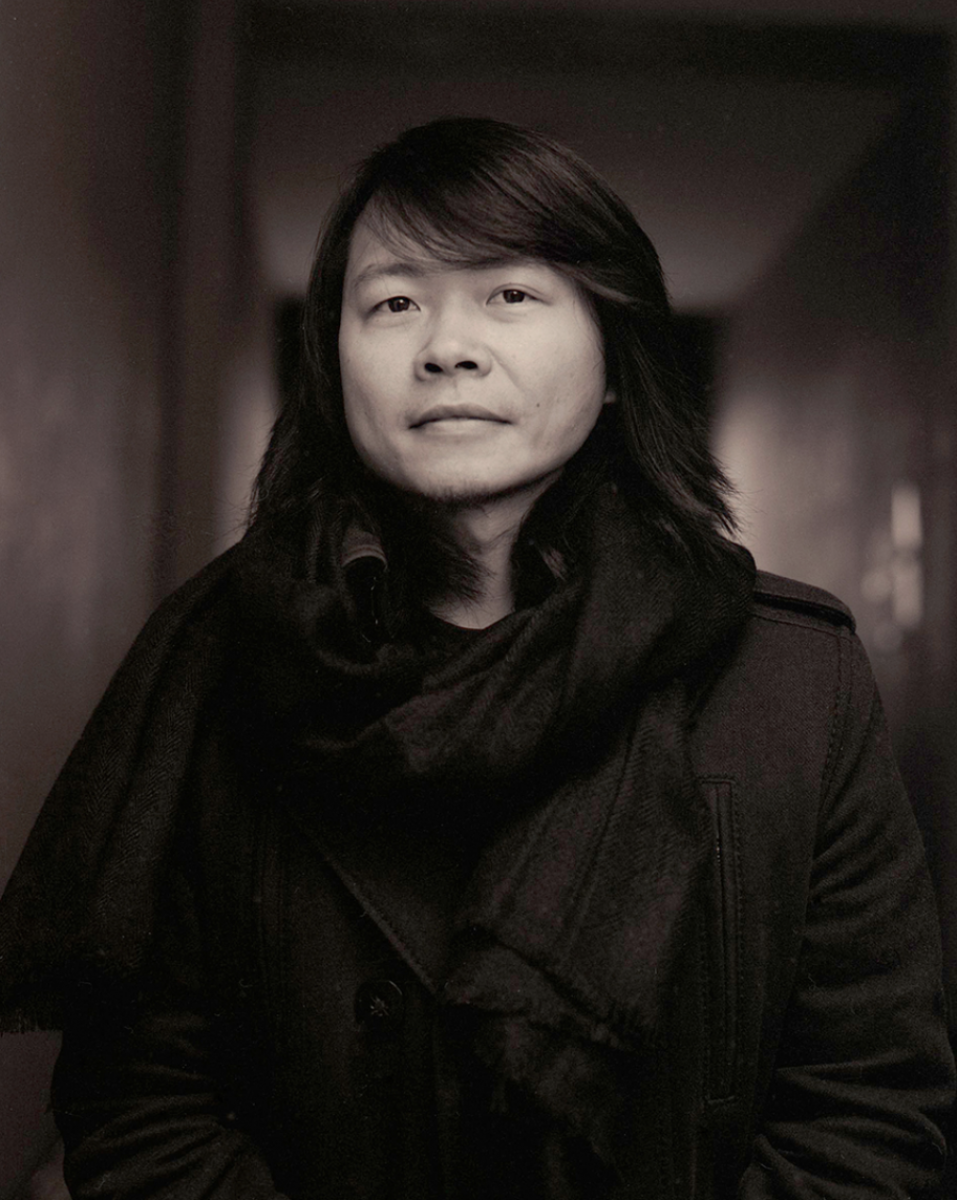
But Yuk Hui, a Hong Kong philosopher and technology theorist teaching at Erasmus University Rotterdam, questions what gets built into these timelines. Indeed, his concept of techno-diversity challenges the assumption that there’s one inevitable path toward intelligent machines.
“Just as there are multiple natures, there are also diverse forms of technology that have been forgotten or ignored due to modernisation,” he says. “By articulating these concepts and rediscovering techno-diversity, we can expand our understanding of technology beyond the one-dimensional view that dominates current discourse.”
For business leaders, this matters more than it might seem. If AGI arrives on Kurzweil’s timeline, companies have less than three years to prepare their workforce, infrastructure, and strategy. But if Hui is correct that “intelligence” itself is culturally constructed, then the challenge is less about preparing for one inevitable future and more about deciding which technological future to build.
Different technological philosophies create different business models
Kurzweil’s exponential framework has powered decades of successful predictions. He describes how computation that once filled buildings now fits in smartphones and will soon fit in blood cells.
This mindset leads to specific business strategies: move fast, scale aggressively, and assume technological solutions to technological problems. It’s the logic behind Moderna using AI tools to design Covid vaccine mRNA sequences in two days. It’s also why Kurzweil predicts “longevity escape velocity” by 2032, where medical breakthroughs add more than a year to life expectancy annually.
And yet the acceleration mindset works until it doesn’t. And since a company operating globally can’t assume that Silicon Valley’s definition of intelligence will serves markets in Lagos, Jakarta, or São Paulo just as well, Hui offers a different perspective.
He distinguishes between what he calls “organised inorganic” and “organising inorganic”. Traditional tools such as hammers and screwdrivers are organised inorganic materials that we incorporate into our workflows. But modern AI systems do the opposite.
“These [tools] acquire organising power because they are capable of auto-regulation, auto-improvements, and because of the computer network, they are able to form gigantic systems in which we are now living,” he explains.
This framing determines whether companies are deploying tools they control or building systems that organise them. For example, a business using AI for customer service thinks it’s deploying a tool. But if that AI system starts shaping how the company understands customers, defines problems, and measures success, the organising power has shifted.
“We are living in technological systems,” Hui says. “We are no longer in an atelier [a workshop or a studio] where we work with simple tools. Now we live in a technological system, and that’s the new condition.”
The merger question determines workforce strategy
Kurzweil envisions humans merging with AI through increasingly intimate integration. Smartphones already extend our brains. By the 2030s, he believes we’ll connect directly to the cloud.
“You won’t actually know whether the essence that your brain appears to present to you is coming from your biological brain or the AI that is within us,” he predicts. “It will all be the same source.”
This merger mindset suggests a workforce strategy focused on augmentation. Train people to work alongside AI. Redesign workflows to leverage computational power. Accept that roles will evolve as capabilities shift from human to machine.
“AI is not a brain extender that comes from outside,” Kurzweil explains. “It is something that humans have created. And it’s already extending our brains.”
But Hui warns this framing obscures power dynamics. When systems acquire organising capability, they reshape how humans think, work, and relate to each other.
For companies, this distinction matters enormously. An augmentation strategy assumes humans remain in control while using AI as sophisticated tools. Contrast that to an organising systems perspective, which recognises that large-scale AI deployment creates new structures that shape behaviour from within.
Consider social networks. Companies thought they were deploying tools for connection and communication. Instead, they built organising systems that restructured how billions of people process information, form opinions, and understand reality. The tools organised the users, not the other way around.
Silicon Valley’s self-fulfilling prophecies shape market assumptions
Kurzweil remains optimistic about AI risks, especially as the latest AI "reasoning" models, which think before they respond, have led to a decrease in hallucinations and an increase in accuracy. And even as AI creates new dangers, he believes it will enhance our ability to deal with those threats.
“The risks of AI are real and must be taken seriously,” he says. “But I believe we are doing that. AI is actually much more reliable now than it was a year or two ago.”
This optimism stems from pattern recognition across multiple technological revolutions: problems emerge, solutions follow, and progress continues. But Hui sees a different pattern: self-fulfilling prophecies from technology companies.
“They’re trying to tell us that there is going to be mass unemployment but at the same time they are inventing machines to replace human beings,” he says of the industry. “So they anticipate what they are doing by producing exactly the same kind of technology.”
By example, he points to Elon Musk signing a letter calling for a six-month AI development pause in March 2023, then founding xAI months later to build Grok, an "anti-woke" ChatGPT competitor. After an update intended to make Grok less "woke" led it to call itself “MechaHitler” and generate antisemitic content, the company still secured US military contracts worth $200 million.
For business leaders, this matters when evaluating vendor claims and market analyses. Is AI inevitably heading toward mass workforce displacement? Or are companies building toward that future because they believe it’s inevitable? The distinction shapes everything, from workforce planning to technology investment.
Hui argues that decades of modernisation have convinced business leaders that the Silicon Valley model is the only way to build technology. This means that companies assume they're deploying universal tools when they're actually imposing specific cultural assumptions.
Rethinking technology strategy beyond acceleration mindsets
The practical question for business leaders is less about choosing between Kurzweil’s exponential optimism and Hui’s cultural pluralism and more about recognising how different philosophical assumptions lead to radically different strategies.
A company embracing Kurzweil’s framework invests heavily in scaling AI capabilities quickly. It prepares for AGI arrival by 2029. It assumes exponential improvements in energy efficiency, medical breakthroughs, and human-AI integration. This framework has powered successful technology companies for decades.
“We are the species that increases our ability to positively affect our surroundings with our technology,” Kurzweil says. “No other species on the planet is able to do this. AI will bring this capability to all humans.”
But a company taking Hui’s techno-diversity seriously asks different questions. What assumptions are embedded in our AI systems? Do our technological choices serve diverse markets or impose singular worldviews? Are we deploying tools or building organising systems?
“For me, there is a need to explore the intimacy between philosophy and technology,” he explains. “What would be the landscape of thinking if we try to analyse the different concepts of technology? If a multiplicity of nature is valid, then we cannot avoid the question of the multiplicity of technology.”
Building strategies that recognise philosophical foundations
The immediate challenge for business leaders is recognising that technology strategy always rests on philosophical assumptions, whether acknowledged or not. Kurzweil’s exponential framework assumes progress is inevitable, problems generate solutions, and human-AI merger extends our capabilities. Hui’s techno-diversity framework assumes culture shapes technology, homogenisation erases alternatives, and organising systems restructure human relations.
Both frameworks offer valuable insights. Kurzweil’s pattern recognition across decades of exponential growth provides powerful predictive tools. His medical breakthroughs from AI-driven biology are already materialising. Companies ignoring exponential trends risk irrelevance.
But Hui’s critique of technological homogenisation highlights risks that exponential frameworks miss. When every company deploys the same AI architectures trained on the same datasets reflecting the same assumptions, markets lose resilience, alternatives disappear, and problems that don’t fit dominant paradigms become invisible.
The most sophisticated companies will hold both frameworks in tension. They’ll invest in exponential capabilities while questioning embedded assumptions. They’ll scale AI systems while preserving alternatives. And they’ll prepare for the arrival of AGI while building for diverse technological futures.
“AI is not coming from someplace else, like Mars,” Kurzweil says. “It’s coming from within you. We as human beings are going to become more capable. It’s not us versus AI. AI is part of humanity.”
Perhaps. But as Hui reminds us, which humanity, which intelligence, and which future remain open questions. Indeed, the companies that thrive won’t be those that assume one inevitable path forward. They’ll be those that recognise technology’s philosophical foundations and make conscious choices about which futures to build.


Gallery