That term might bring specific ideas to mind. Perhaps you think of a dynamic NPO founder or an exciting start-up pursuing both profit and purpose. James Donald, outgoing executive director at DBE-E3 and GIBS Social Entrepreneurship Programme graduate, says the term “social entrepreneurship” needs to evolve. “All business is ultimately social,” he says. “The economy is an imperfect measure of all activity in our society. Part of the problem is that we view capital (and return on capital) as the only purpose and measure of the economy.”
DBE-E3 is part of the Department of Basic Education. The three Es stand for entrepreneurship, employability, and education, and the mission is supporting the DBE in preparing learners with skills to flourish amid change by integrating entrepreneurial education into the education system’s core.
Donald says building the programme required an appropriate definition of entrepreneurship. “We’ve focused on the idea of an entrepreneurial mindset,” he says. “That’s the intrinsic desire to add value to others; then testing and learning to do that. I’ve started to think of entrepreneurial mindset as a collective noun for the 21st century skills learners need – critical thinking, communication, and collaboration.”
Expanding on this broad definition, social entrepreneurs are those who are working to add value in the social sector, then looking to scale that impact.
Benefits and limitations of business thinking
Some ways social entrepreneurs can improve their efficacy mirror the ways businesses improve their results. But there are differences too. In 2005, Jim Collins, author of Good to Great, wrote the following in Good to Great and the Social Sectors: Why Business Thinking Is Not the Answer:
“We must reject the idea – well-intentioned, but dead wrong – that the primary path to greatness in the social sectors is to become ‘more like a business’. Most businesses – like most of anything else in life – fall somewhere between mediocre and good. Few are great. When you compare great companies with good ones, many widely practiced business norms turn out to correlate with mediocrity, not greatness. So, then, why would we want to import the practices of mediocrity into the social sectors?”
He believes the critical distinction should not be between business and social, but great and good.
In Good to Great, he introduces the Hedgehog Concept, a Venn diagram illustrating the “sweet spot” for moving from good to great. The three intersecting circles are:
- What you are deeply passionate about
- What you can be the best in the world at
- What best drives your economic engine
For the social sector, the third circle becomes your resource engine. The critical question, Collins says, is not “How much money do we make?” but “How can we develop a sustainable resource engine to deliver superior performance relative to our mission?”
Building better boards
Developing a strong board can be challenging for social enterprises and NPOs. As Donald notes, there’s little incentive in South Africa to serve on non-profit boards. However, effective boards are often those where the chairperson works well with the executive director, and necessary specialist skills are in place.
Dr. Francois Laurens, board member of Banbury Investments and adjunct faculty at GIBS, says well-run NPOs typically demonstrate financial stability, strong leadership, and a committed volunteer base. Effective boards play a vital role in achieving strategic goals and ensuring good governance.
Laurens says qualities of effective NPO boards include:
- Passion for the cause – genuine commitment to the mission
- Diverse skills and experience such as expertise in finance, law, marketing, fundraising, and nonprofit management
- Strong leadership and governance, including strategic thinking, accountability, and ethical conduct
- Collaboration: open communication, constructive feedback, and conflict resolution
- Continuous learning and openness to innovation
- Financial acumen: at least one member should oversee financial planning and resource management
- Legal expertise, ensuring compliance
- Fundraising experience, aiding in securing support
- Community representation reflecting beneficiary perspectives
- Strategic planning skills: aligning goals with operations
- Marketing and communication skills, boosting outreach
- Tech expertise: leveraging digital tools
Of course, knowing what an ideal board looks like is one matter and attracting and retaining suitable board members is another matter.
Laurens emphasises the importance of defining clear roles and responsibilities, including time commitment. This helps candidates understand their role and how they can contribute. He suggests using a skills matrix to assess the current board’s composition, identify gaps, and guide recruitment efforts.
“Encourage current board members, staff, stakeholders, and volunteers to tap into their networks for potential candidates,” Laurens advises. “Personal referrals often lead to high-quality prospects who are already familiar with the organisation.”
To engage prospective members early, invite them to attend board meetings or events. Implement a structured recruitment process involving outreach, interviews, and orientation. A formal application process underscores the significance of the decision for both parties.
Finally, provide training and cultivate a positive board culture. Regularly discuss recruitment at meetings to ensure ongoing alignment with organisational needs.
Role of business schools
“Business schools have a unique opportunity to bridge the gap between the corporate and nonprofit worlds by focusing on strategies that enhance leadership skills for both,” Laurens says. “They should imagine courses that blend concepts from both sectors, like social entrepreneurship, corporate social responsibility, and nonprofit management. This way, students see the similarities and differences in leadership challenges across these fields.”
Using case studies from both sectors helps students understand leadership challenges across contexts. Laurens also encourages student projects with nonprofits, internships, fellowships, and mentorship programmes to provide hands-on experience and promote social impact thinking.
“Research on impact measurement is key,” he adds. “Facilitating research on measuring social impact helps students understand success beyond financial metrics.”
Measuring and marketing
Peter Thuynsma, managing partner at Thuynsma & Associates and facilitator for the GIBS Monitoring, Evaluation, Reporting and Learning (MERL) short course, stresses the importance of tracking progress. “We all need to know we’re not wasting time and we’re making a meaningful impact,” he says. Impact measurement ensures continuous improvement and helps build credibility with funders and stakeholders.
Monitoring and evaluation (M&E) promotes efficiency, controls waste, and allows for continuous improvement and judicious deployment of limited resources. “Ultimately, the very conscious process of studying what you’re doing promotes openness and transparency and, in turn, builds trust and accountability,” says Thuynsma. “Because I hold fast the axiom that people give to people (not, or not before they give to organisations), funders and donors are more likely to support entities that are open with their self-assessments and can demonstrate their successes. Measurement builds credibility – vital for resilience and retaining support.”
Thuynsma says NPOs and social enterprises often struggle with defining their social impact, setting clear KPIs, and collecting and analysing data. These processes require training, and ongoing coaching and support. Tools like strategy maps, balanced scorecards, and theories of change are valuable but can feel overwhelming for smaller organisations. Simplified templates can make these tools more accessible and engaging.
“I advocate two relatively simple instruments: a success equation and a result-based reporting form. The success equation is pretty much unknown. It was pioneered by Jason Saul in his book The End of Fundraising, and it functions as an excellent ‘leave behind’ after delivering a pitch, is invaluable in shaping a business idea, and sells a business’ full value (its intended outcome, outputs, activities). Best of all, it articulates exactly how it will measure its progress. The results-based reporting template is quite standard, I think. Its basic and logical progression is easy to follow if updated regularly, not only when deadlines loom.”
Thuynsma suggests NPOs adopt three tools:
- A strategy map loosely based on the balanced scorecard model, (for strategic thinking)
- A populated success equation (for action-based planning)
- An organic results-based report template (for analysing and reporting)
He says impact measurement is shifting towards transparency, accountability, and real-time insights. Tools like performance dashboards now simplify data tracking, and mobile and wearable devices make data collection easier. Collaborative impact measurement is also gaining traction, fostering a more holistic view of social impact.
Marketing
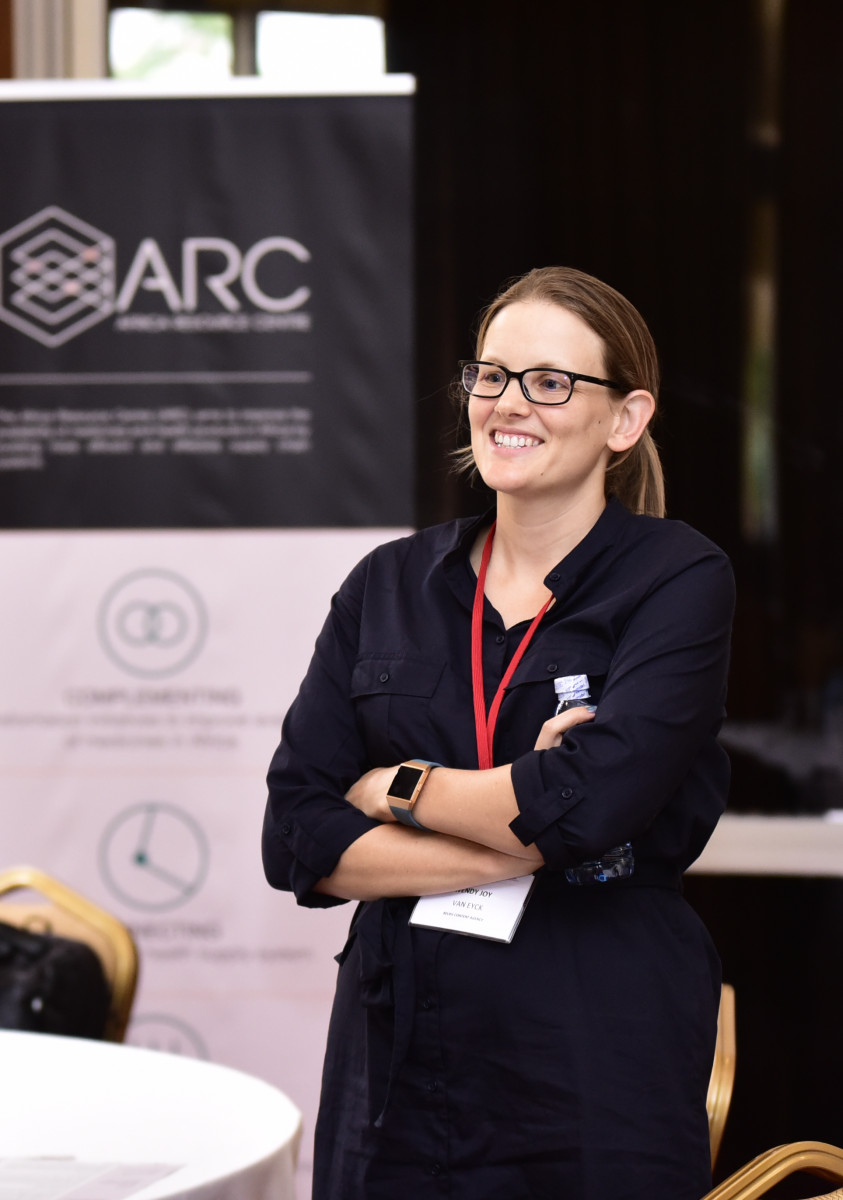
Nonprofit communications consultant Wendy van Eyck says cause marketing mirrors traditional marketing principles: “Both require creating an emotional connection and motivating people to act.”
The biggest challenge for many social sector entities attempting this is resource constraints. “Beyond that, many non-profits struggle with framing their work in a way that gets people to care. Impact isn’t always easy to show, especially when the work is long-term or systemic,” she says. “A bigger issue is that people don’t trust charities. There are so many stories of money being stolen or misspent that cause marketers face two challenges: building a brand and building trust. Fortunately, those two things reinforce each other. If you have a strong, consistent brand, it reassures funders and supporters that you’re credible, transparent, and worth investing in. If your messaging is inconsistent, vague, or only reactive when something goes wrong, it weakens trust.”
She advises nonprofits to challenge common myths:
- Good causes won’t market themselves: Intentional storytelling is essential for visibility and support
- Online fundraising alone doesn’t guarantee success: Outreach, relationship-building, and consistent communication are crucial
- Marketing isn’t just for big nonprofits: Even small organisations can achieve strong visibility through consistent messaging
“Non-profit marketing isn’t about big budgets,” she says. “It’s about making people feel they matter to the cause. People don’t just support organisations. They support stories they believe in and people they trust.”
10 top marketing tips
Van Eyck’s practical advice to nonprofits and social entrepreneurs is:
- Define what makes you different (unique value proposition). Why should people choose to support your organisation, not someone else’s?
- Understand your target audience to tailor your message effectively. Don’t assume staff perspectives reflect the audience’s view.
- Prioritise doing fewer things well, rather than spreading resources too thinly.
- Invest in brand guidelines for visual and message consistency. If money’s tight, leverage affordable tools, such as Canva, Mailchimp, and WhatsApp Business.
- Make supporters feel like partners in the impact story. Focus on impact over need in appeals. Treat donors or funders as partners, not just financial contributors. Personalised appreciation goes a long way to strengthen connections.
- Prioritise authentic, human stories over polished campaigns or overwhelming statistics.
- Consistency is critical; sporadic communication weakens trust, whereas repetition builds recognition.
- Don’t try to appeal to everyone; targeted messaging is more effective.
- Build your owned channels (such as mailing lists) rather than over-relying on social media.
- Communicate regularly and intentionally, not just when making an ask. Even a small, regular effort (like a weekly WhatsApp update) can build recognition, trust, and long-term support.


Gallery