
“All other tropical storms must bow before El Niño,” American comedian Chris Farley declared during a mock weather forecast on Saturday Night Live in 1997.
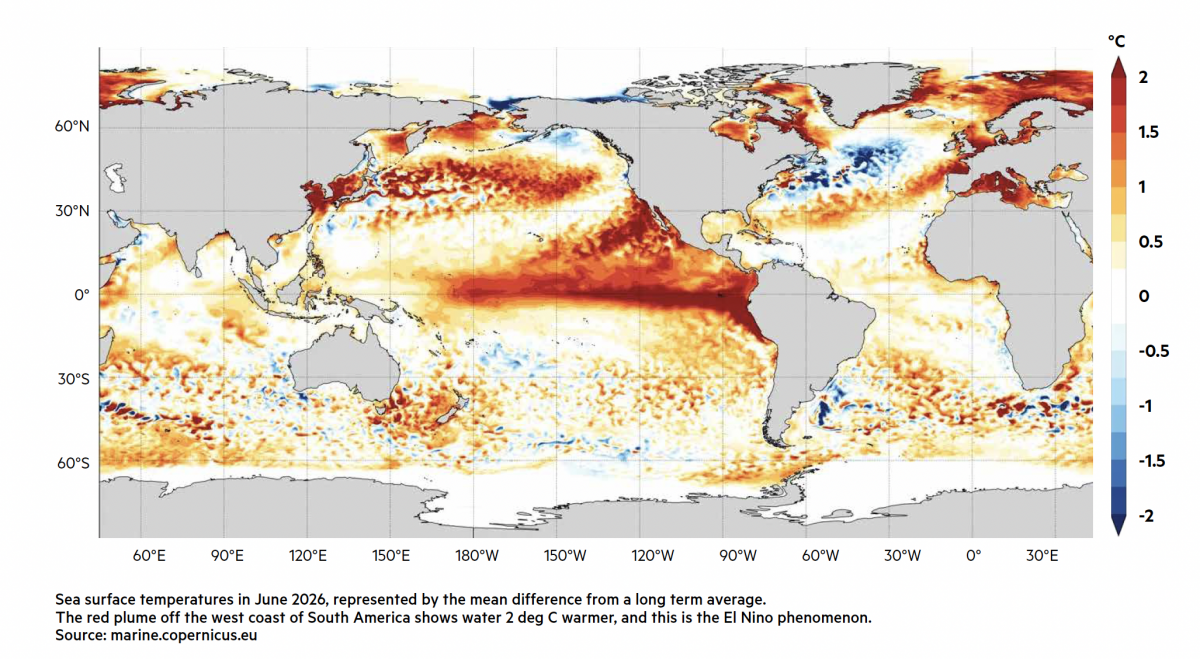
He wasn’t wrong. Tropical storms may wreak havoc in specific areas for a short period of time, but El Niño affects the whole world. Hence the intense interest in the El Niño currently underway, which global forecasts agree should strengthen through the remainder of 2026 and likely persist into early 2027. This means that southern Africa should be poised for a period of intense heat, disrupted rainfall, and potential summer drought.
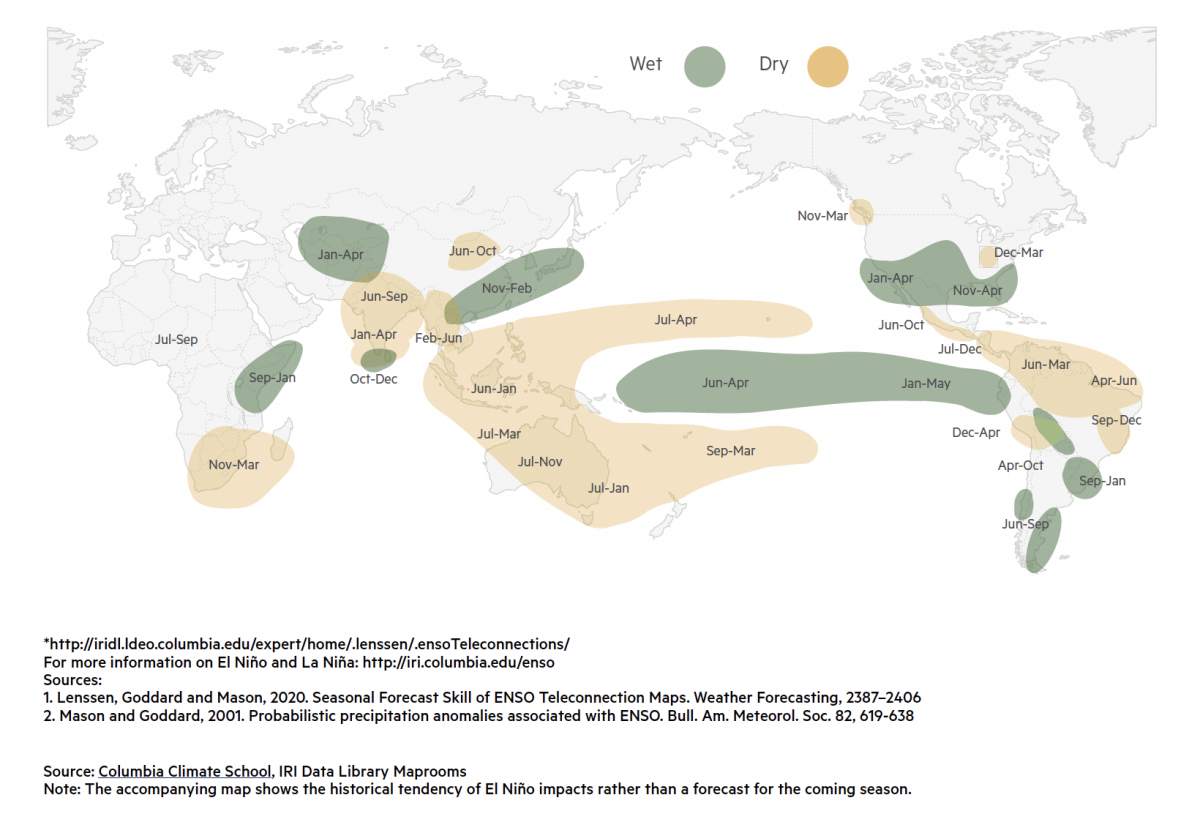
Historically, soft commodities are hard hit by El Niño, so coffee producers in Vietnam and Brazil, sugar exporters in Thailand, and cocoa growers in West Africa are also bracing for a potentially rocky ride this season, as are farmers in the Free State and winemakers in the Cape.
These are the impacts reported most frequently in the media, but the ripple effects extend across the globe. Furthermore, these El Niño impacts are made worse by the aggravating effects of climate change and an increasingly hotter planet where, currently, average global temperatures are sitting above the critical limit of 1.5°C above pre-industrial levels. While it is hoped this spike will return below 1.5°C, before rising again, right now we are seeing the convergence of temperatures above 1.5°C and a super El Niño. This offers a taste of what a 1.5°C future will feel like.
For any organisation or leader who has been kicking the ball down the road when it comes to climate action, the 2026-2027 El Niño will be a litmus test. By using El Niño as a practice run, business leaders across board and executive management levels can begin to identify the hidden impacts of climate change on their activities, and align operations and strategy to support long-term mitigation and adaptation.
The hidden impacts
Among the obvious and less obvious impacts of El Niño and climate change in general are long-term strategic risks impacting companies directly as well as indirectly via the risks posed to economies and operations. Water supply is often cited as an issue exacerbated by less rain and increased usage, and compounded by ageing infrastructure, leaks, and wastage. However, water usage is not just about households being more frugal or businesses recycling and reducing usage.
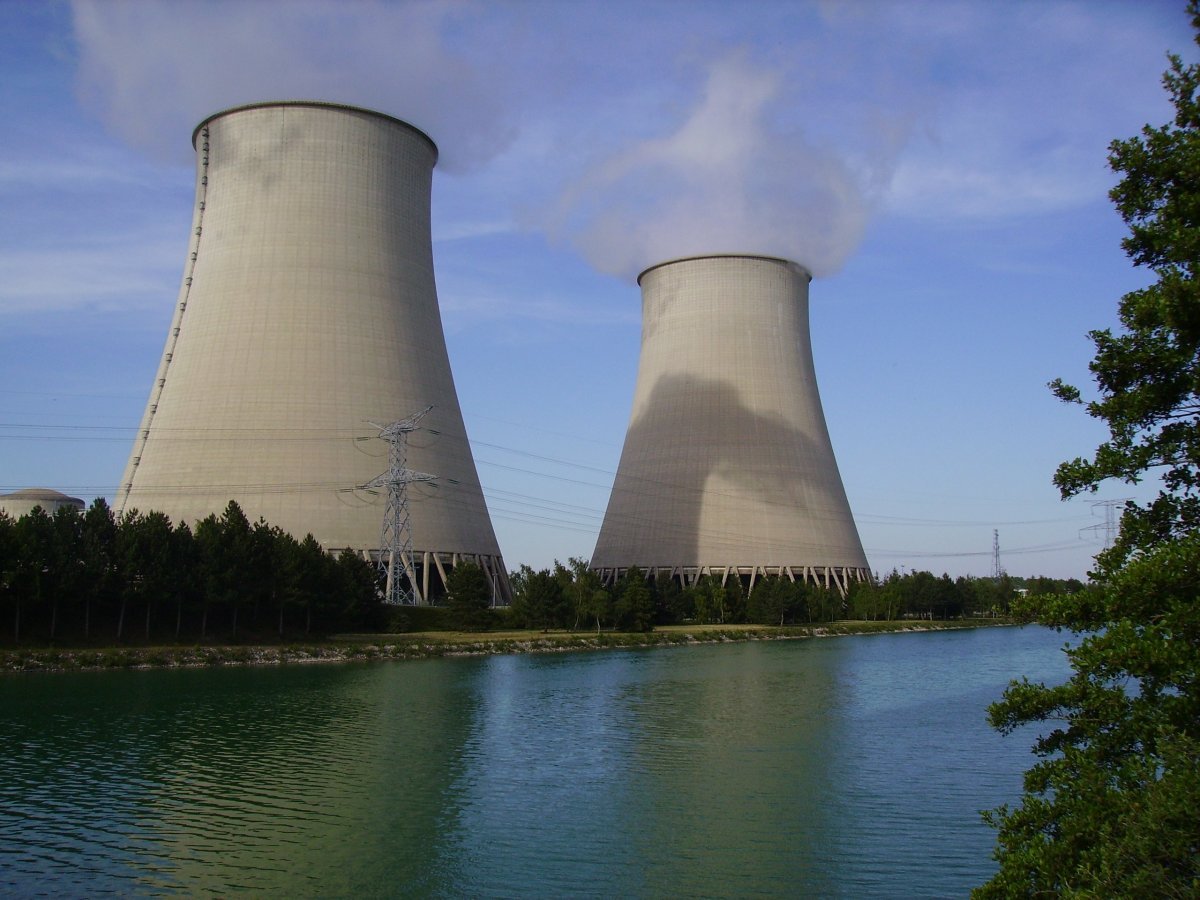
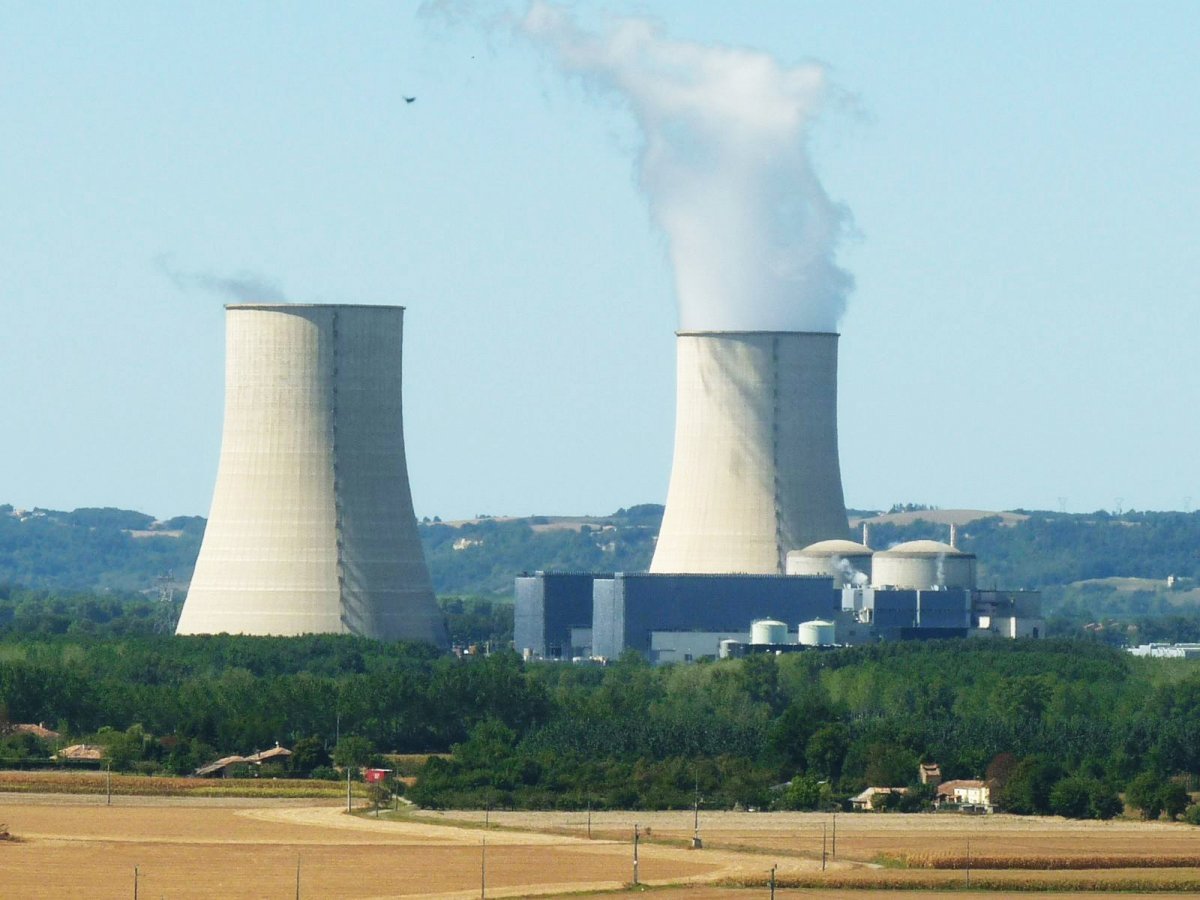
Take China’s record-breaking heatwave of 2022 that raged for more than 70 days. It caused a 50% reduction in hydro-electric power output and forced companies like Toyota and Tesla to close. In Europe this past summer, the Golfech nuclear power plant in France was forced to shut down when the river water used to cool the plant became too warm.
The risks don’t stop there and, in fact, many new risks are emerging that organisations haven’t fully linked to climate change. Consider the implications for a logistics firm running a fleet of cooling trucks to keep perishables fresh during transportation. Without using cooling units designed for high ambient temperatures, logistics firms must prepare for more spoilage, higher operating and maintenance costs, and potentially higher long-run insurance premiums.
Similarly, the implications of hotter climates don’t only extend to cold chains for food or, as research tells us, complications during childbirth due to higher temperatures. They span issues of wellness and human health. As Prof. Kristie Ebi and her co-authors outlined in The Lancet, “Almost half of the global population and more than one billion workers are exposed to high heat episodes and about a third of all exposed workers have negative health effects.” Consider the risk to a mining operation significantly invested in a zero-harm working environment of a sleep-deprived heavy machine operator whose overheated temporary dwelling doesn’t afford him proper rest.
In the future, of course, it might not be heat exposure that poses the risk. It may be flooding, the spread of new diseases, or disruptions to supply-chain routes. In a world already disrupted by extreme weather events, nothing is off the table when climate change and El Niño combine, and savvy leaders must not only plan for and document every eventuality, but also pay careful attention to near-misses. With climate change predicted to become more severe than even this coming practice run, today’s near-misses may be tomorrow’s commonplace occurrences.
Where does the responsibility lie?
While few would argue that the buck stops at the top, climate-linked impacts – especially ones that comes with ample warning, like this imminent super El Niño – cross over between operations and the sort of long-term strategy that takes place at board level.
In practice, companies will ideally respond to El Niño and other imminent climate threats largely through capabilities that already exist: business continuity, enterprise risk management, occupational health and safety, maintenance, procurement, and supply-chain management. The effectiveness of the response will be determined by whether these responses were informed by climate impacts, and whether the company is mature enough to recognise systemic impacts across its value chain.
Dealing with a complex issue like climate change through traditional risk mitigation lenses does mean that the systemic challenges could fall through the cracks. For instance, a mining group might respond adequately to keeping workers safe from heat, but fail to consider the implications of potential flooding on the rail infrastructure they depend on to export iron ore. The World Economic Forum’s approach of representing clusters of linked risk, rather than discrete line items in a register, is pertinent here. It’s critical to evaluate risk contagion, both locally and globally, including those instances where risks didn’t trigger but came close.
New reporting frameworks that are coming in via the compliance route, through accounting and sustainability reporting, may offer organisational leaders an interesting opportunity to close the gap. Part of the process required to get a company compliant and ready for this level of reporting is the creation of a detailed roadmap showing how the organisation thinks about water-, climate- and nature-related risks. This process also helps orientate teams to think about existing and missed impacts. For organisations that have gone through this exercise, replicating the process in light of a new risk – such as a supercharged El Niño – can be done relatively quickly.
Therefore, for board members hearing about the potentially catastrophic effects of El Niño, a good first move would be asking the sustainability manager if a Taskforce on Nature-related Financial Disclosures (TNFD) disclosure has been done. If not, put this on the agenda. If so, then now is the time to redo the exercise and identify possible supply-chain vulnerabilities coming this December.
TNFD is in the process of being integrated into expanded existing disclosure frameworks and accounting standards, so the effort to implement the framework is not a siloed one. The International Sustainability Standards Board recently proposed a way forward for including nature-related disclosures, drawing on the work of the expansive TNFD framework that was born out of the previous Task Force on Climate Related Financial Disclosures (TCFD). The four TNFD reporting pillars – governance, strategy, risk and impact management, and metrics and targets – consider how to shift financial flows towards nature-positive outcomes, including climate resilience. These insights are key for any organisation harvesting business-critical insights that might impact risk management and strategy.
It’s not a 100% fit for El Niño readiness, but the process organisations need to go through to have quality TNFD disclosures forces leaders to think about the systemic challenges and surprises that might be in store. As a result, those companies with a mature level of internal TNFD (and TCFD) reporting have a less steep learning curve ahead of them. They are likely to be better positioned to rapidly undertake an internal stress test and get ahead of the likely impacts of the upcoming El Niño. From a profitability and competitiveness perspective, these companies should be in a stronger position to adapt to a significant climate event, and possibly even come out ahead of their competitors.
The good news is that organisations that haven’t adopted TNFD or a similar disclosure framework can still undertake a stress test of their processes and vulnerabilities, and put mitigation steps in place. The accompanying 90-day checklist offers some guidance.
The overwhelming recommendation, however, is to avoid the very human response of putting your head in the sand. Instead of hinging your strategy on debunking science or picking holes in predications that sometimes go wrong, recognise that natural variabilities are becoming more extreme and long-lasting in light of climate change. Dodging the Cape Town Day Zero water crisis in 2018 was not a one-off occurrence, it was a strong signal of what’s to come.
For the past three million years the forces of El Niño and La Niña have danced around each other, contributing to climate variation on Earth. But that rhythm is now superimposed on a much more extreme climate caused by global warming. Even without El Niño, we have to go back in time some three to five million years to experience the sort of climate we are currently experiencing. These are not the conditions under which civilisation evolved, nor are they conducive to business as usual.
On top of global warming, current observations and seasonal forecasts indicate a strong El Niño is underway and likely to strengthen further. The question is whether your organisation just takes the blow and hopes for the best, or uses this practice run to make hard choices for the future.
What does the science tell us?
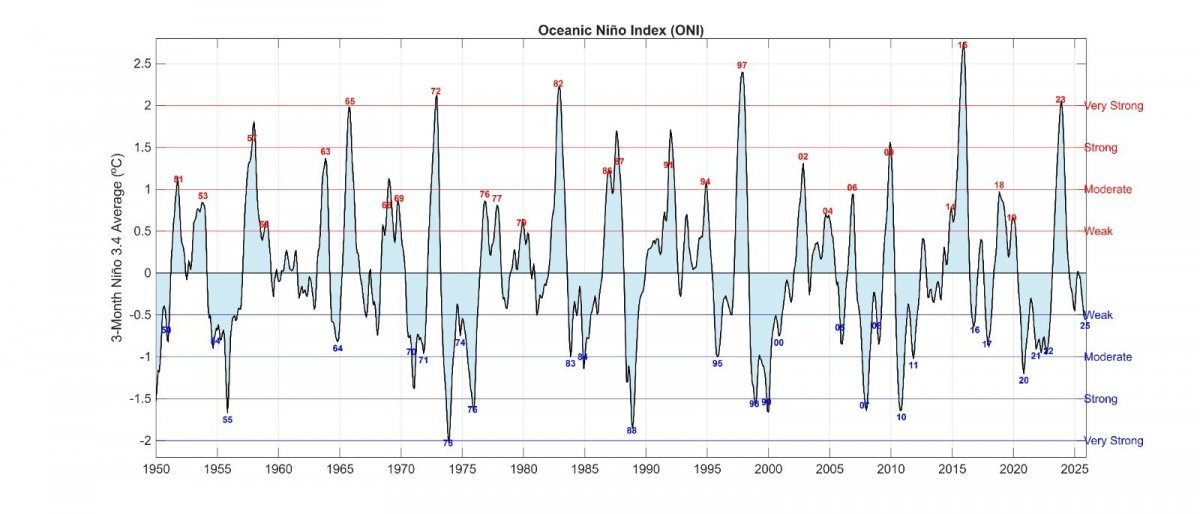
El Niño is a naturally occurring phenomenon. It happens roughly every two to seven years and is associated with the warming of the Pacific Ocean. Its wetter opposite is La Niña; linked to cooling of the Pacific. Both names are derived from Spanish, meaning boy and girl, respectively, and date back to the 1600s, when fishermen in Chile and Peru first observed a recurring warming of the Pacific Ocean around Christmas. Hence the phenomenon’s full name – El Niño de Navidad.
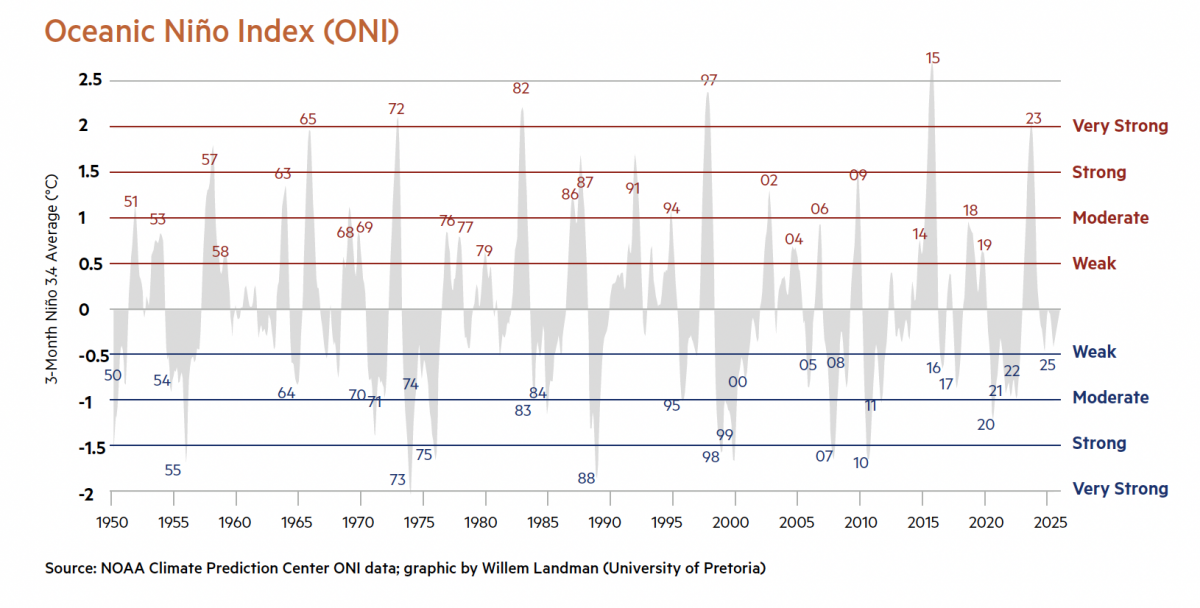
The accompanying graph illustrates the cyclical nature of these two phenomena, as well as their irregular occurrences over time. There is a suggestion that some of the strongest El Niño events have become more frequent in recent decades as the oceans have warmed, although the observational record is too short to establish this conclusively.
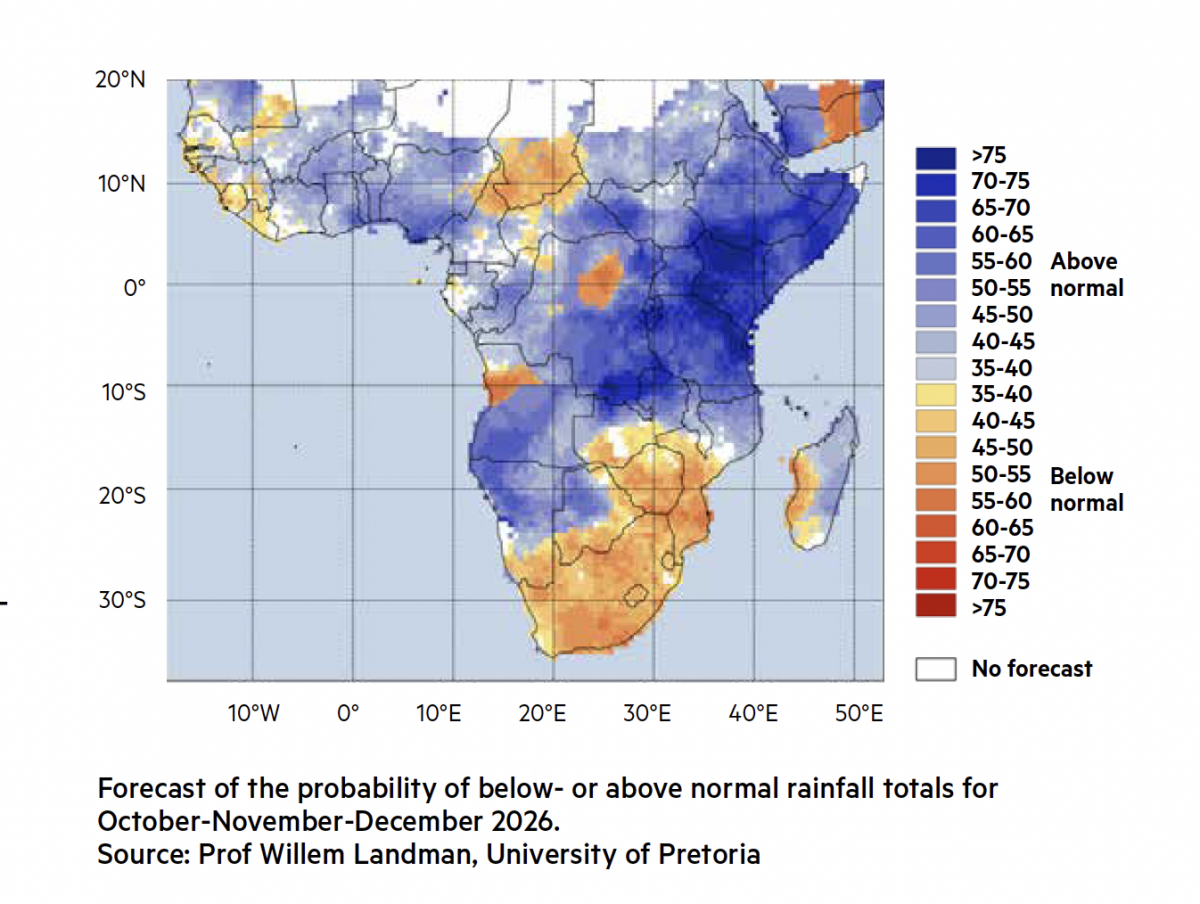
Not every El Niño leads to a widespread drought. However, current seasonal forecasts do indicate an increased likelihood of below-normal rainfall and above-normal temperatures across much of South Africa’s summer rainfall region from around October or November.
The 90-day El Niño checklist
When – not if – El Niño hits around November this year it will expose the climate-change readiness of every company and every sector. Some will be found wanting, while those already well-advanced in their preparations will have the edge. When in doubt, run through this 90-day checklist to see what shape your organisation is in. Then realistically set out a plan for the next three months.
Within 30 days
Assess your value chain
- Identify heat, energy, and food-price dependencies.
- Where does your supply come from?
- What are the alternatives?
- Who do I need to speak to if things go wrong?
- What are in implications if something goes wrong?
- What does this mean for employees, suppliers, stakeholders, consumers?
- What are the risks and possibilities?
Speak to your insurer
- Be proactive.
- Talk to your bank or insurance company about lenient payback periods if profitability takes a dive.
- Lay out potential vulnerabilities and explore which generic insurance offerings can be used to cushion the blow if the worst happens.
Connect with your suppliers
- It’s too late to think about diversifying suppliers, these are locked in already.
- However, you can urge partners and suppliers to identify risks at their end and then plan around potential disruptions together.
Assign responsibilities
- Assign an executive owner to each key aspect of the value chain.
Within 60 days
- Complete a full horizon scan
- Conduct a full environmental scan that considers implications within your industry, country, and the world.
- Take a systemic approach, looking for large and small levers.
- onsider the signals and the stressors.
- Rope in a futurist to work with your risk management experts if needed.
Develop four scenarios
- Building on the horizon scan, create four scenarios of what might happen.
- Consider best-case scenarios, mild El Niño impacts, severe drought, and compound events such as drought-plus-energy or multi-year disruptions.
Run stress tests
- Based on each scenario, consider the implications for procurement, production, labour, logistics, and community-relations implications.
- Put in place a plan for each eventuality.
Within 90 days
Agree trigger points
- Based on the multi-scenario response plan, ensure clear guidelines are in place about when to reduce water use, shift production, change procurement, communicate with customers, protect outdoor workers, or support local municipalities and catchments.
Connect decision-makers
- Ensure executives responsible for key operations are talking to each other.
- Loop in managers and on-the-ground decision-makers.
- Ensure everyone understand the guidelines.
Brief in communications and PR teams
- Ensure public-facing executives and communication specialists are fully briefed on the three scenarios, fail-safes and emergency procedures.
KEY TAKEAWAYS
- El Niño is coming. Current projections point towards a potentially very strong event with the potential for drought across southern Africa this coming summer season.
- Irrespective of the force, and manner, in with which El Niño strikes, it represents a test run of what’s to come.
- No matter what your industry, use this opportunity to assess your readiness to deal with nature-related disturbances by fine-tuning your responses and running through all possible scenarios.
GIBS Professor Barend Erasmus is a globally respected voice in the science-policy landscape and a recognised leader in the local and international transdisciplinary research space. From 2019 to 2025, Erasmus was Dean of the University of Pretoria’s (UP’s) Faculty of Natural and Agricultural Sciences. During his tenure, Erasmus helped drive UP’s long-term institutional strategy, while strengthening his faculty’s international research profile and levels of industry engagement, as well as securing new avenues of funding for research and innovation. Erasmus has published more than 100 research outputs spanning the fields of ecology, socio-ecological systems, environmental health, climate risk, and sustainability. His work has been cited over 15 000 times. At GIBS, Erasmus helps business leaders and key decision-makers confront the reality of systemic environmental risk.
Professor Willem Landman is one of Africa’s leading experts in seasonal climate prediction and climate services. He is Professor of Meteorology at the University of Pretoria, where his research focuses on climate variability, seasonal forecasting, and the application of climate information to support decision-making. Over four decades, Landman has helped shape operational seasonal forecasting across the continent through pioneering research and the development of climate services for agriculture, water resources, energy, and disaster risk management. He has published more than 90 scientific papers and has served on numerous international scientific advisory groups under the auspices of the World Meteorological Organisation and the World Climate Research Programme.
Steve Nicholls is executive director of African Energy Futures, a pan-African organisation strengthening energy and economic planning capacity. Previously he led the mitigation team at South Africa’s Presidential Climate Commission, and was head of environment and society at the National Business Initiative. Nicholls has experience across a range of stakeholders in building consensus around net-zero pathways for each sector of the South African economy. Advancing the view that economic planning must be built on a considered and robust research base, Nicholls has played a key role in building cooperation within the modelling community in South Africa, and now across Africa. He has also worked on projects in the United Kingdom and Europe, spanning government and private sectors like mining, telecoms, energy, financial services, and retail


Gallery