
In 2022, the world was introduced to OpenAI’s ChatGPT and given a taste of the vast array of tools generative artificial intelligence (AI) offers. It was a global phenomenon. Since then all the major US tech platforms have released their own AI applications. The cost of developing and training these systems ran into the billions and these tech companies therefore locked the prying eyes of the world out of their inner workings.
That is until, January 2025. In a move that sent shockwaves through the global tech industry, Chinese AI start-up DeepSeek announced the launch of its AI platform. Not only did the Chinese start-up develop and train its AI system for under $6 million, it was also launched as an open-source platform, meaning everyone has access to its source code and can run it from their own computers.
Touted as a more cost-effective, more sustainable (in terms of electricity used), and powerful alternative to ChatGPT, the DeepSeek application was eagerly downloaded by millions of users around the world. Yet, simultaneously, the app faced a backlash as countries such as the United States, United Kingdom, Australia, and other European allies all claimed DeepSeek as a significant threat to their national security.
Further proving the platform’s disruption of the global AI space, from 25-29 January, DeepSeek faced a massive cyber-attack that lasted 83 hours as its server cluster was hit by more than 230 million DDos (distributed denial of service) malicious requests per second. The size of the attack is equivalent to the total network traffic in Europe for three days. Chinese tech giants stepped in to help with multilevel, multidimensional traffic cleaning to protect DeepSeek.
David takes on AI Goliaths
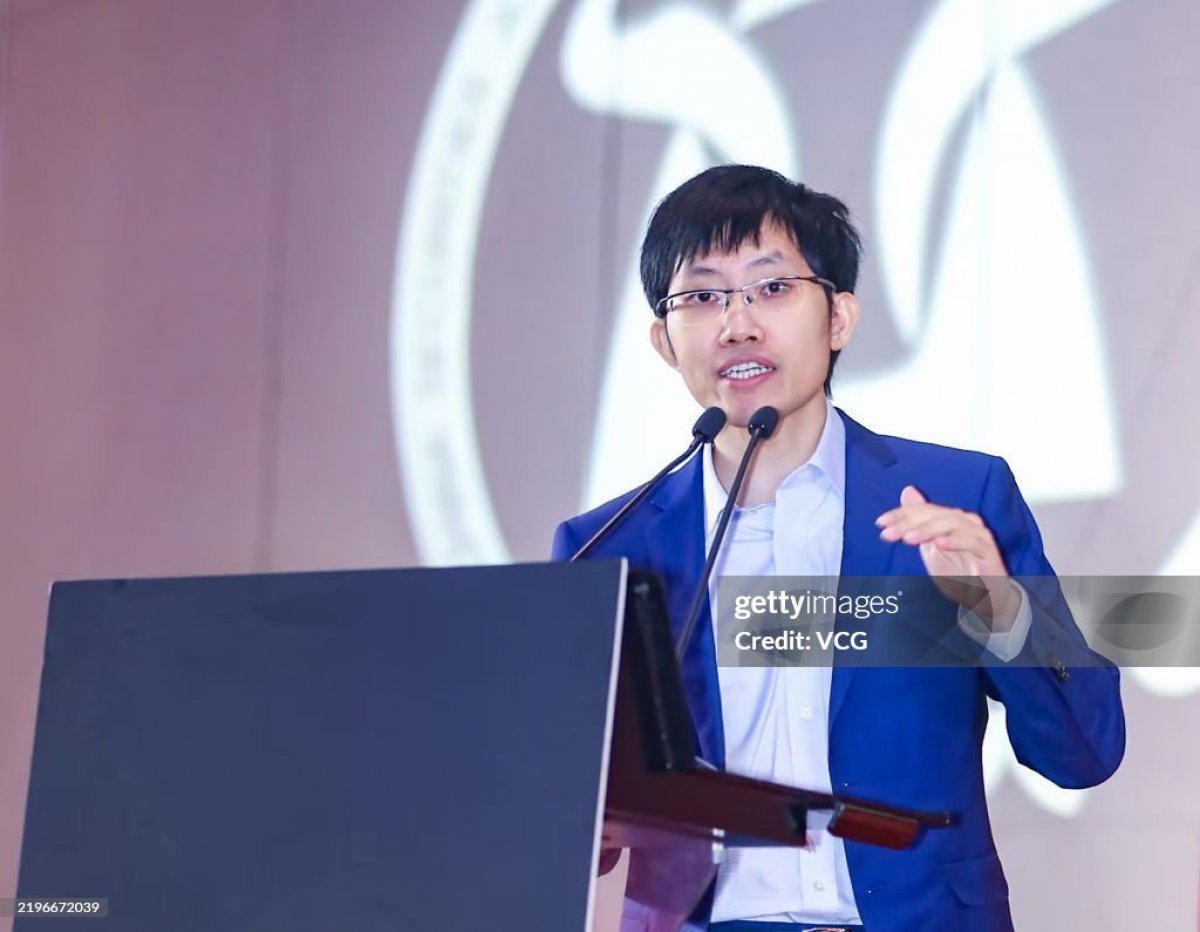
How has DeepSeek founder Liang Wenfeng been able to develop one of the best AI platforms in the world at a fraction of the cost?
The answer partly lies in his personal focus and commitment to his craft. Liang operates behind the scenes, reading papers, writing code, and joining team discussions, thereby personally furthering his research on the topic. He is considered a rare talent within China’s AI community because he has managed to combine strong engineering infrastructure with cutting-edge research. He was described in China Talk as having “a terrifying ability to learn” and comes across as more of a “geek” than a “boss”. But perhaps what makes him stand out above his global billionaire tech peers is his desire to prioritise a sense of right over wrong, public good over private profit.
He believes that tech is meant to benefit humanity. While US tech billionaires are in a race to enclose AI development for corporations and conquer space, Liang is more interested in building what is on the ground to promote human benefit. He is not driven by money. Rather his drive comes from a curiosity to create a technology universe that benefits the whole ecosystem. He said, “We hope to create an ecosystem where the industry directly utilises our technology and outputs… If a complete industry value chain can be established, there’s no need for us to develop applications ourselves.”
While DeepSeek will continue to work on the platform, research and technological innovation will always be the company’s top priority. Liang Wenfeng was quoted when he launched DeepSeek, “True innovation is driven not only by commercial incentives by also by curiosity and the desire to create.”
This ethos has informed the kind of talent Liang employs. The bulk of his employees are graduates from Chinese universities. Focused on developing local talent, he believes DeepSeek’s value lies in its team, which grows and accumulates know-how through this process. He is building an organisation and culture that can consistently innovate.
He believes that top people are interested in doing interesting things. While he pays employees above-average salaries in Chinese terms, he looks for people who are not motivated by money, but by the work they do. He wants his team to push boundaries and find new ways of doing things. A researcher by nature, this is exactly what Liang himself excels at. He told The China Academy, “The real gap is between originality and imitation. If this doesn’t change, China will always be a follower.”
He is also committed to democratising AI and advocates for accessible and affordable AI solutions. While OpenAI is “open” in name only, DeepSeek is true open source, where technology is shared and accessible because Liang Wenfeng says “sharing is a cultural act” and “giving is a form of honour”. An ethos with echoes of ubuntu.
But perhaps Liang’s motivation goes further than mere accessibility. The wider DeepSeek’s network is, the bigger the impact its source data can have on AI usage. This idea builds on the economic principle of positive network externalities, where the more people who have access or use the technology, the more value that technology ultimately has. Additionally, by encouraging the widest adoption, Liang is automatically developing a positive feedback loop where inputs are enhanced, causing a self-reinforcing effect.
His thinking mirrors the views of Carl Shapiro and Hal Varian, who wrote the book Information Rules in 1999. Their view was that for digital technology to evolve rapidly, the system must be free of roadblocks, patents, and intellectual property because those things stymie development. By being open source, within weeks DeepSeek saw the immediate development of more than 20 plugins built with its software, including ChatGPT-Next-Web, personal knowledge management app CocoAI, PapersGPT to read papers into the referencing app, Zotero, AI agent frameworks, data AI application frameworks, and RAG (retrieval-augmented generation) frameworks, among many others. Those who are interested can see the list on GitHub.
Met with such rapid-fire adoption and integration into other software, when pushed about building a moat around his software, Liang has reiterated that he will not do this. In the tech world, a “moat” refers to a company’s sustainable competitive advantage, making it difficult for rivals to imitate or replicate its success. This advantage is said to help the company maintain market share, profitability, and long-term value for investors. Rather, Liang believes that if you employ and develop the best talent, pay them well, and develop a culture of openness and of sharing that aligns with your values, it is far more valuable than building moats. Liang argues that all moats are temporary, at best, and new companies can leapfrog you at any time.
Liang’s platform is also designed to operate within China’s 14th five-year plan (2021–2025) which calls for AI development to be open source.
Leadership lessons for a new world
Liang Wenfeng offers valuable leadership lessons through his story. He is a man who believes in research, innovation, and solving the world’s challenges. He sees innovation as an act of service to the wider community. By making his AI platform open source, he has created a significantly more powerful system with a far wider and diverse training base – one that will ultimately have far more global appeal.
The end result is that at a societal level, more inclusive wealth can be made off the technology by growing the pie than by hoarding the know-how, which is what US big tech companies are doing. As he has noted in an interview with The China Academy, “OpenAI is not divine. It cannot lead forever.”
Who is Liang Wenfeng?
DeepSeek is the brainchild of Chinese Tech entrepreneur Liang Wenfeng. Born in 1985, he was raised and educated in China. While still at university, in 2008, he was convinced that AI would change the world. So when university cohorts left to work for big corporates as programmers, he took a different path. His exploration saw him stumble onto the world of finance and he founded the hedge fund High-Flier in June 2015 at the age of 30.
The hedge fund was novel in that it used AI to make investment decisions for clients. Liang built his fortune by using AI and algorithms to identify patterns that could predict stock prices. This journey, however, was short-lived, because in 2022, the Chinese government clamped down on the salaries and bonuses paid in the financial services industry. Halting outsized bonuses and salary increases in finance took the glow off the industry. This directed talent to technology. In line with this move, High-Flier, along with a number of other firms, pivoted into tech.
Liang’s side-line AI project became his central focus. Using Nvidia graphics cards, Liang started building a computing system that ultimately evolved into DeepSeek. He was quoted as saying in Chinese tech magazine 36KR, “The market is changing. The real decisive force is not some ready-made rules and conditions but the ability to adapt and adjust to changes.” To date, when compared to its industry counterparts, Liang’s DeepSeek-V3 outperforms the industry benchmarks on all fronts, and his ultimate goal is to develop DeepSeek into human-level AI.
Liang surprised everyone with his platform. As one of his business partners, who was quoted in Fortune magazine, said, “When we first met him, he was this very nerdy guy with a terrible hairstyle talking about building a 10 000-chip cluster to train his own models. We didn’t take him seriously.” He added, “He couldn’t articulate his vision, other than saying, ‘I want to build this, and it will be a game changer.’ We thought what he created was only possible from [tech] giants like Byte Dance and Alibaba.”
KEY TAKEAWAYS:
- Liang Wenfeng used his passion and talent to create his businesses.
- He believes work is for the good of society and is an act of service.
- He is proudly Chinese and employs local talent with the aim of growing and developing it.
- He is a researcher and innovator – and therefore is more interested in how far he can push the boundaries of AI than in creating moats to stifle innovation.
- Liang works within the directives of the Chinese Communist Party, but does not allow it to dictate the pace of innovation.
Dr. Kerry Chipp is an academic and researcher with extensive experience in marketing, consumer behaviour, and sustainable business practices. Dr. Chipp holds a PhD in Marketing from KTH Stockholm and is currently serving as an Assistant Professor at Luleå Tekniska Universitet in Sweden and as Adjunct Professor at GIBS. Dr. Chipp has a background in both academia and professional research, with a focus on emerging markets, sustainability, and digital marketing.


Gallery