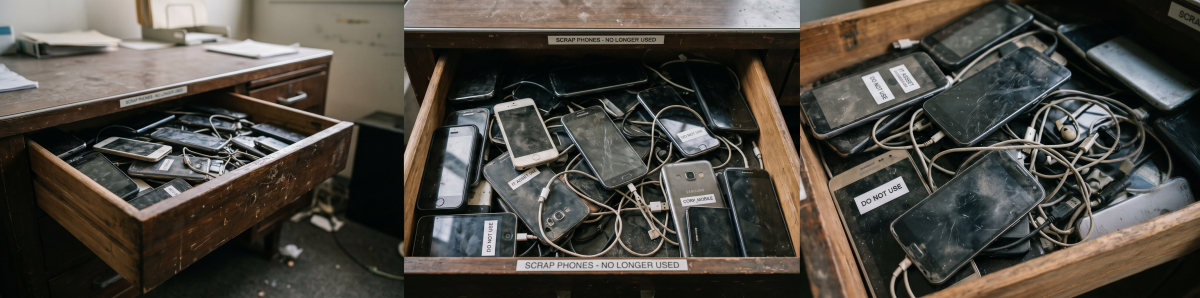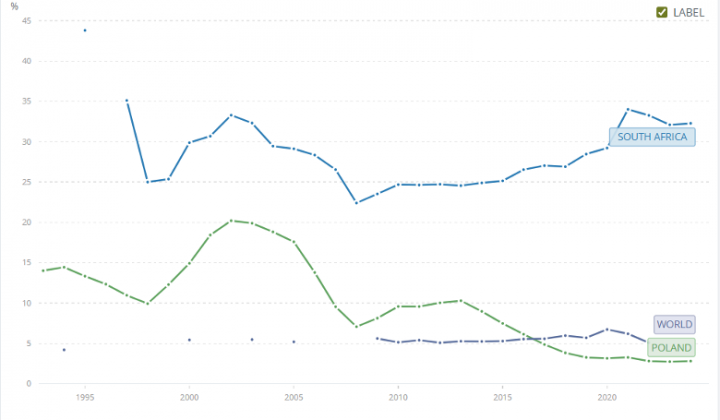

Every year, the global tech industry produces roughly enough smartphones to give one to every adult in China. Most of those phones are dead, sitting in drawers, or destroyed within three years. The recycling rate sits between five and 10 percent. Electronic waste is now the fastest-growing waste stream on the planet.
The framing as a recycling problem misses the real issue, which is upstream. The industry has built business models that depend on customers replacing devices long before they break. But a handful of companies is trying to flip that logic. They want phones that last longer, repairs that don’t require a specialist, and components that find their way back into new products instead of into landfill. The shift is partly ethical, partly regulatory, and increasingly commercial. The World Economic Forum estimates that circular models could generate $4.5 trillion in economic benefits by 2030.
The phone designed to outlive itself
Monique Lempers is the chief impact officer at Fairphone, the Dutch company that has spent more than a decade trying to prove a sustainable smartphone is possible. Its devices are modular: pop off the back, slide in a new battery, and replace a cracked screen with a few screws. Most repairs can be done without a technician.
“In all phones, after two years, the battery just simply degrades to around 70% to 80%,” Lempers says. “You can notice that in the functionality. You can take off the back and buy a new battery and just put it in. You don’t have the barrier of going to a repair shop and paying high repair costs. You just buy one online and you have it in your mailbox the next day.”
The longer a phone stays in use, the smaller its environmental footprint becomes. That’s because most of a smartphone’s carbon emissions are baked in at the factory, not generated during daily use.
“The CO2 footprint of a phone is mainly in its production, meaning that if you don’t have to buy a new phone, you actually [halve] the footprint,” Lempers says.
Fairphone also commits to taking back as much electronic waste as it puts onto the market. “All our phones are e-waste neutral, meaning that for every phone we bring to the market, we take similar e-waste in weight back.”
Last year, the company partnered with Deutsche Telekom to launch a circular router built on a chipset from the Fairphone 2, a model first released a decade ago. Components that would normally have been shredded for trace minerals found a second life as the motherboard of a new product.
Europe is making transparency mandatory
By 2029, every smartphone sold into the European Union will need to carry what the European Commission calls a digital product passport (DPP). The passport will record what materials are inside the device, how it can be repaired, and what happens to it at end of life. Battery passport requirements for industrial and EV batteries arrive first, in February 2027, with consumer electronics following over the back half of the decade.
Mike McCamon, executive director of the NFC Forum, has been watching the rollout closely. NFC, the near-field communication technology behind contactless payment, sits inside almost every phone shipped today. McCamon’s group sees an opportunity for that same chip to carry the passport data itself, embedded in the device rather than only stored in the cloud.
“Products, when they reach their end of life, may go to places where they may not have good internet connectivity,” McCamon says. “And of course, you cannot be DPP compliant unless you can get to that record in the cloud. By having the data also embedded into the product, we think there are some benefits.”
The European rules will affect manufacturers worldwide. No major handset maker designs phones just for the EU market, so the passports will end up shipped globally. McCamon, however, is not convinced the industry is ready.
“I don’t think we’re very prepared, and it actually is making me quite nervous,” he says. “It’s giving me a real call to action to even get more active in these efforts.”
For consumers, the passport has a quieter implication. With clearer information about what is inside a device and how long it will last, buyers can make different choices. “The customer can vote with their feet,” McCamon says. “They can vote with their money.”
Used equipment doesn’t mean second-rate
The same shift is taking place inside the infrastructure that runs the mobile economy. David Evans heads group asset recovery and services at TXO, a British company that recovers, tests, and resells telecom equipment to network operators around the world. The pitch to clients is straightforward: refurbished gear, properly tested, is as reliable as new and significantly cheaper.
“It’s tested as new and it’s tested used,” Evans says. “What’s the difference?”
His main obstacle is psychological. Network operators are cautious about anything that might cause downtime, and the assumption that “new” equals “trustworthy” is hard to dislodge. Evans uses the word “brave” repeatedly to describe what he is asking of clients.
“My call to action would be: try it,” he says. “Stop buying new. Try it. Others are doing it. Be comfortable that you’ve got quality control, you’ve got the warranties.”
The financial argument is strong. Refurbished telecom equipment can cost a fraction of new, and TXO has built a Carbon Trust-certified calculator that shows operators how much carbon they avoid by keeping equipment in service. The savings, Evans says, work in two directions. The operator who buys refurbished gear cuts emissions. The operator who sells decommissioned gear into the network enables someone else to do the same.
Africa is already living this future
For African and Global South markets, circular tech is already the operating reality. Refurbished smartphones move through East African resale markets at scale. African mobile network operators routinely extend the life of base-station equipment well past the timelines European carriers would consider standard. The repair economies in Nairobi, Lagos, Johannesburg, and Accra keep devices working long after their manufacturers have given up on them. The continent’s mobile economy was built on doing more with less.
What’s been missing is recognition and protective infrastructure. Much of the e-waste shipped to West Africa over the past two decades, particularly into Ghana and Nigeria, has arrived disguised as donations or refurbished goods and ended up burned for copper in informal scrap sites like Agbogbloshie in Accra. The health and environmental costs land on local communities. The regulatory shift now happening in Europe could change that flow. Digital product passports, if extended globally, would make it harder to disguise broken equipment as reusable. They would also give African refurbishers verifiable information about what they are buying and, in turn, what they can credibly sell.
The opportunity for African business is real. If telecom operators on the continent can buy properly tested, traceable refurbished equipment from companies like TXO, they cut costs and reduce dependence on imported new infrastructure. The same circular practices that European regulators are trying to mandate, African markets have run on for years.
Prof. Manoj Chiba, who leads work on data science across African markets at GIBS, reads the regulatory shift in sharper strategic terms. The digital product passport, he argues, is not just environmental compliance machinery but a gateway condition for who participates in global device value chains.
“The critical risk is that this becomes another asymmetric standard,” Chiba says. “Europe sets the data architecture, European OEMs and platform operators control the DPP infrastructure, and African refurbishers find themselves on the receiving end of a system they had no hand in designing.”
For African mobile operators that already manage large device fleets and refurbishment programmes, he sees the data layer as a strategic asset rather than a burden. The capability gap, he argues, is not technical. “Africa’s informal repair sector is genuinely world-class in its technical capability. The capability is not the gap. The gap is documentation, traceability, and institutional legibility.”
His prescription is for African stakeholders to engage now, while the architecture is still being written. “Africa does not need to build its way up to European standards from scratch. It needs a bridging framework that is credible enough to interface with DPP verification requirements while being practical enough for the actual operating conditions of informal repair ecosystems.”
The commercial case wins, or nothing happens
Despite the environmental framing, circularity must make business sense. Lempers makes this point directly. “You are far more motivated to work for such a company,” she says, before acknowledging the financial reality. “But it is still a business case.”
For her, the calculation widens once externalities are accounted for. “At the end of the day, when you look at it more holistically and at a macro level, that is financially also the best business case.”
Evans frames it more bluntly. “The more you embrace it, the more you take from the circular economy, the more you contribute to the circular economy, the easier it is for others to be circular. When we stop doing it, and there’s pockets doing it, then it’s much more difficult.”
The thread running through Fairphone’s modular smartphones, the NFC Forum’s data passports, and TXO’s tested infrastructure is a single idea. Tech does not have to be disposable. The supply chain that built the e-waste problem can be redesigned to solve it. The question for African telecoms, manufacturers, and refurbishers is whether they wait to be folded into a European framework, or whether they design their own version of circularity around the practices the continent already has.
“This story is really powerful, but it’s embracing it,” Evans says. “And the finance bit really makes that work.”


Gallery