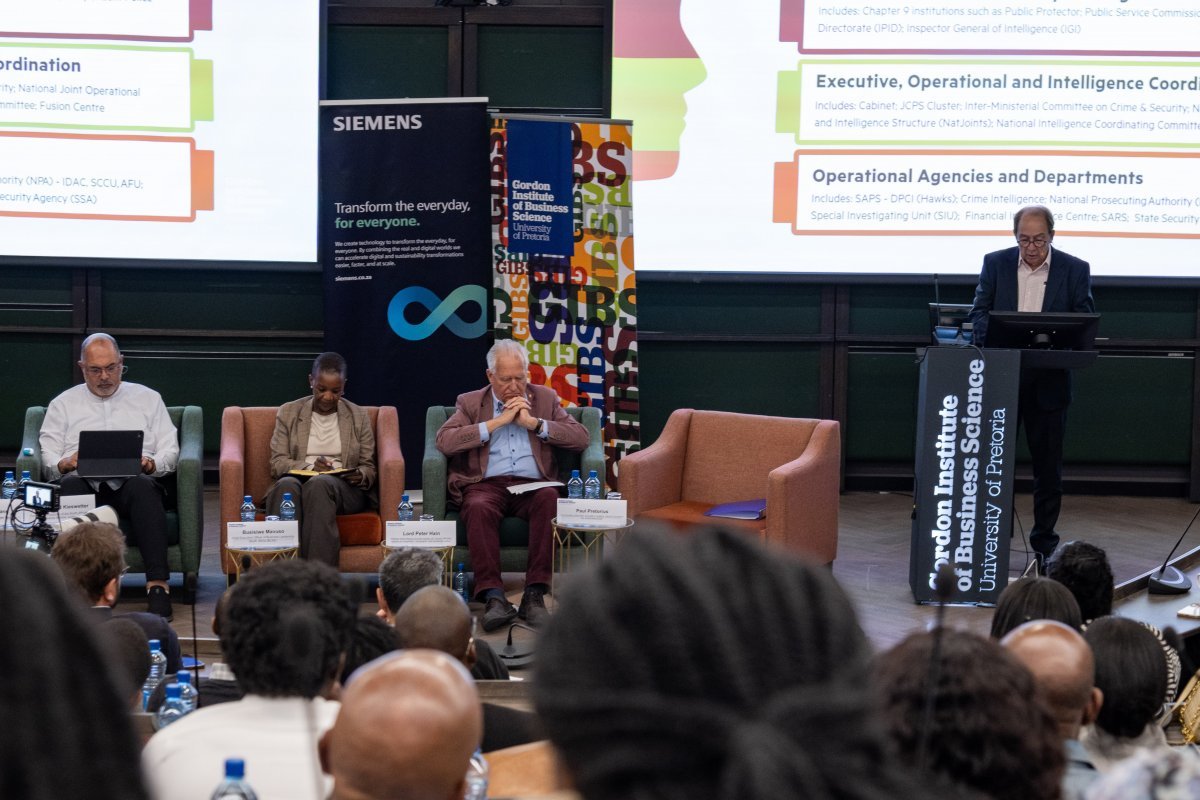
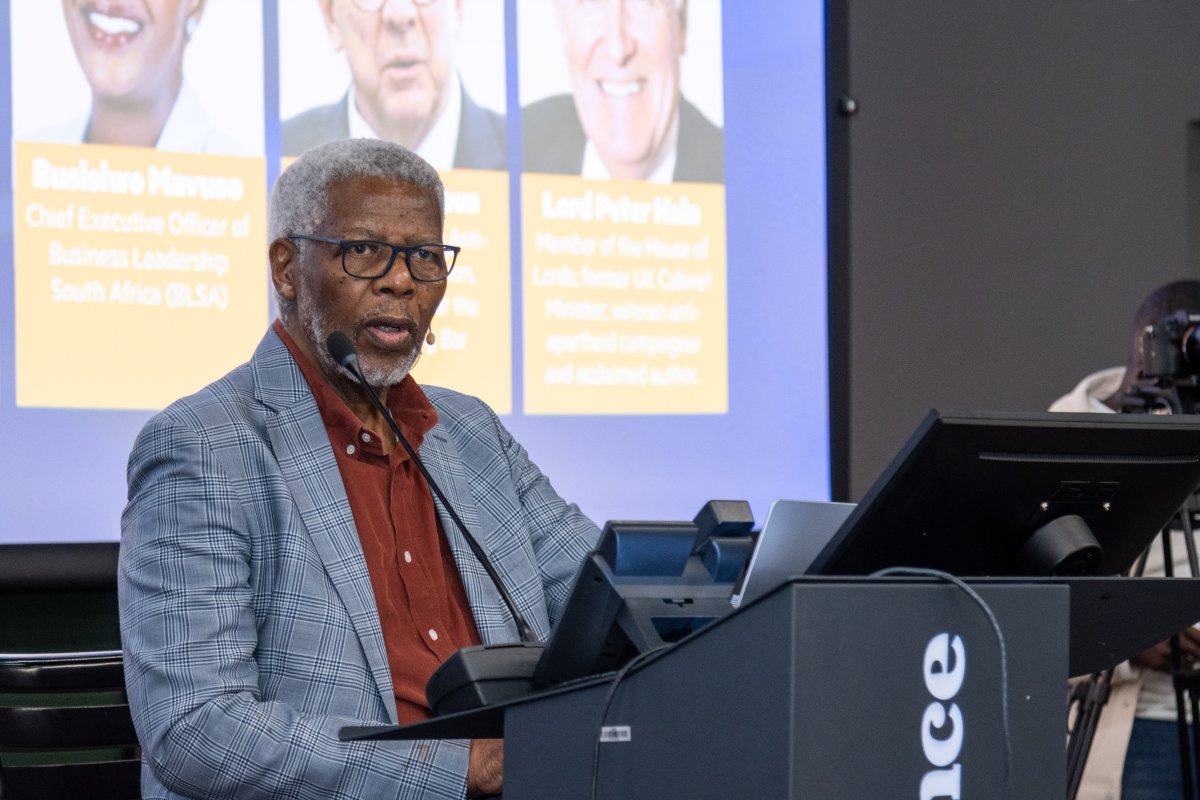
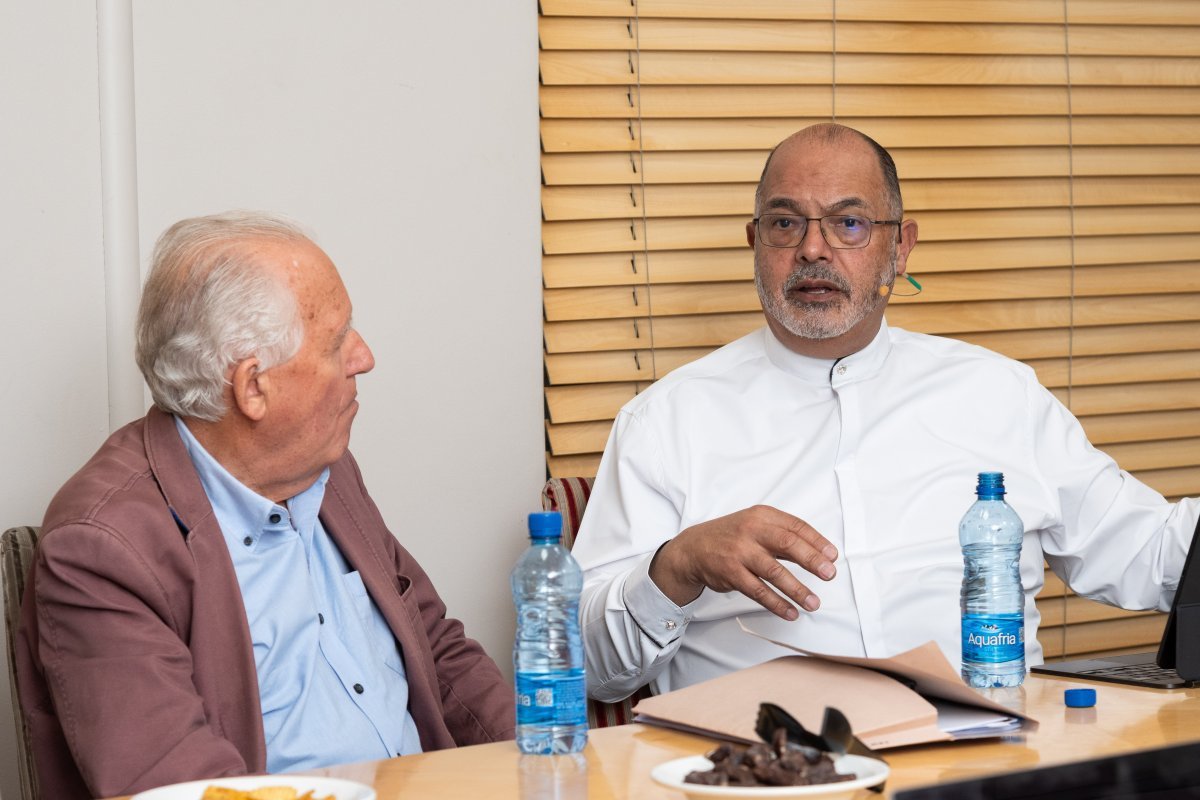
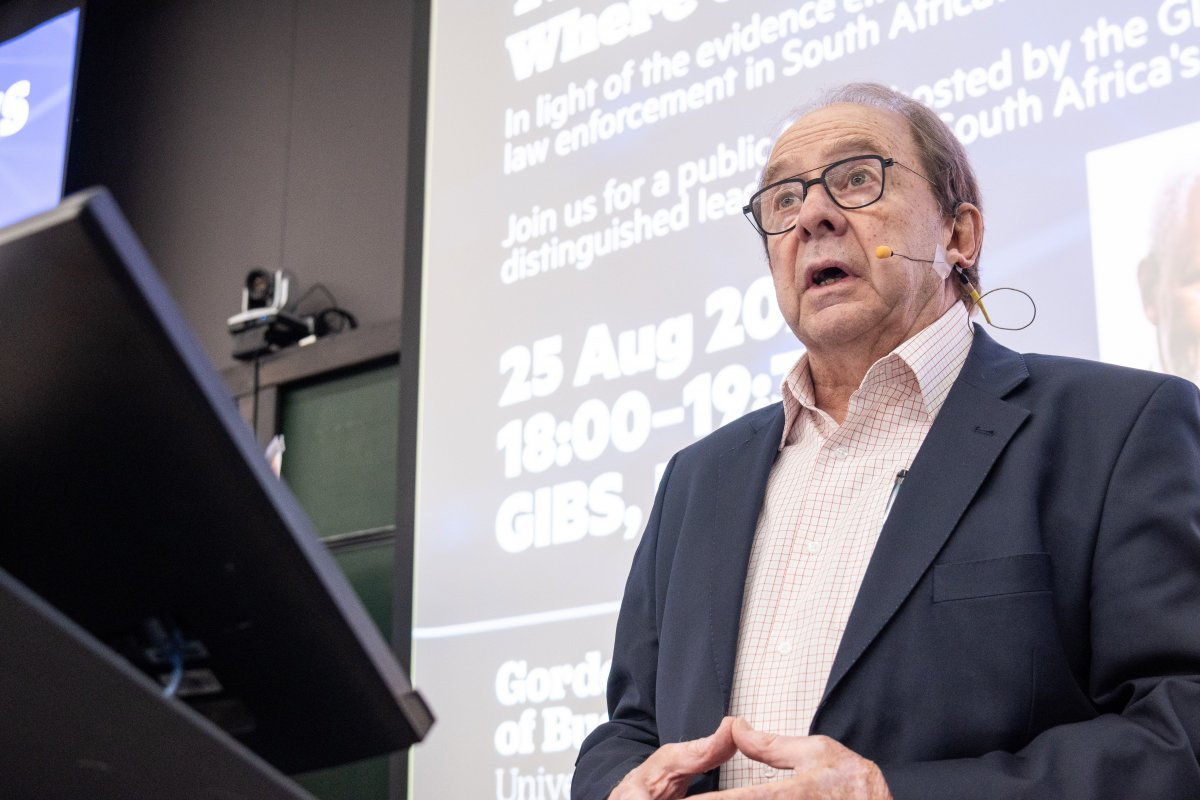
A recent forum hosted by the Anti-Corruption Coalition, based at the Centre for Business Ethics and Narratives at GIBS, asked whether South Africa is facing a new level of organised criminality and corruption, including the alleged infiltration of law enforcement, or whether recent events have simply exposed long-standing weaknesses.
Setting the scene for the discussion, Advocate Paul Pretorius, senior counsel at the Johannesburg Bar and co-founder of the Anti-Corruption Coalition, questioned whether the country’s constitutional, parliamentary, and law-enforcement institutions, designed to prevent corruption and ensure accountability, are doing enough, and whether they can withstand increasingly powerful criminal syndicates.
He was joined by a panel of experts including Mavuso Msimang, chairperson of Corruption Watch, Prof. Edward Kieswetter, former commissioner of the South African Revenue Service (SARS), Busisiwe Mavuso, CEO of Business Leadership South Africa (BLSA) and Lord Peter Hain, the former UK Cabinet minister, veteran anti-apartheid campaigner and author.
Corruption has moved to institutional capture
Msimang said South Africa’s corruption problem had moved beyond individual wrongdoing into institutional capture while whistle-blowers remain dangerously exposed. Corruption has penetrated sectors such as procurement, construction, public transport, and municipal tendering, while organised syndicates are increasingly willing to use violence to protect their interests. He described the difference as being between “a leaking roof and a house whose foundation has been quietly sold to termites”.
Whistle-blowers are being asked to take extraordinary risks to expose corruption without adequate protection for the risks they face. Msimang pointed to the deaths of whistle-blowers and argued that the existing framework was designed for a much less dangerous form of wrongdoing than the country now confronts.
The problem beyond our borders
Lord Hain said corruption is sustained by international financial and corporate networks and that corruption should not be understood solely as a domestic political failure. In his book, Liberation and Corruption, he examined how corruption can become entrenched in liberation movements and political systems, while also highlighting the role of global corporate complicity.
Can institutions be fixed?
Referring to the “Nhlanhla Mkhwananzi moment” which resulted in the Madlanga Commission, Kieswetter said South Africa should not allow the current corruption crisis to end with only a more accountable police service. He believes the country needs anti-corruption institutions designed to survive individuals, political cycles and departmental interests. He said once there is an understanding of institutional architecture along with having the right people leading various institutions, it is possible to have effective anti-corruption institutions.
Reasons for optimism
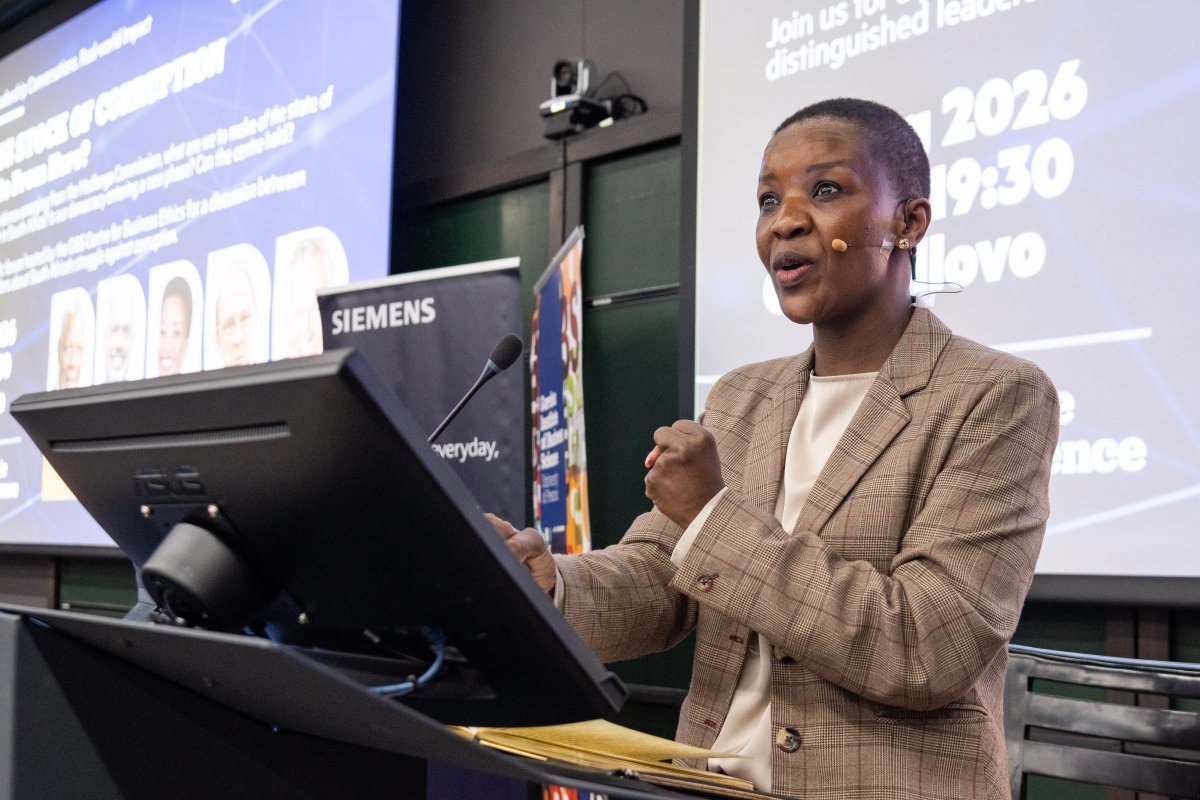
BLSA’s Mavuso said despite the corruption crisis, South Africa has made tangible progress in rebuilding institutions. She pointed to the turnaround at state-owned entities including Eskom, Transnet, and SARS, arguing that the experience of these institutions demonstrates what happens when capable leadership and governance are restored.
She also pointed to South Africa’s exit from the Financial Action Task Force grey list, improvements in Eskom’s operational performance, the spectrum auction, visa reforms, and credit-rating improvements as evidence of movement in the right direction.


Gallery