
In every workplace, there’s an ideal colleague who’s the first to arrive and the last to leave, who never takes a holiday, and never calls in sick. Indeed, many companies are actually experiencing that already because that employee is a robot.
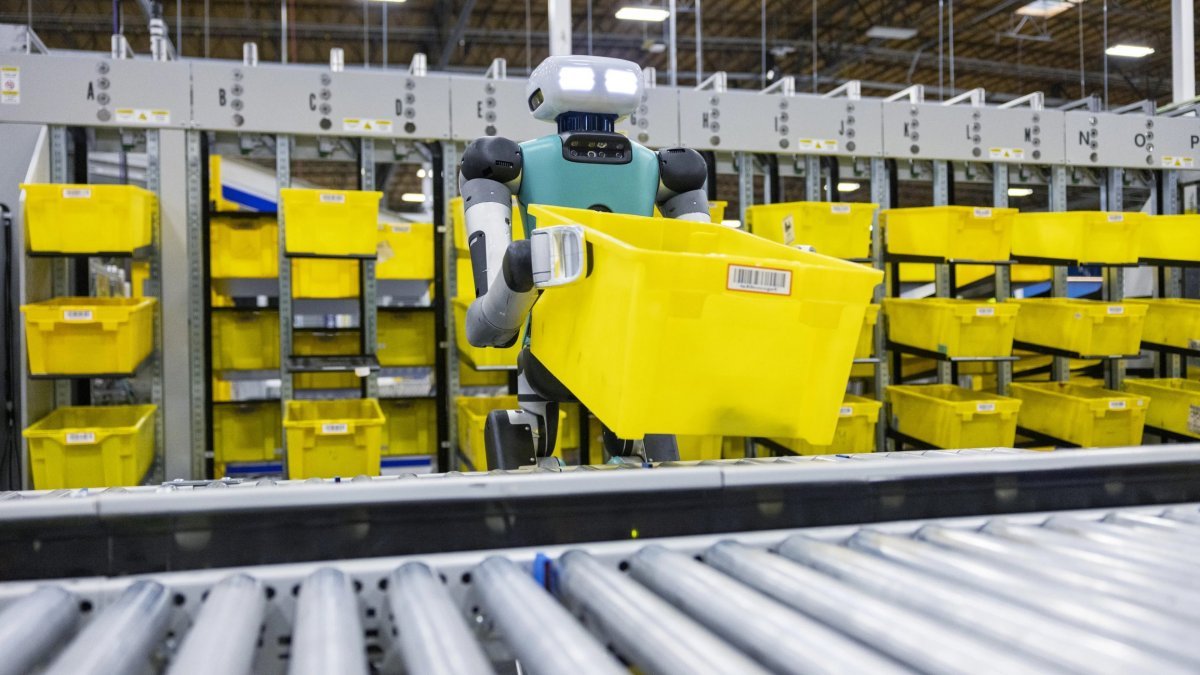
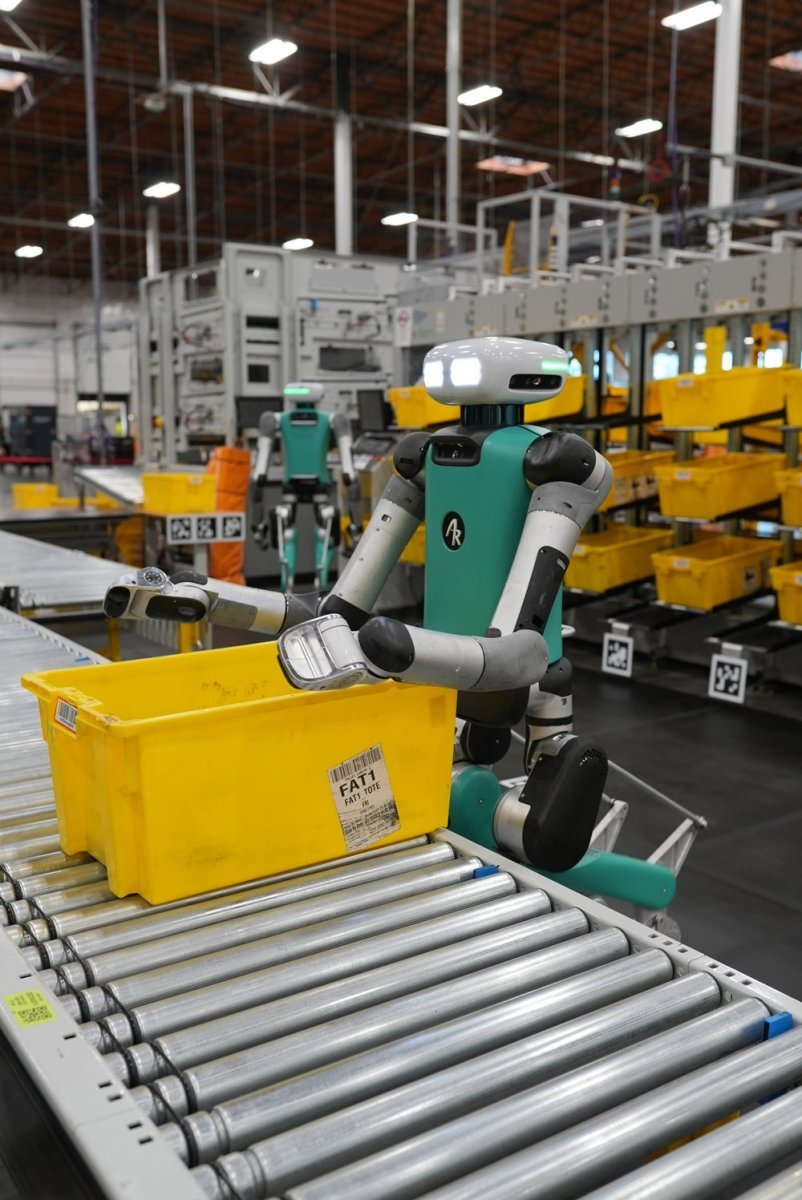
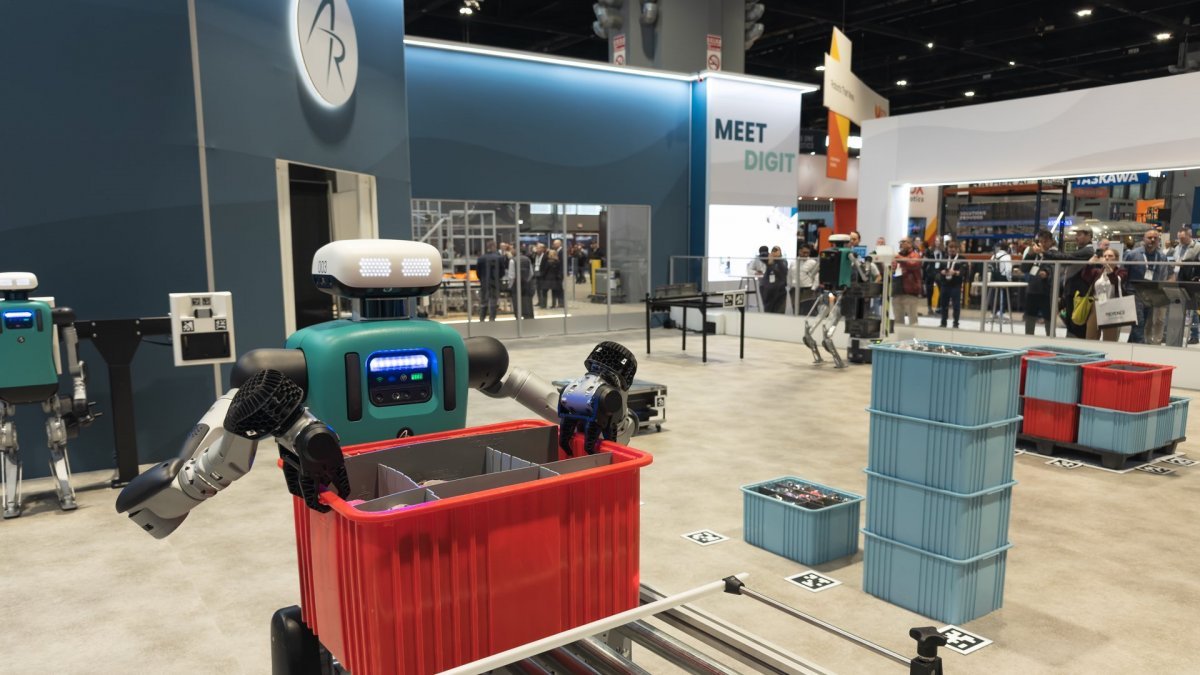
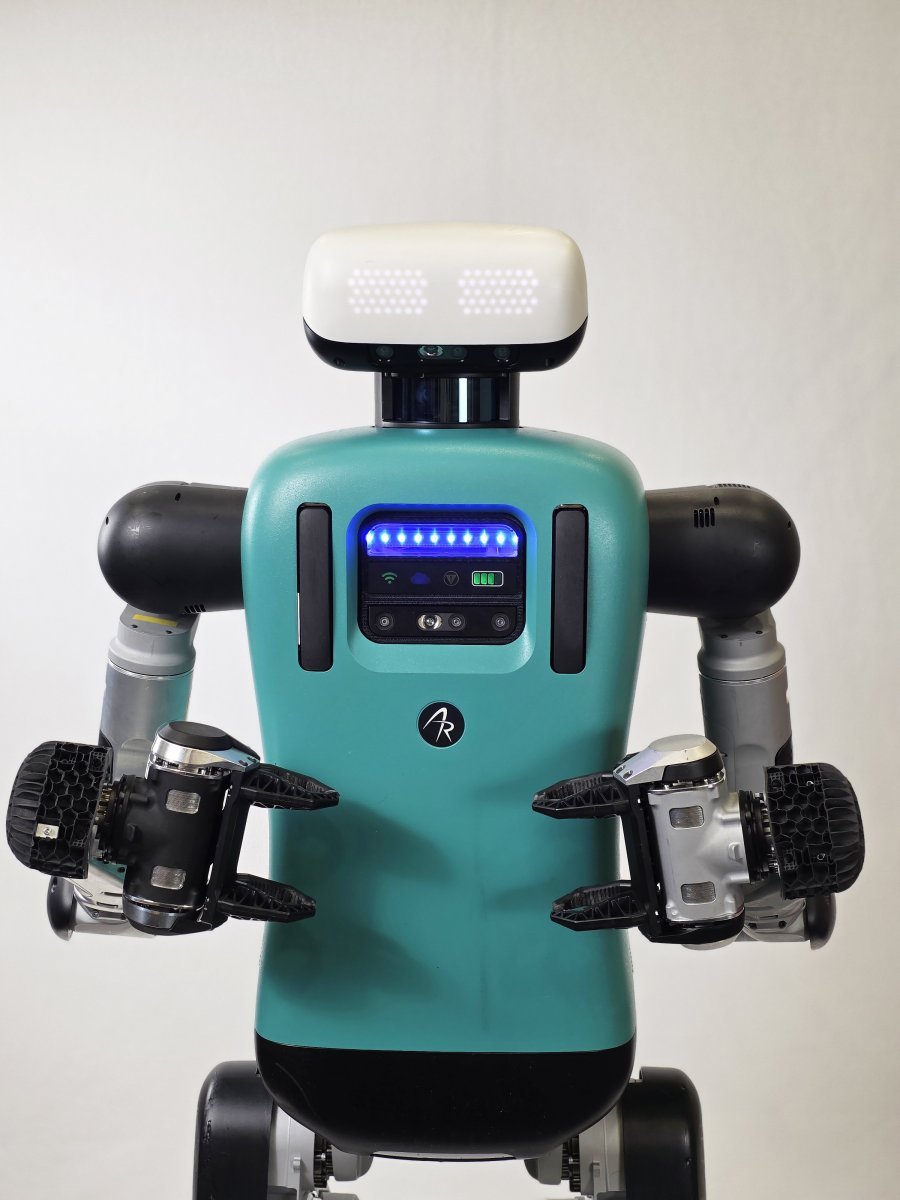
“It gets paid time, it doesn’t complain, and it doesn’t fight with co-workers. It just does the job,” explains Peggy Johnson, CEO of Agility Robotics, describing Digit, her company’s humanoid robot that has walked into a warehouse facility where it works eight hours a day, five days a week.
The robot stands about 1.75 metres tall, weighs 73 kilogrammes, and can lift about 16kg, with plans to increase that capacity to 25k. Digit represents a significant shift from traditional industrial automation because it operates alongside human workers in spaces designed for people, rather than being confined to separate automated zones.
“It augments the human in the loop,” Johnson says. “It’s typically part of someone’s job, augmenting somebody for a few hours a day when they’ve got to move this product, and then they’re doing something else.”
The robot handles what Johnson describes as “repetitive, somewhat dull tasks that generally people don’t like”. This fills a genuine labour gap as there are approximately one million jobs in this space that remain open in the US alone because companies cannot find people to fill these positions.
AI colleagues don’t require physical form to transform workplaces
However, the transformation Johnson describes represents just one facet of how non-human colleagues are reshaping modern workplaces. In many companies, this always-on and reliable employee isn’t a physical robot but instead a digital AI colleague that works through software interfaces and collaborative platforms.
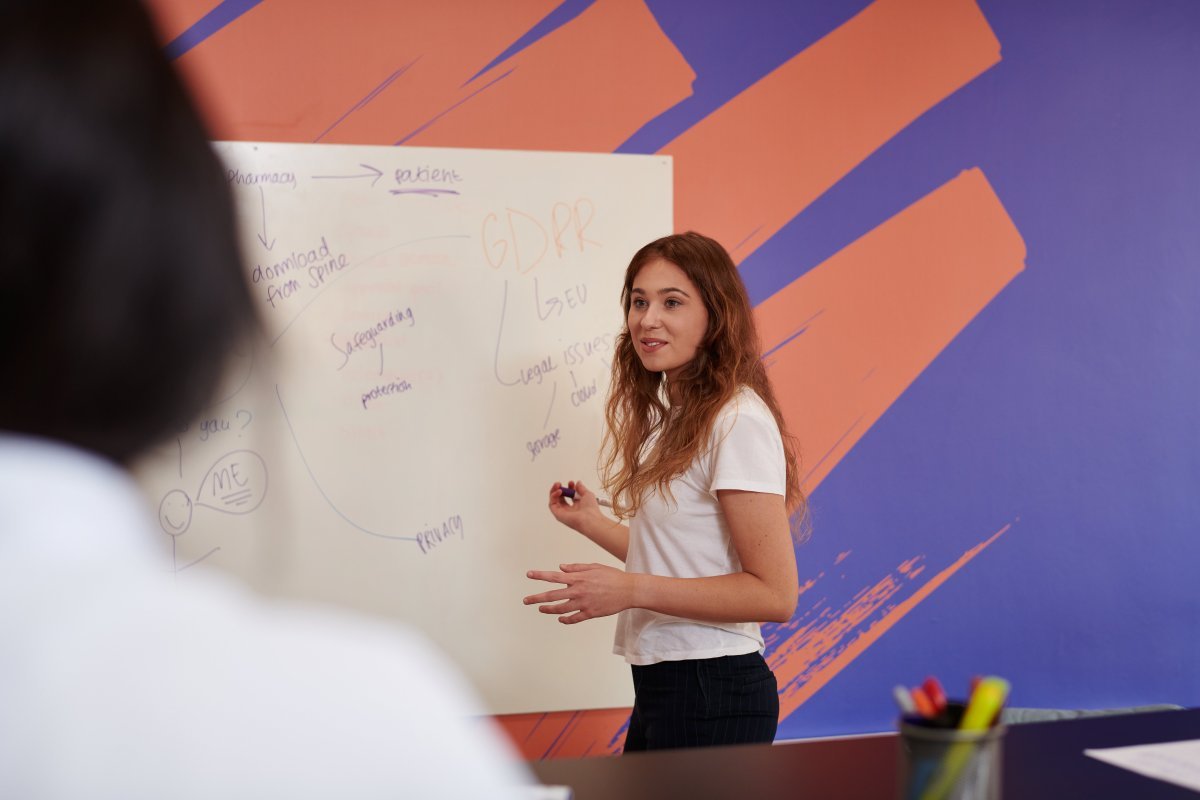
“We’re training everyone from clinicians through to operations managers through to administrative workers,” explains Euan Blair, CEO of Multiverse, a company that upskills and reskills the workforce at scale in technology, data, and AI through applied learning delivered on the job and apprenticeships. “All of them have to be able to use AI and data effectively.”
Multiverse works with more than 1 500 companies, typically enterprise organisations across nearly every sector. What Blair observes represents a fundamental shift in how businesses approach AI adoption and workforce development.
“Skills training has evolved from being an HR and learning and development responsibility to becoming the responsibility of senior leadership,” Blair explains. “The chief executive officer, chief information officer, chief technology officer, chief data officer, and members of the board now see this as essential to business operations.”
The practical results of this shift become apparent when companies commit to genuine AI collaboration training. Blair cites the example of one of the largest public publishing organisations in the world, which bought Microsoft Co-Pilot licenses for the majority of its workforce but found usage and adoption weren’t meeting expectations.
“They put half of their employees with Co-Pilot licenses on a Multiverse [training] programme and half just on the generic Microsoft training,” Blair says. “The group on the Multiverse programme saw three times the usage and a 90% increase in ROI.”
The challenge extends to fundamental workplace dynamics
The integration of AI colleagues creates challenges that extend far beyond technical competence. Johnson emphasises that safety represents the number-one challenge for humanoid robotics, particularly as these systems move beyond protected work environments to operate directly alongside human workers.
“Right now, there are no humanoid robots who are certified to operate outside of a protected area,” Johnson explains. “They’re typically in a factory situation [where] they operate within a work cell so humans are not in the work cell with the robots.”
The breakthrough that companies like Agility Robotics are working toward involves creating robots that can be “cooperatively safe around humans.” This means developing systems that can navigate unpredictable human environments while maintaining safety protocols that protect both human and robotic colleagues.
“All of our customers would like to tell Digit go down to the loading dock and pick up a box and bring it back here,” Johnson says. “But on its way down to the loading dock, it’s going to encounter humans. And as it encounters humans, it has to stay a safe distance away. Should the human do something unexpected, it has to react properly and bring itself down to the ground.”
Organisations struggle with the adoption layer of AI integration
Blair identifies what he calls the “adoption layer” as the crucial missing element in most AI implementations. Despite companies investing billions in AI technologies, many executives still struggle to identify concrete applications within their organisations.
“I speak to 10 to 15 C-level leaders weekly and many still describe AI as a solution looking for a problem within their business,” Blair observes. “Without addressing that adoption gap, AI will continue to feel disconnected from real business value.”
This challenge becomes particularly acute when organisations attempt to scale AI collaboration across diverse workforce populations. The key, according to Blair, lies in training people on the job to use AI tools effectively rather than treating AI adoption as a separate learning exercise.
“Learning has to take place on the job,” Blair emphasises. “I’m not all that interested in learning in and of itself, I care much more about the consequence of learning, so we really focus on training people on the job to be able to do things better, faster, and increase their productive output.”
Indeed, the success of AI-colleague integration often depends on how well companies can reorganise workflows to accommodate both human and AI capabilities. Without this fundamental restructuring, companies may find themselves with expensive AI tools that deliver minimal practical benefit.
The future workplace will require new management approaches
As AI colleagues become more prevalent, workplace dynamics will require entirely new management approaches. The traditional model of human-only teams operating within established hierarchies will need adaptation to accommodate hybrid human-AI collaboration.
Johnson envisions a future where the distinction between human and AI capabilities becomes less relevant than optimising overall team performance. Her robots are designed to human scale precisely because they need to operate in environments built for human workers so that they can navigate the same spaces and reach the same (literal) heights.
The implications extend beyond individual task completion to broader questions about career development, workplace culture, and organisational structure. When AI colleagues can handle routine tasks more efficiently than humans, the human role necessarily shifts toward higher-value activities that require creativity, relationship building, and complex problem solving.
Blair sees this transformation as fundamentally positive, provided organisations approach it strategically. The companies that succeed will be those that view AI not as a replacement for human workers but as a tool for augmenting human capabilities and creating new opportunities for meaningful work.
“Companies have been spending billions on technology for a really long time, and that’s just ratcheted up even more in the AI era,” he says. “But despite this relentless march of tools, we haven’t yet seen a material impact on global productivity, and that’s because the human component and the training component of what you do with the workforce has often been an afterthought.”
Blair believes that the organisations that will thrive in this new environment are those that invest as heavily in preparing their human workforce for AI collaboration as they do in the AI technologies themselves. This requires moving beyond surface-level AI familiarity to deep, practical integration that changes how work gets accomplished at every level of the organisation.
“The key is scale,” he concludes. “When you multiply time savings across an entire organisation, it quickly becomes meaningful. But you must fundamentally change how people work.”
The executive perspective on AI workplace evolution
Brett Taylor’s list of roles is incredibly long: he currently serves as chairman of OpenAI, while his former positions include co-CEO of Salesforce, chairman of Twitter, CTO of Facebook, and co-creator of Google Maps. To that impressive resume, we can add his latest venture: Sierra, a company that builds AI agents for customer-facing roles at major brands.
In this new role, Taylor offers a unique perspective on how AI colleagues are evolving from simple assistants to autonomous workplace partners. His view focuses on the fundamental shift in how organisations will structure work relationships with artificial intelligence.
“If the word ‘site’ was the noun for the web, and the word ‘app’ was the noun for mobile, the word ‘agent’ is the noun for AI,” he explains. “I think of agents as autonomous pieces of software that can actually do a job.”
This evolution represents more than just technological advancement. Taylor sees it as a complete reimagining of workplace relationships, where AI colleagues won’t just assist with tasks but will take complete ownership of specific outcomes and deliverables.
The business implications are profound. Taylor predicts that organisations will move away from paying for software licenses toward paying for results delivered by AI colleagues. “You’re going to pay for the code being written by a coding agent or the contracts reviewed by a legal agent,” he says.
Perhaps most significantly, Taylor believes this transformation will fundamentally alter expectations about workplace interactions. Within the next few years, he predicts that working with AI colleagues will become preferable to working with human colleagues in many contexts.
“In four or five years, you will prefer talking to an AI than a real person,” he says. “You don’t have to wait on hold [with customer service]. It’s multilingual. It’s patient. There’s no pressure to get off the phone. It has perfect access to all the systems to take action on your behalf. All these things are actually something that only AI agents can do.”


Gallery