
I’m sitting in the Labia Theatre in Cape Town, watching Ocean with my family. This meticulous BBC production brilliantly articulates Sir David Attenborough’s latest – and arguably final, at the age of 99 – message on marine conservation.
The film is, as expected, visually spectacular and intellectually engaging, but dark undertones sucker-punch home an emotionally harrowing message. We’re subjected to the duality of jaw-dropping natural beauty juxtaposed with the abject horror of industrial-scale bottom-trawling.
Underwater cameras capture the malevolent destruction caused by the gargantuan nets, with openings large enough to swallow a Boeing 747 jumbo jet. Giant steel spikes hammer into the ocean floor ahead of the dragnet, pulverising everything from coral beds and small marine outcrops to kelp forests and seagrass beds.
Massive iron chains and beams force the 100m-wide mouth of the trawl net down onto the ocean floor, where it drags up tornadoes of silt to release megatons of carbon. Skates, groupers, octopi, sharks, and every imaginable denizen of the deep flee in terror ahead of this orc-like robotic invader, but few manage to escape.
In one fell swoop, Attenborough’s documentary film transforms polar travel from a bucket-list thrill into an urgent call to stand up and help save what is left of the planet’s last wild spaces. “The most important place on Earth is not on land, but at sea”, he says, staring passionately into the camera. This is explicitly true of the polar regions and their oceans.
I’ve always thought of myself as fortunate. Most people in the cinema with us have – and probably never will – get to travel to the polar regions. My career as a journalist and photographer, however, has seen me visit Greenland several times, with a few other 66 degrees North destinations thrown in for good measure.
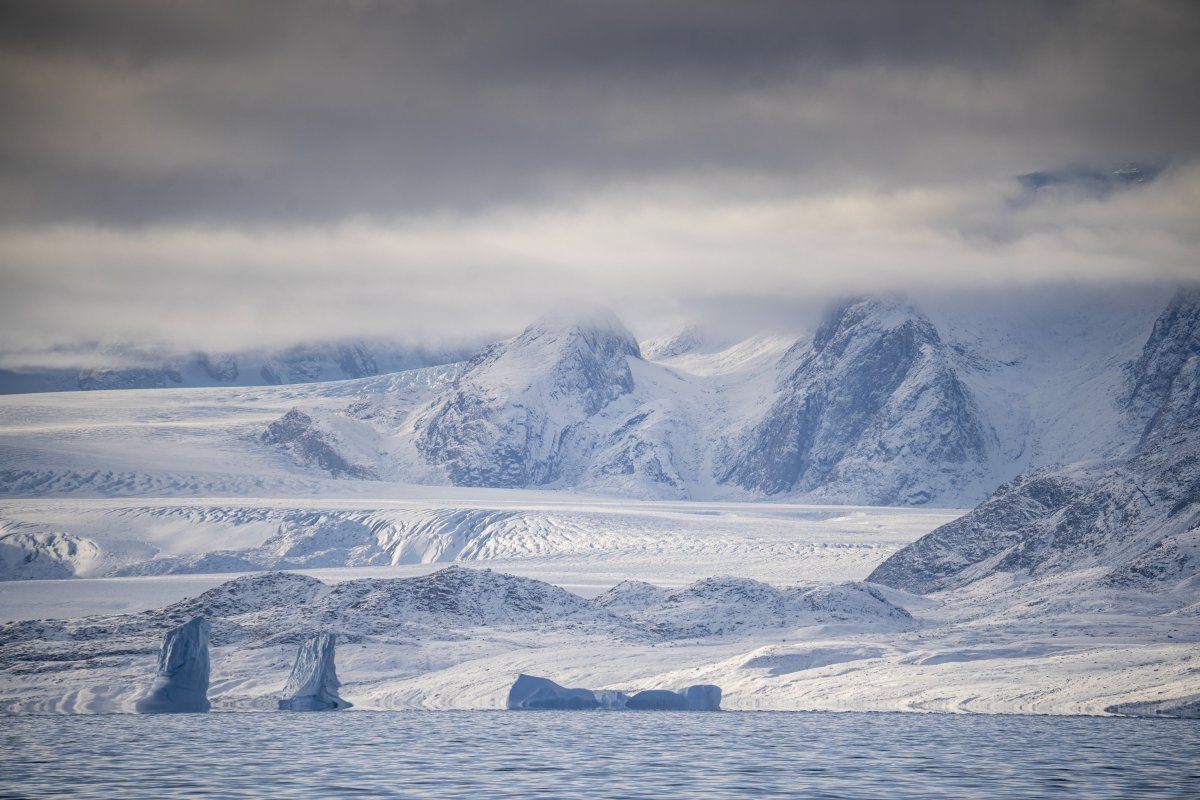
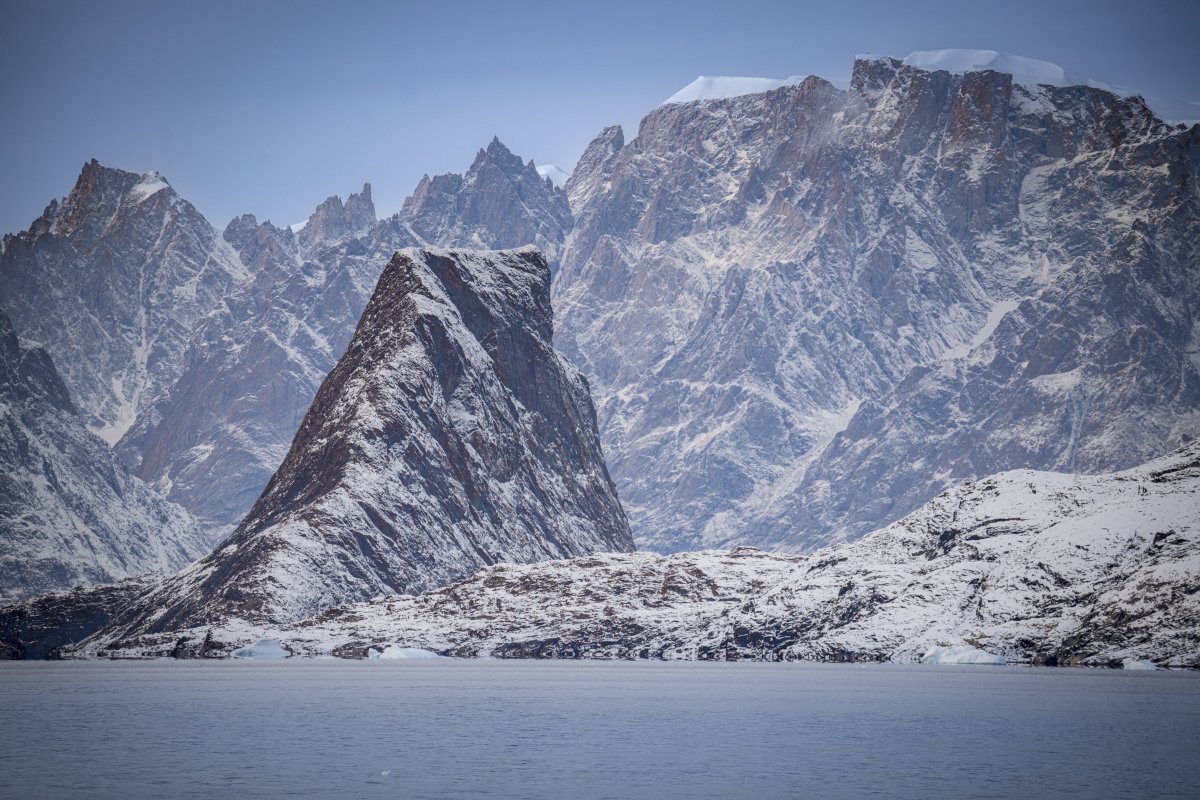
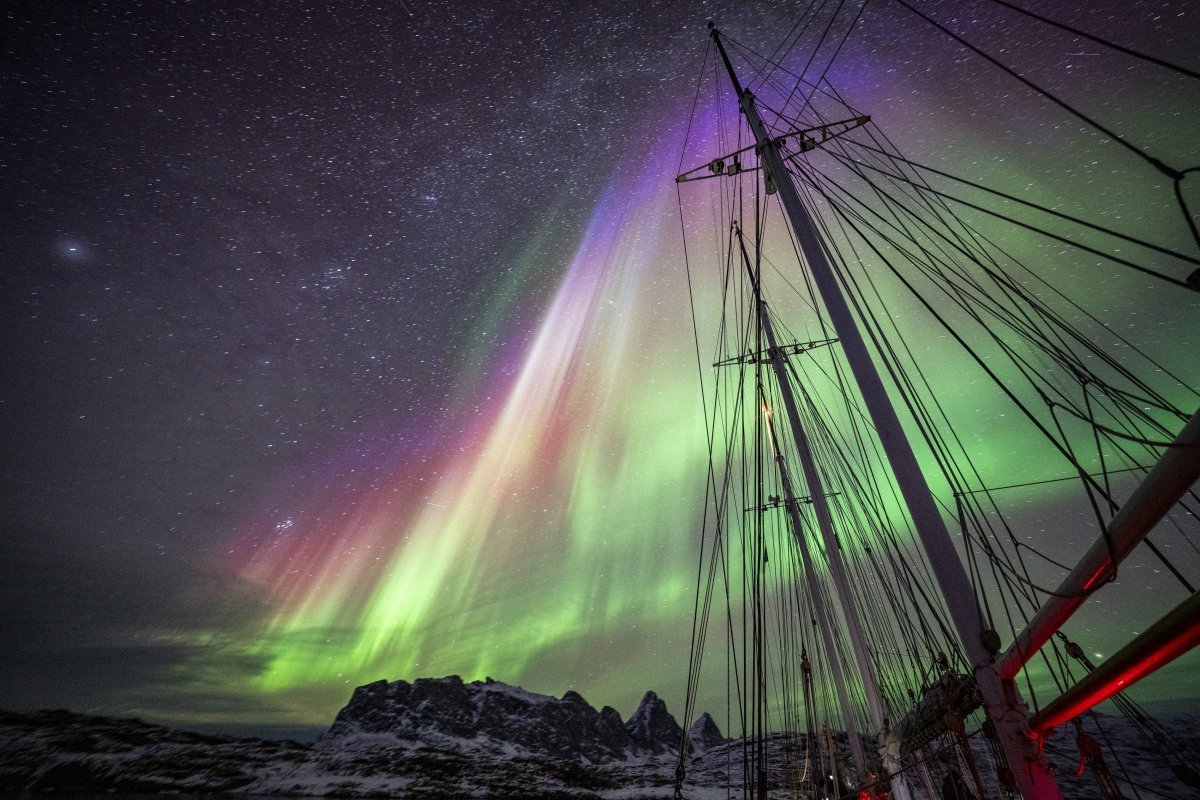
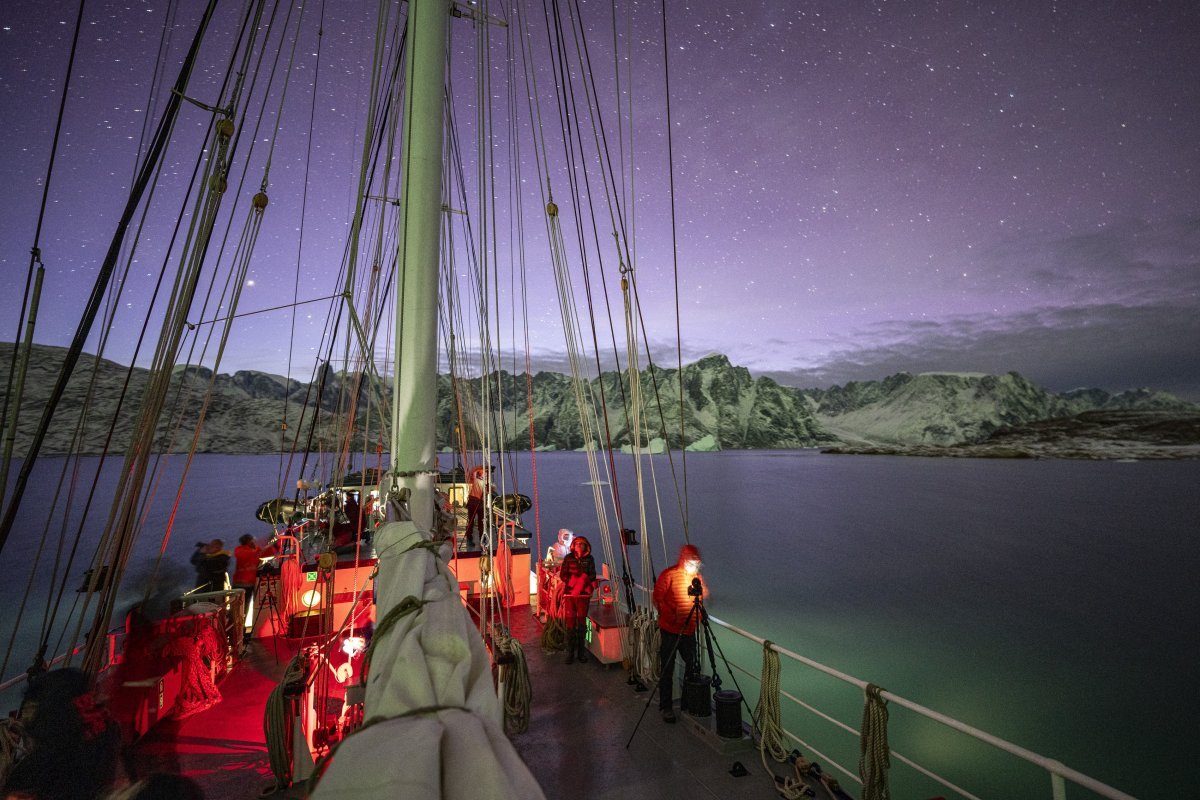
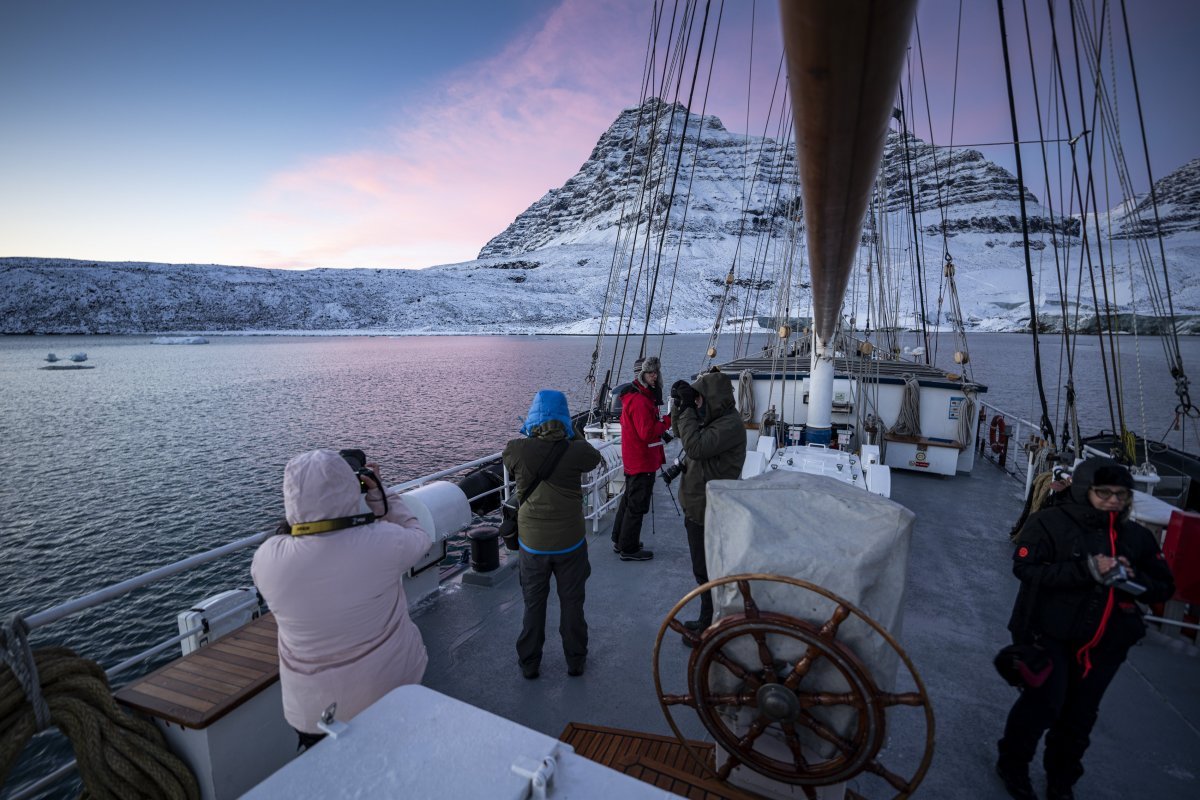
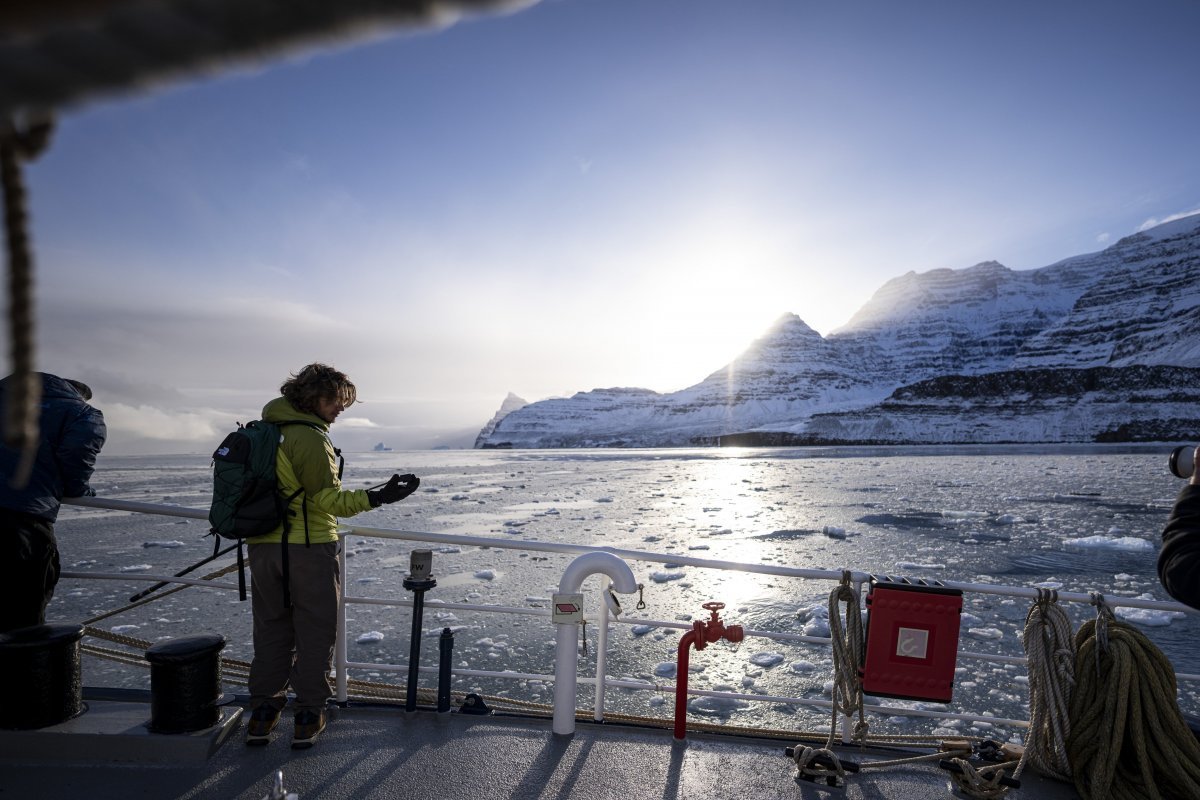
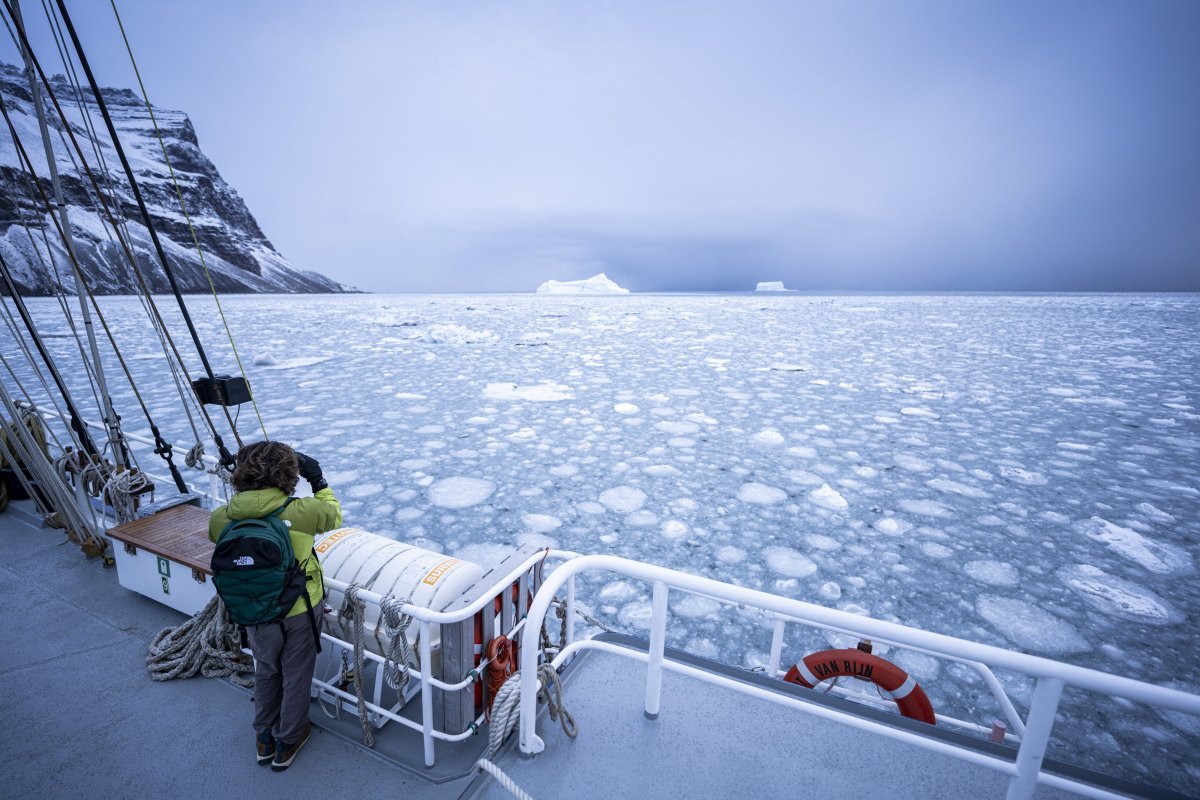
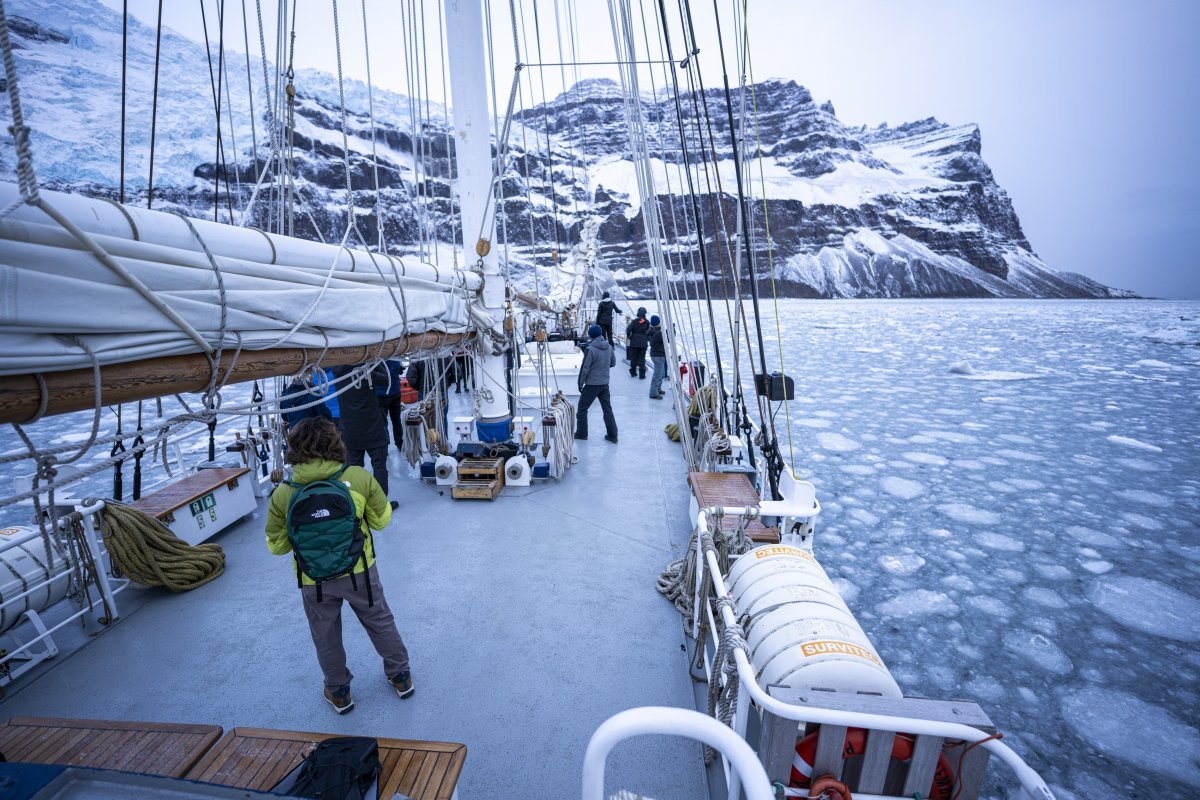
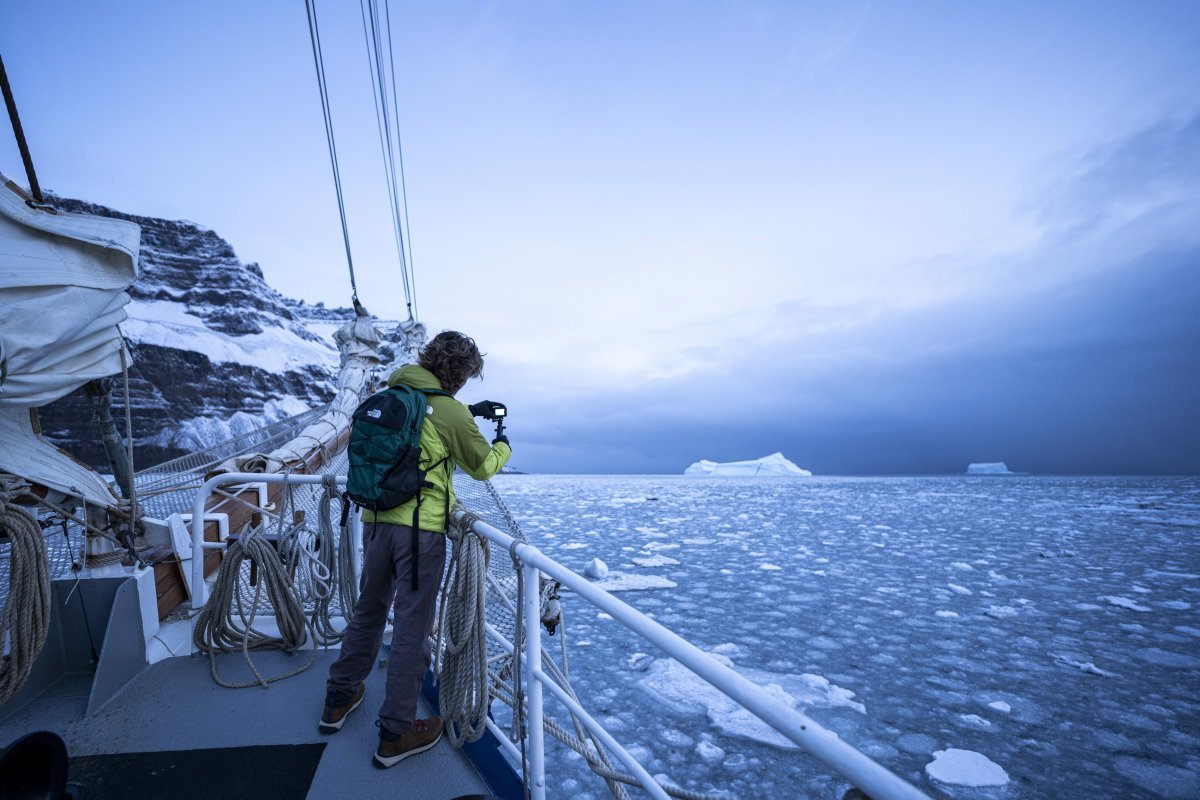
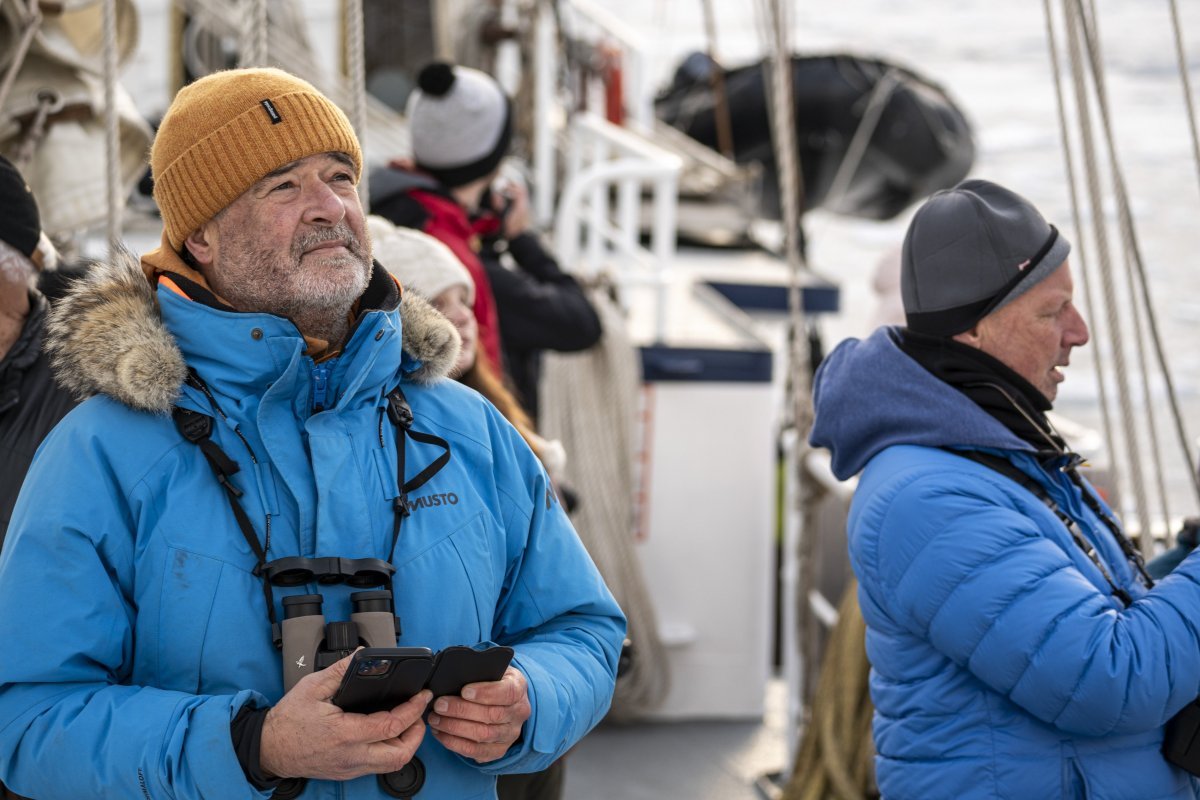
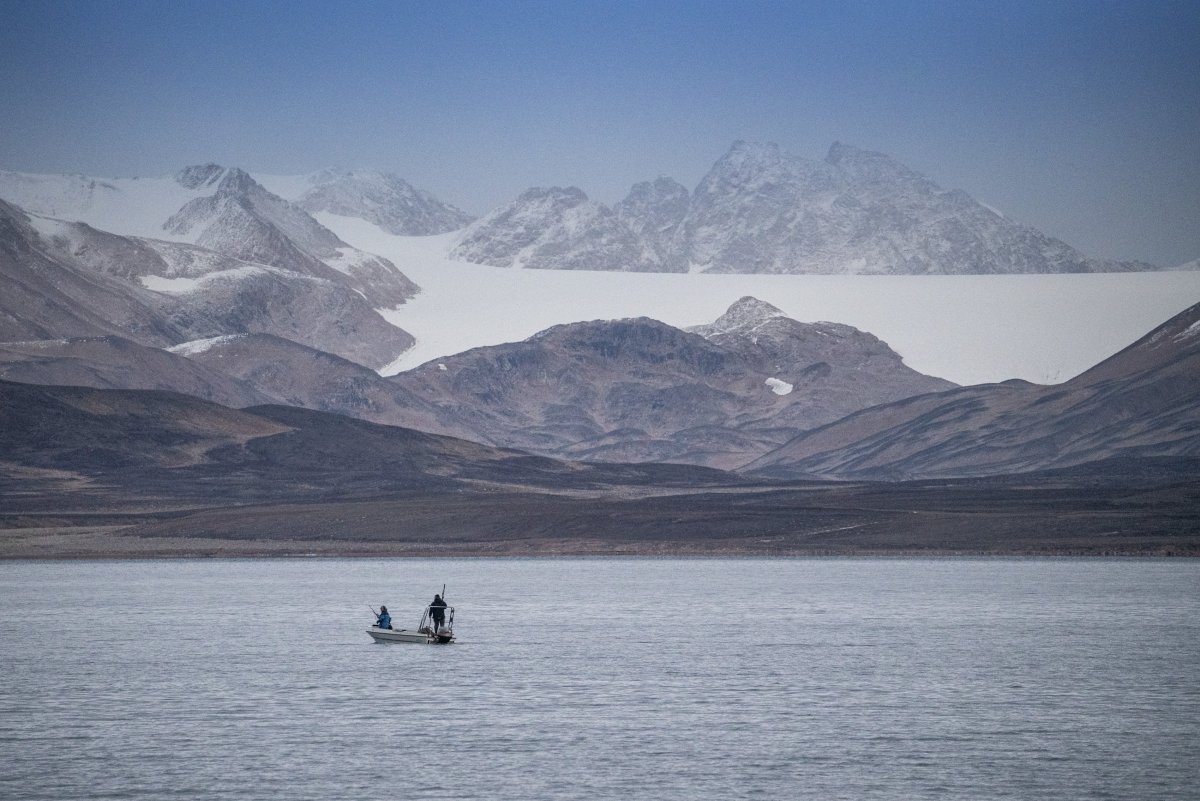
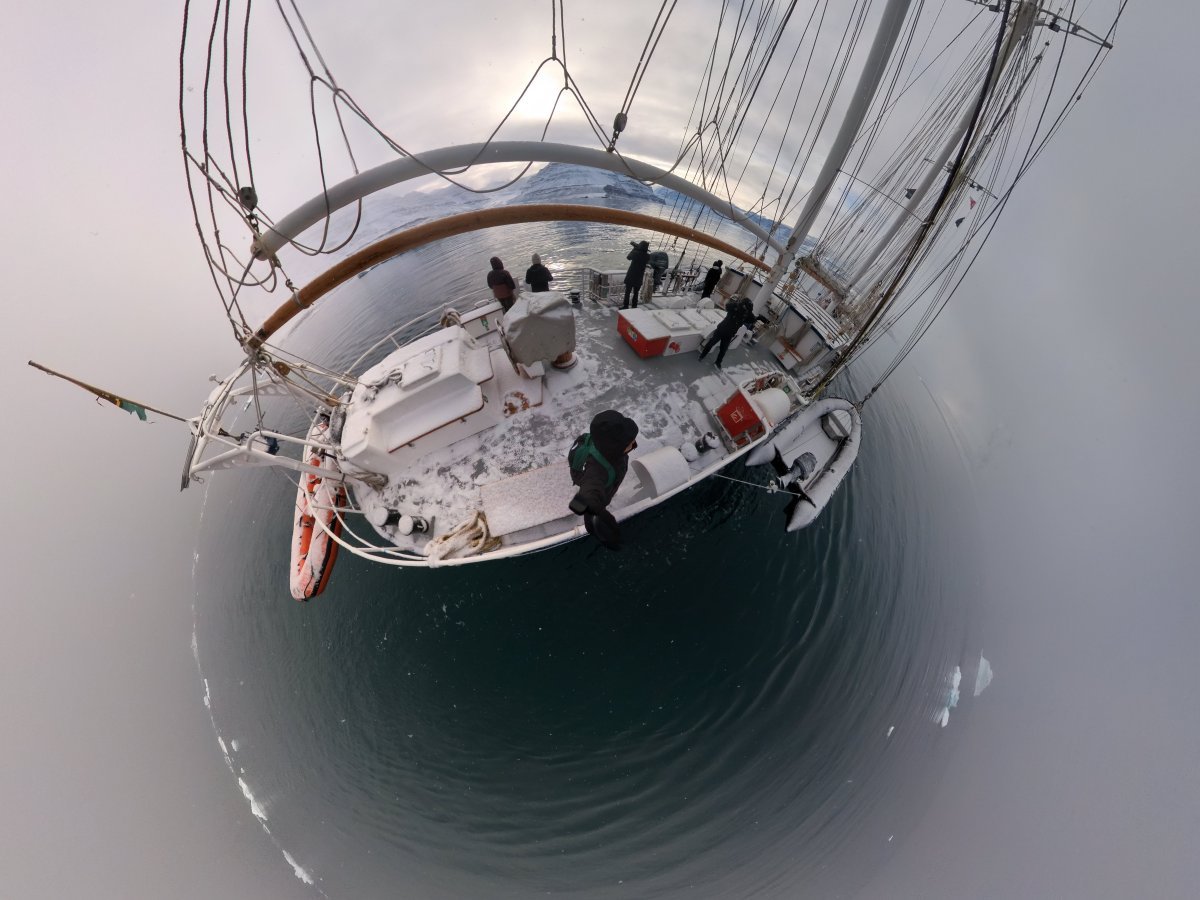
My most recent trip – aboard the 100-year-old schooner, the venerable Rembrandt van Rijn – was in 2024. My son, Robert, and I sailed from Constable Pynt up the utterly remote Scoresby Sund, into a landscape largely untainted by any industrial-scale development. But the times they are a’changing…
Cold fact
A mere seven decades ago, fewer than a thousand adventurous souls had set foot on Antarctica as part of organized tours. Fast-forward to the present, and polar tourism has morphed into a dynamic multibillion-dollar industry, driven by travel operators, cruise lines, expedition outfitters, and even some governments.
Antarctica alone now receives more than 100 000 visitors per year, while the so-called high Arctic region (Svalbard, Greenland and Canadian Arctic) accounts for approximately 250 000 visitors. Add Scandinavia, Iceland, et al to the destinations list, and visitor figures skyrocket to more than 18 million people.
Key contemporary operators in this fluid business space number roughly 200, and offerings range from day trips in Svalbard to multiweek polar expeditions. The prime players focus on premium Antarctic and Arctic voyages. They are niche operators with vessels under 150 berths, while half a dozen mass-market operators dominate bed-nights with larger cruise ships.
Their overall business model balances at that intersection where adventure travel, science and conservation meet. The International Association of Antarctica Tour Operators (IAATO) sets voluntary guidelines for over 140 members companies, while Arctic tourism is governed through national regulators and specialised operators.
Financially, it is a high-stakes game. The polar tourism season is limited to around three months in many of the wilderness regions, and operationally, the logistical costs are astronomical. Authenticity and exclusivity are the key USPs, which means the only workable economic model must balance out low client volumes with premium pricing.
Limiting the numbers of visitors to destinations like Antarctica and Greenland is also a necessity if you want to preserve the integrity of polar regions. The sustainability of these ecosystems should be a primary consideration, and operators leading the pack are the ones committing to reducing their overall impact on the environment.
Minimising impact
Our journey to Greenland last year was with Oceanwide Expeditions while on a shoot to capture its land-based excursions. The company’s corporate philosophy builds on the concept of “Tiny ships. Big impact”, and it is globally respected as one of the original family-owned polar operators.
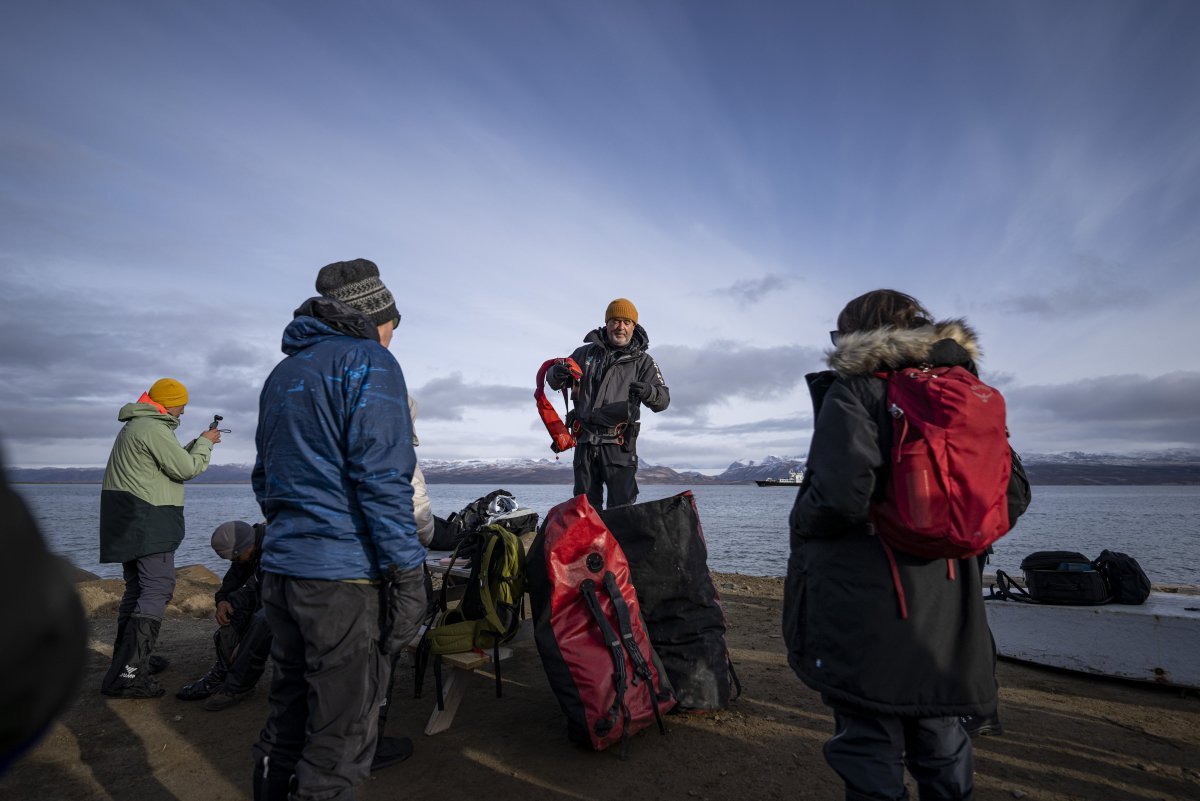
Founded by Ko de Korte in Vlissingen, Holland, in 1993, this multivessel operator was among the first to adopt the IAATO protocol on minimum impact. This includes mandatory shoreline route planning, enforced wildlife buffer zones, and a group size limit of one guide to 12 visitors on shore landings.
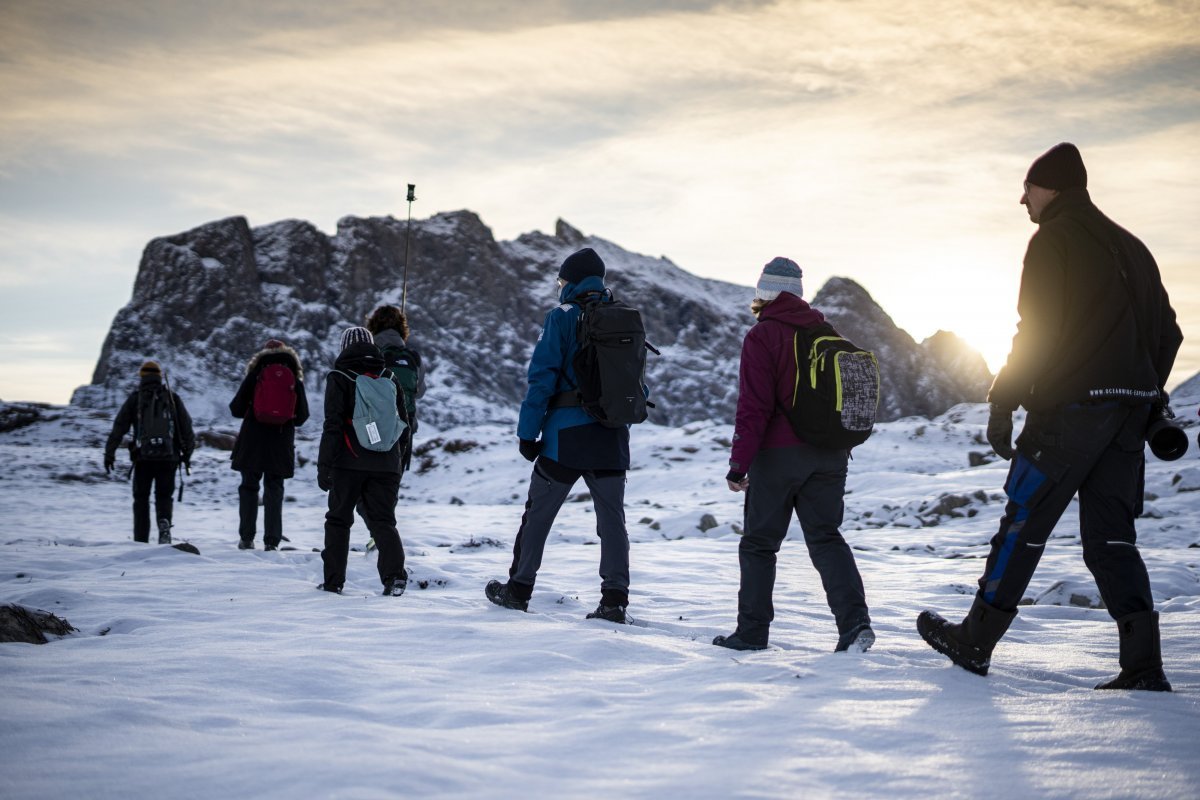
This states that passenger landings require an expedition leader plus assistant to maintain “step-on/step-off” sequencing, thus minimising potential erosion or wildlife harassment. Our guides and expedition leaders enforced this zero-tolerance protocol during our Greenland visit, and applied it rigorously to all land-based activities.
All Oceanwide Expeditions’ polar ships are fitted with portable environmental sensors such as weather stations, turbidity meters, and sea-ice thickness sonar to relay real-time data to collaborative research institutes. In 2023 alone, the company contributed 200GB of polar-data logs for open-access climate studies.
Community collaboration with local guides in Greenland allows indigenous knowledge to drive interpretation, while also sharing $250 000 per season with small-scale Inuit operators. Its “ultra-low waste” policy has also reduced the company’s shore-bound landfill contribution by 95% in just five years.
All its initiatives are subjected to rigorous transparency and third-party audits, and Oceanwide Expeditions publishes an annual Polar Sustainability Report, overseen by Bureau Veritas. These policies are not trivial costs, and amount to roughly $1.8 million – or approximately 5% of its total revenue – every year.
The reason for this commitment to sustainability is clear. In just twenty years, the tourism economy for Antarctic tourism voyages has boomed from zero to more than $400 million in direct passenger revenue per season. Arctic cruises add another $350 million, together supporting 3 500 direct jobs in coastal gateway towns and in on-board staff.
The iceberg in the room
Polar tourism has long carried the cachet of “last chance” allure; “see the melting ice before it disappears!” Mass tourism does, however, come with wide-ranging risks. Wildlife disturbance, trail erosion, alien species introduction, pollutants discharge, greenhouse-gas emissions, diesel-powered vessels ... it is a long list.
Scaling sustainability is never an easy balancing act, and the industry is facing an inevitable paradox: demand is surging, with bookings for this year up by 20% from pre-pandemic levels. Numbers must be balanced in accordance with environmental legislation, though, which in turn is being tightened every year.
Shareholders want sustained growth, but also understand you will have no business if you destroy the fragile ecosystem your customers are paying to experience. Right there is the crux, then, and the motive for re-thinking basic operational procedures.
Existing solutions include creating capacity caps in eco-sensitive landing spots (near penguin rookeries, for example). Zero-emission vessels reduce the per-guest carbon intensity, and on-deck or on-shore conservation projects further enhance carbon-offset targets. Local partnerships, which should directly fund indigenous stewardship programmes, are critical, too.
Perceptive operators and regulators will use sustainability as the golden thread that weaves their business model together. In short, rigorous environmental oversight, far from being an obstacle to growth, can be the industry’s greatest catalyst and should therefore be prioritised as a key selling point.
Leading polar travel operators have already committed to this and are reaping rewards such as enduring brand loyalty and invaluable conservation dividends, all while generating healthy profit margins.
Which brings me back to Sir David Attenborough and Ocean. Just like the viewers in the cinema, travellers to the polar wilderness leave, not just awestruck by immense natural grandeur, but also with an awareness of what the world stands to lose if we destroy the equilibrium of these vast and unspoiled spaces.
Just as every expedition carries a responsibility – to tread lightly; to bear witness; to champion the protection of these last great wildernesses – so do each and every one of us. Firstly, individual choices – from selecting a sustainable operator to refusing single-use plastics – directly bolster marine recovery.
Secondly, collective action matters. Support marine protected areas, lobby against rampant mining exploration and the mass exploitation of krill, and amplify campaigns protecting our oceans and wild places.
In a world where resource grabs from industrial corporations threaten these ice-bound ecosystems at the furthest ends of our planet, Attenborough reminds us that tourism can be so much more than sight-seeing: it can actually be a force for planetary preservation.
How polar travel helps save the world
Conservation contributions
IAATO’s Antarctic members have collectively funded in excess of $15 million in on-site research grants since 2010. An additional $8 million in Arctic community fees (Svalbard’s cruise head tax is one example) every year help fund local conservation and infrastructure, with projects ranging from penguin population monitoring to microplastics surveys.
Marine education and stewardship
Every major cruise vessel now embeds expert naturalists, typically on a 1:20 educator-to-guest ratio. Their responsibility is to lead briefings before shore excursions and to strictly enforce wildlife-related regulations. On-board surveys have shown that 85% of expedition guests report heightened pro-conservation awareness, and 60% engage in follow-up advocacy once back home.
Job creation and socio-economic benefits
Gateway ports such as Longyearbyen and Ushuaia owe much of their high-season employment to polar tourism, mostly in the hotel, ground transport, museum, and guiding industries. The Ushuaia cluster, as an example, generates up to $120 million in tourism-driven GDP to sustain 1 200 jobs annually.
Green technology investments
Technology used in the new wave of polar class vessels fast-tracks concepts such as exhaust-scrubbing, battery-hybrid propulsion, and biodiesel trials. These advances are applied to wider marine fleets, and reduce cruise-vessel SOx (sulphur oxide) and CO2 emissions by up to 25% compared to old ships. Three newly built zero discharge expedition yachts will debut next season, setting the green credentials bar even higher.


Gallery