
While they have truly established South Africa as an emerging endurance sports destination, when compared to Europe and the US, the local market is still in its infancy.
What does it take to create and operate a world class event that attracts sustainable numbers of both elite and amateur athletes? And how can race directors operate profitable races while protecting the natural environments where they are held?
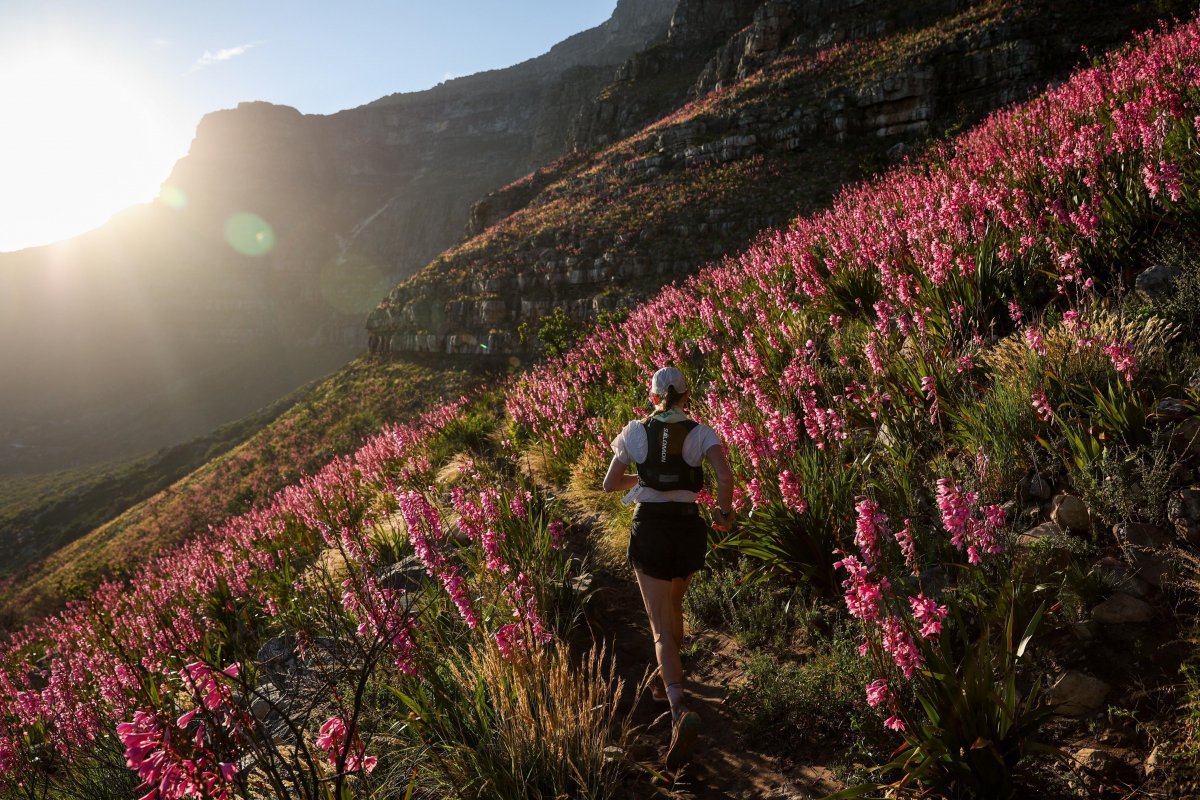
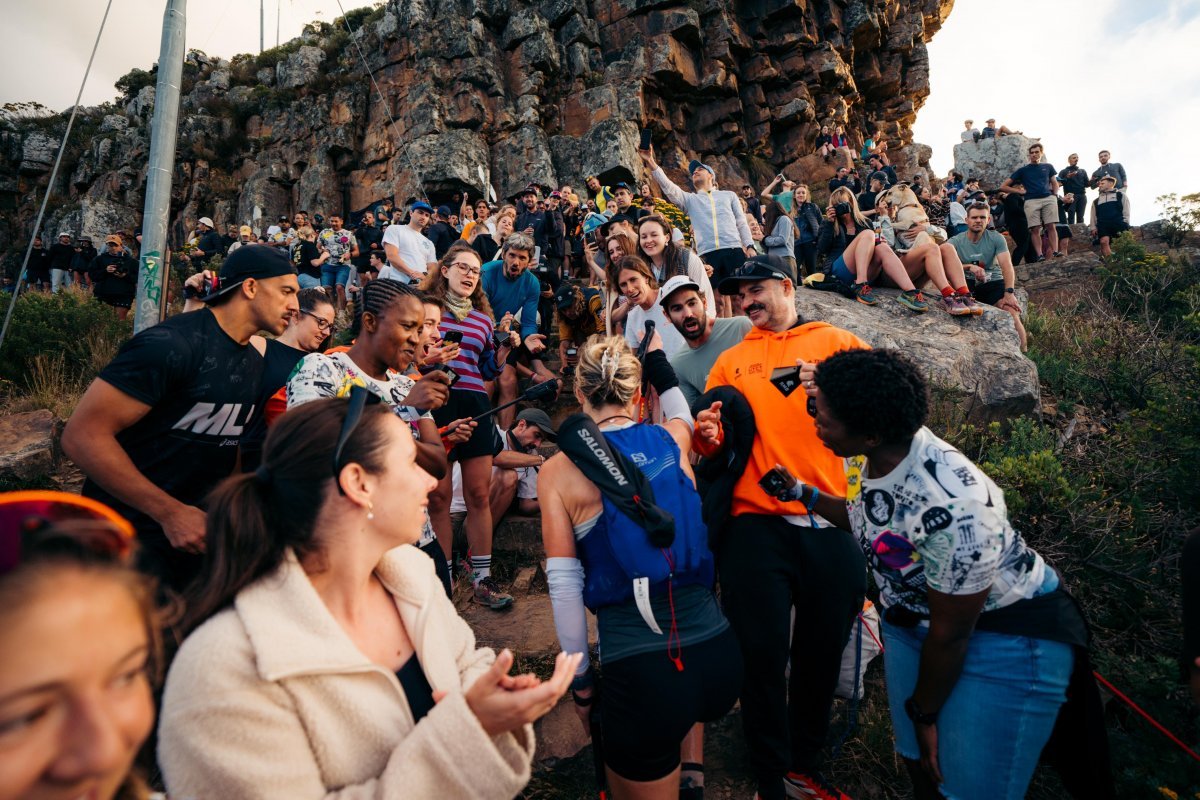
Each November, Table Mountain comes alive with the sound of cow bells. While you may be forgiven for thinking you are lost in a flower-strewn alpine meadow, it is actually the sound of thousands of trail running enthusiasts and supporters who congregate for the RMB Ultra Trail Cape Town (UTCT), a week-long festival of trail held at the beginning of the Southern Hemisphere’s summer.
From a race that started in 2014 with 360 runners across three events, UTCT has grown to 2 800 runners participating in six races including a 100-mile loop around the Cape Peninsula, attracting athletes from around the world and putting South African trail running on the map.
Race director Stuart McConnachie said he and founder Nic Borman “loved the idea of a South African race on local soil for the global trail community”.
The true hero of this event, he adds, is the local community. “They have taken RMB UTCT to heart and represented it at every level.”
Endurance as the new escape
According to a recent BBC article, endurance-based holidays “where the goal isn’t relaxation but transformation,” are gaining in popularity, as more travellers opt to push their limits.
The World Economic Forum recently reported in its publication Travel & Tourism at a Turning Point that “sports tourism is one of the fastest-growing sectors in the global travel economy.”
Valued at $609 billion in 2023, the sector is forecast to grow at a compound annual growth rate of 16%, reaching more than $1.7 trillion in less than a decade.
The online coverage of events provided by social media and digital content platforms are cited as key accelerators of the sector, as is participation by amateur athletes.
Driven by the need for community, run club participation is surging across the world, as is active travel. “Running vacations (runcations) are merging movement, connection, and exploration, with travellers trading sightseeing for trail runs and races,” according to US wellness publication Fitt Insider.
A global phenomenon
The UTMB World Series, a global circuit of mountain ultramarathons founded in 2003, now hosts 200 000 runners across 50 events on five continents every year.
The event culminates in the Ultra Trail Mont Blanc World Series Finals, held annually in Chamonix every August. Nestled in the shadow of Mont Blanc, the Alpine town exudes an electric atmosphere in a sporting event that is a unique combination of Burning Man and the Superbowl Final. More than 10 000 participants descend on the town, filling it with the elite of global trail running and their crews, outdoor enthusiasts and spectators participating in brand activations, product launches, film screenings, and group runs.
UTMB is owned by the Ironman Group, the mass participation sports event behemoth that operates a global portfolio of events including the Ironman Triathlon series and other multisport races. Its first event was held in 1978, and the company was acquired for $730 million in 2020 by family-owned group Advance, which also owns media conglomerate Condée Nast.
In 2016, Ironman announced its move into mountain biking with the purchase of South Africa’s premium mountain biking race, the Absa Cape Epic, often considered the toughest mountain bike stage race in the world. Founded in 2004 by South African Kevin Vermaak, the Epic attracts some of the world’s best mountain bike racers and hosts 600 two-person teams, each paying an entry fee of R157 000.
Big money
The involvement of major corporate sponsors in endurance sports has signified an important shift, allowing for bigger and more elaborate events.
Absa came on board as the title sponsor of the Epic in 2006. While the first few editions of the race were held in a point-to-point format from Knysna to Stellenbosch, it is now hosted in the Cape Winelands. The race is a logistical challenge of monumental proportions, with race villages, portable showers, tents, and facilities for all race teams and their crews at each stop.
RMB UTCT is now in its 11th year. The race has been sponsored by RMB for three years, an agreement that was recently renewed for another three.
“RMB saw an opportunity in trail running. It is a strategic partnership, and not just a sponsorship for the sake of it,” McConnachie says.
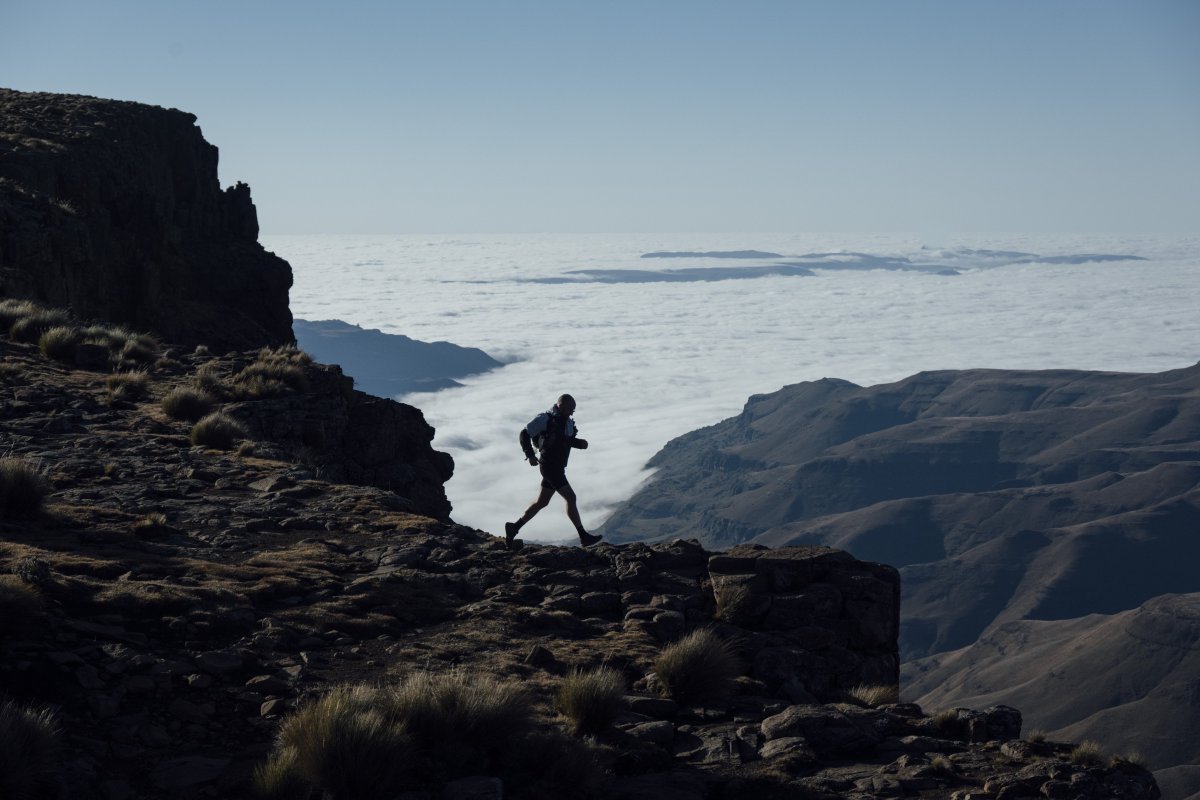
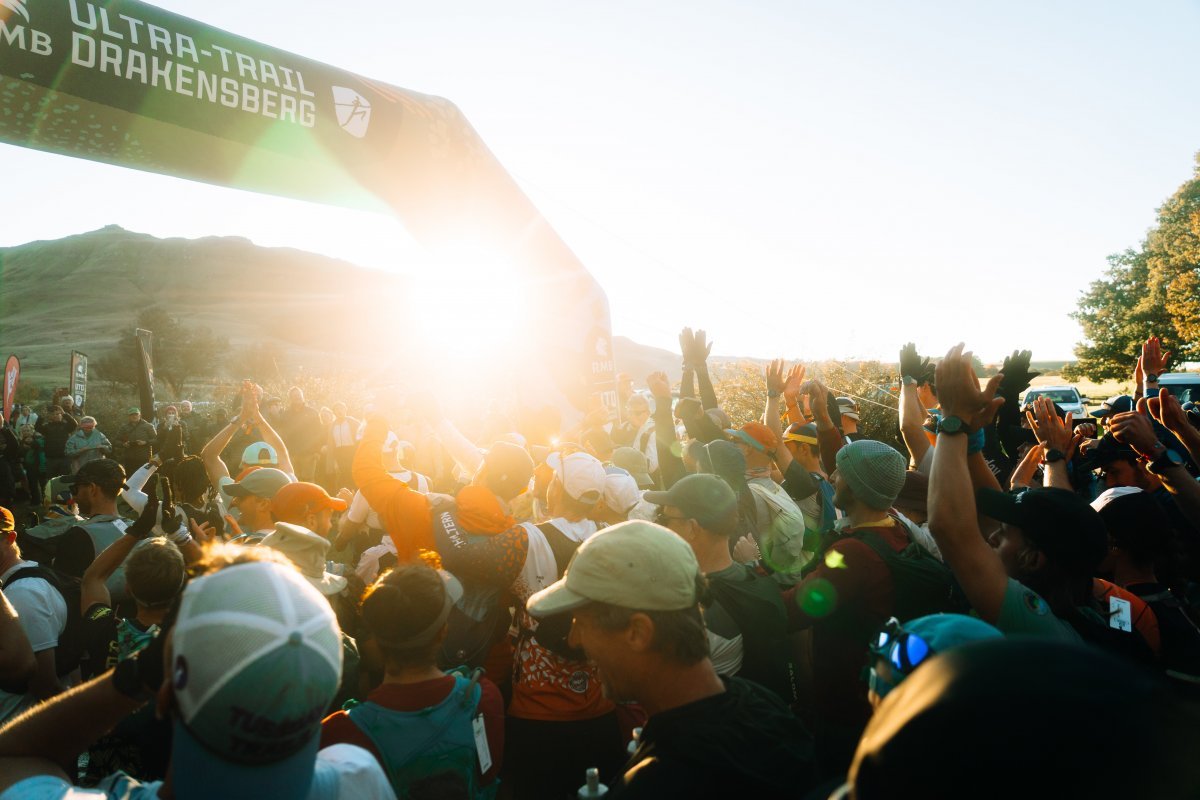
The bank is also the headline sponsor of the RMB Ultra Trail Drakensberg, held every year in the Maloti Drakensberg World Heritage Site. Spurgeon Flemington, founder of UTD, Sani Stagger, The Giant’s Cup, and the Sani Pass Time Trial, says: “Corporate sponsors are key in staging truly world-class events, but it is critical that the expectations and vision of the event and the sponsor are aligned.”
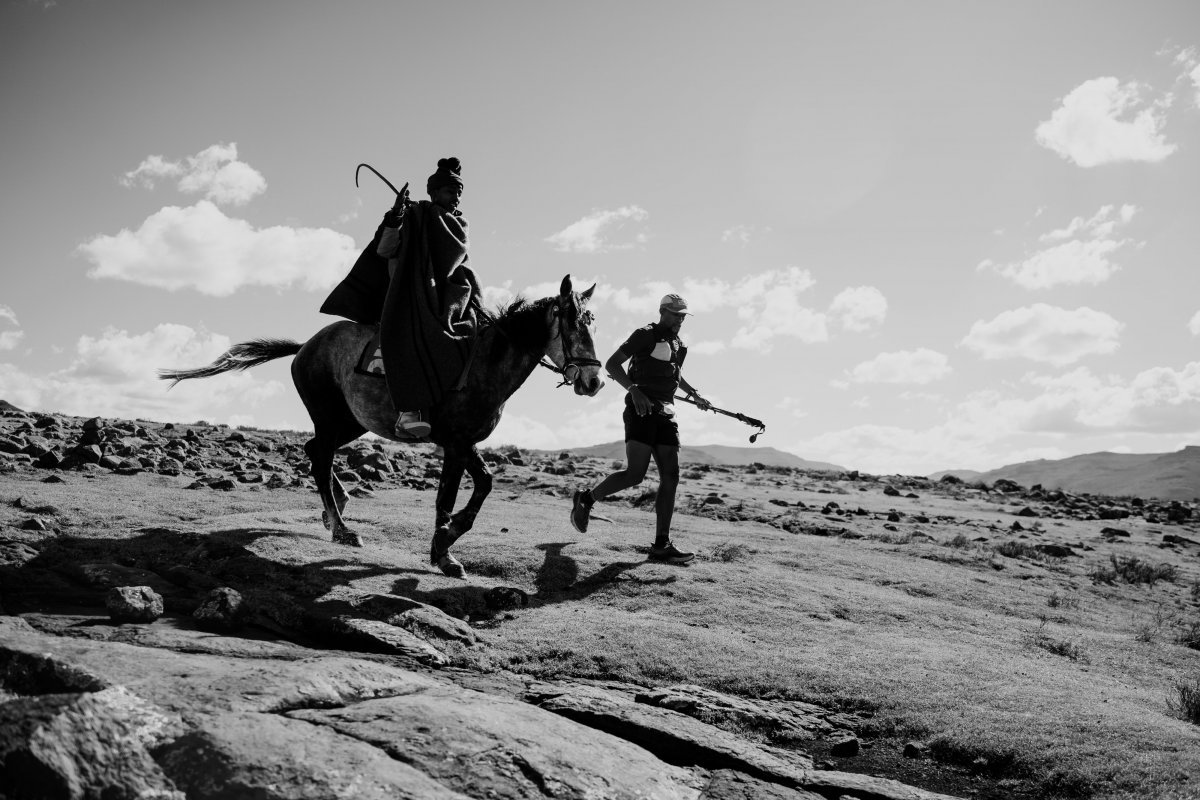
“We have been very fortunate to have sponsors who are in it for the long haul,” Mike de Haast, founder of Pure Adventures, operators of the K-Way SkyRun, says. The event traverses the remote Witteberg Mountain Range near Lady Grey in the Drakensberg district of the Eastern Cape.
“Managing a profitable event is extremely difficult. It’s all about the numbers. You need scale to entice sponsors and put on a better event,” he adds.
While sports equipment brand Salomon was headline sponsor of SkyRun for 12 years, outdoor apparel brand K-Way has been on board for the past eight. The sport of trail running is gaining increased interest from corporate sponsors, De Haast adds. “We are seeing a change. It’s good for the sport.”
Organising an event that is both successful and profitable requires a fine balance, Flemington says. “One can run a successful event in the eyes of the participants but if it’s not financially justifiable, it simply won’t last.”
Profitability takes time, so a long-term vision is vital.
Flemington says his vision is to provide a “transformative experience for the athletes, irrespective of their personal ambitions and abilities”.
“It is non-negotiable that the winner, the final finisher and everyone in between are valued equally and have the same quality experience. A successful event must prioritise the experience of the athletes. You must never fall into the trap of treating your athletes like a product.”
Sustainable growth
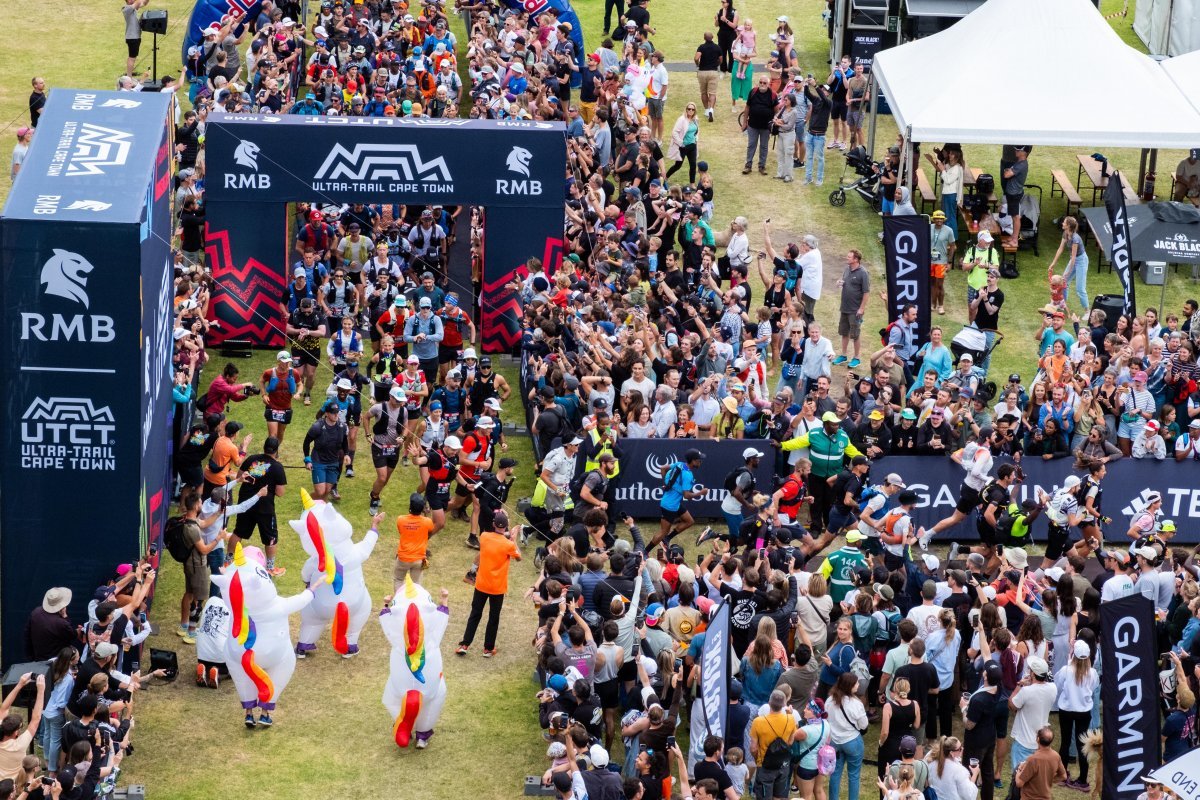
The clanging of cow bells, cheering supporters and even the odd dancing unicorn meets runners as they come into the UTCT aid station at the University of Cape Town, before beginning the final climb of the race to the King’s Block House, around the Devil’s Peak contour path, and then descending to the finish line where the UTCT race village is in full party mode at the Gardens Tech Rugby Club.
UTCT has become an integral part of the local trail running community, relying on 650 volunteers, some of whom work through the night, to make it a success.
McConnachie explains the organisers have attempted to keep the entry fees affordable. These range from R950 for the 16km race to R6 195 for the Miler (160km). R140 of each entrant’s race fee goes to SANParks for conservation efforts. “We still want the average person to be able to enter the race, and having the right partners means we are able to grow the event,” he explains.
However, McConnachie says he does feel there is a limit to how big the event can, and should, grow.
“I’ve seen races get too big and lose the personal touch.”
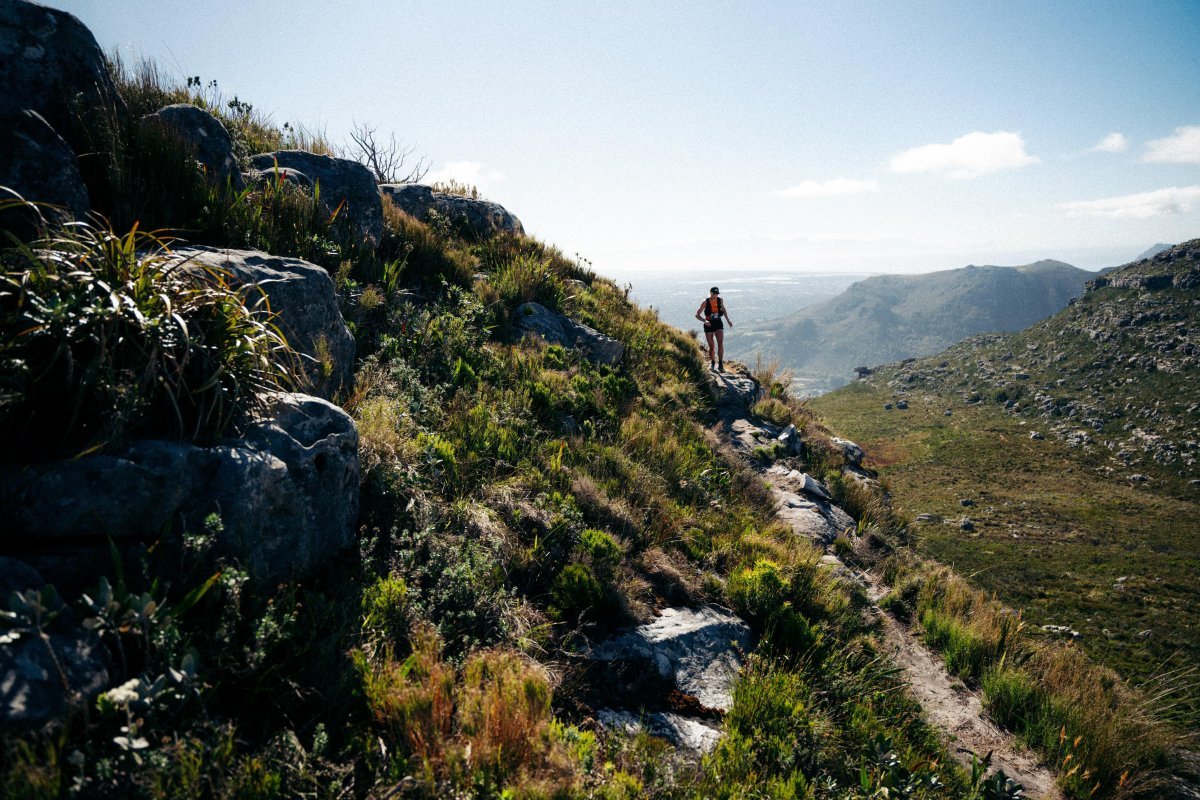
He says it would be possible to add another race to the line-up, but they have chosen not to. “Table Mountain doesn’t have a capacity,” he explains. “The trails are narrow and quite rocky, and there is a limit to how many runners you can put on the mountain. At present there are 500 runners per race, which is enough as far as I’m concerned. Any more would make it a bun fight.”
Instead, “the dream is for there to be more support, more spectators online and for the event’s footprint to grow, while ensuring that the experience for the runner doesn’t change”.
Commitment to the environment
Because of the remote mountain locations where the sport takes place, trail running is committed to protecting and preserving the pristine and often remote locations where the races are held. Maintaining a good relationship between events, race organisers, and the conservation authorities is vital, as without their support the races wouldn’t be able to exist.
“UTCT is part of a broader ecosystem,” McConnachie explains. “We identified partners early on who were able to help us achieve our goals to fix and maintain the mountain and its biodiversity.”
Engagement with the community, who can see the value of the sport and why it is unique, is ongoing. “It is more than a running race. It is about supporting the environment, supporting friends and the broader systems.”
This collective effort involves working with partners from SANParks, Table Mountain National Park, the City of Cape Town, Friends of Table Mountain, the Sugarbird Project, Sustainable Ceder, as well as the International Trail Running Association Green Programme.
Friends of Table Mountain work tirelessly all year long, upgrading and maintaining the trails on Table Mountain, a unique urban national park.
The Sugarbird Project’s mission is to protect and preserve the unique biodiversity of the Cape Floral Kingdom and its fynbos. To achieve this, they remove invasive alien plant species that threaten the fynbos and the delicate ecosystem.
The ITRA’s Green Programme seeks to encourage the trail running community to join forces and work together to reduce the environmental impact of the sport.


Gallery