When we think of universal human rights, the concept of “universal” is harder to grasp than it seems. The Universal Declaration of Human Rights, proclaimed in 1948 when most of the world was still colonised, was based primarily on Western ideas and priorities. It assumed a single form of political economy and, in doing so, blurred the diverse social world and its many forms of discrimination.
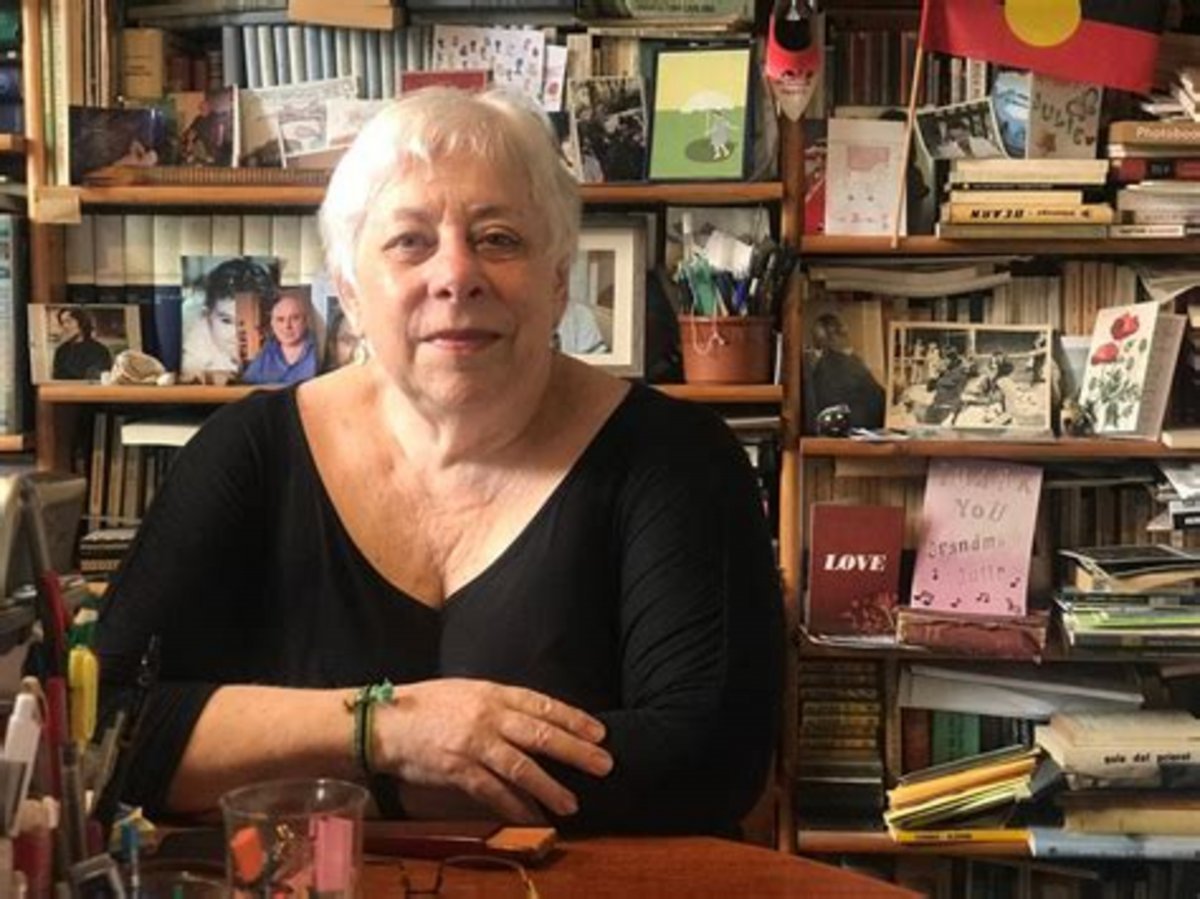
“In 1948 when it was promulgated, the United Nations had only 51 members, by comparison with 193 members today,” says Julie Wark, who is a translator and human rights activist, and author of The Human Rights Manifesto. “The declaration was a document based on Western ideas and priorities and Western dominance. It was acting as if there was only one form of political economy in the world.”
The disparity is too great
In theory, the protection of human rights is a universal concern. But in practice, the disparity of standards, systems, rules, and norms is too great to make international guarantees possible, although Wark believes a universal basic income (UBI) is an instrument that could make things possible by taxing the rich.
“In a real state-centred view of human rights, states and blocs in the capitalist world behave differently when protecting their own interests,” she says. “But individuals universally understand, in their own lives, in their own flesh, in their own experience, the three basic principles of human rights: freedom, justice, and dignity. They usually understand these in their absence.”
For the vast majority of the world, Wark argues, none of these principles are possible without the basic right of material existence being guaranteed. This is where minorities enter the picture, but not necessarily in the way we might think.
Redefining minorities
Wark challenges the common social science definition of minorities as culturally, ethnically, or racially different groups that co-exist with and are subordinate to a dominant group. She argues that minority status doesn’t necessarily correlate with population size.
“What makes one group a rich minority makes the other groups subordinate minorities,” she explains. “For example, there are about 3 300 billionaires in the world today. Elon Musk’s estimated $425 billion fortune [at the time of writing in early 2025] is more than the GDP of Denmark.”
Musk’s wealth comes at the cost of destroying the habitats and lives of another minority – the indigenous people of Halmahera island in Indonesia, where nickel for electric vehicles is mined. These ventures, Wark argues, are leading to the climate catastrophe that is the result of “ecocide on a global scale”, which had its early impetus in the history of Western capitalism and imperialism.
Indigenous people hold the key
It’s estimated that about 5% of the world’s population – broadly, indigenous people – care for 85% of its biodiversity. While these figures are disputed, Wark says it’s the quality of the question that matters, not the numbers.
“Indigenous communities that have done the least damage in terms of the climate catastrophe and know more than anybody else how to conserve the essential biomes are actually bearing the brunt of so-called solutions like carbon offsetting, biofuels, and electric vehicles,” she says.
In West Papua, where Wark has worked most on human rights, a real genocide is happening as the Indonesian government takes three million hectares of rainforest (the size of Belgium) for palm oil plantations in a supposedly sustainable solution.
“You can imagine how many people get displaced and their lives destroyed or ended by these policies,” she says. “But the ripples of damage go both ways. They go out from the metropolitan centres of power, and then they come boomeranging back from small, embattled tribal communities in vanishing biomes. We’re seeing it in the forms of wildfires, ice storms, and flash floods in all around the world.”
The problem with technological solutions
The West’s response to this threatening reality has been technological rather than social, which creates even more separation between humans and the rest of nature. Ironically, this approach clings to the idea of human exceptionalism while denying what human nature really is.
“The climate crisis is treated as something separate from the lives of termites and beetles and bees,” Wark says. “But every species that disappears has a chain effect, and that chain is tightening around human necks. The only instrument I know that tries to address the universal human right of material existence is basic income.”
However, among most UBI thinkers, the issue of indigenous rights is ignored. Wark believes there are two key considerations: 1) reparations for the damage done to their habitats and genocidal actions over centuries, and 2) how best to support their desire to live communally, not necessarily in the cash economy.
Basic income in kind
Indeed, many indigenous peoples, like those in the Amazon, have no concept of numbers, surplus, or savings. If they want to catch a fish, they catch one fish, not ten. About 200 groups around the world also prefer voluntary isolation.
“Should they be brought into the cash economy?” Wark asks. “No, because they don’t know about cash. They don’t care about cash. They have their own ideas about human rights and their own means of material existence. These means have to be protected if we’re going to talk about universal human rights, but not governed by outsiders.”
In this sense, indigenous peoples’ UBI should guarantee their means of existence, but not necessarily through cash allocation. Their subsistence economies don’t produce a surplus but instead reject absolute control over nature in favour of living with the environment in accordance with society’s needs.
“It’s not about technical inferiority,” Wark explains. “It’s not wasteful like the Western economy. You walk into any supermarket and you see how wasteful our economy is in every way. So why would indigenous people work long hours if three or four hours meet all their needs?”
This ethos, she argues, defines most indigenous societies and comes close to the basic income tenets of having time for creative, voluntary, and care work. It also creates a more equal political system with no hierarchy.
Grassroots organising is powerful
Given the failure of governments to address the climate crisis, Wark believes grassroots organising, especially in the form of “redemptive and transformative social movements”, is the only way to save the planet.
Redemptive movements require total individual change, while transformative ones demand complete social change. The only practicable way to strengthen these is to guarantee the means of existence to provide resources and time for people to engage in the voluntary, creative work society needs.
“Indigenous people need to say in their own voices what they need and how they can continue their important work as stewards of essential biomes, with the support of the rest of us,” Wark says. “But not by imposing any cash economy on them when they want protection of their lands and an end to fossil fuel mining.”
Funding a redefined UBI
How would this redefined UBI be funded? Wark points to fossil fuel subsidies, estimated by the IMF at $13 million per minute or $7 trillion per year.
“Taking money away from the fossil fuels industry hits at the foundations of capitalism and means organised resistance,” she says. “Without a focus on real universal rights and a universal mechanism like basic income to provide the means and ethical impetus, not much can happen.”
For Wark, UBI is more than subsistence within the current system. It’s an essential condition for organising and breaking the system through redemptive and transformative social movements. The form it takes should be decided by each society, always with the idea that human rights are universal.
“The capitalist system is perverse, destructive, and sociopathic,” she says. “The only way we can save the planet is grassroots organising, strengthened by guaranteeing the means of existence so people have the resources and time to engage in the voluntary, creative work society needs now more than ever.”
UBI Trials in Africa
Namibia
In 2008-09, the Namibian Basic Income Grant Coalition conducted a two-year pilot in the Otjivero-Omitara settlement, providing N$100 (US$7) per month to every person under 60. The treatment group consisted of around 1 000 people. After the study ended, a monthly allowance of N$80 was paid to all participants until March 2012.
In 2013-14, due to extreme drought, the Evangelical Lutheran Church in Namibia provided a $100 monthly cash grant to 6 000 individuals in four communities, modelled after the initial pilot. The programme restarted in June 2014 thanks to support from the Waldensian Church in Italy, lasting until June 2015.
Uganda
In Uganda, a programme randomly awarded unsupervised grants of $382 to 535 young applicants aged 15-35. The results showed increased business assets by 57%, work hours by 17%, and earnings by 38%. Many participants also started their own enterprises, creating job opportunities for others.
In January 2017, another two-year pilot study was launched in an undisclosed village of 50 households. The experiment, recorded in a documentary, evaluated the effects of basic income on education participation, healthcare access, democratic engagement, and local economic development.
Kenya
GiveDirectly, a top-ranking charity according to GiveWell, is running the world’s largest and longest-term UBI experiment with a budget of $30 million. Starting in 2016, 20 000 recipients from 195 rural villages are receiving UBI for two or twelve years, depending on their study group. One hundred villages serve as a control group.
A 2020 survey of 8 427 participants during the Covid pandemic found that UBI recipients were less prone to food insecurity, had better physical and mental health, and were more motivated to start businesses compared to the control group.
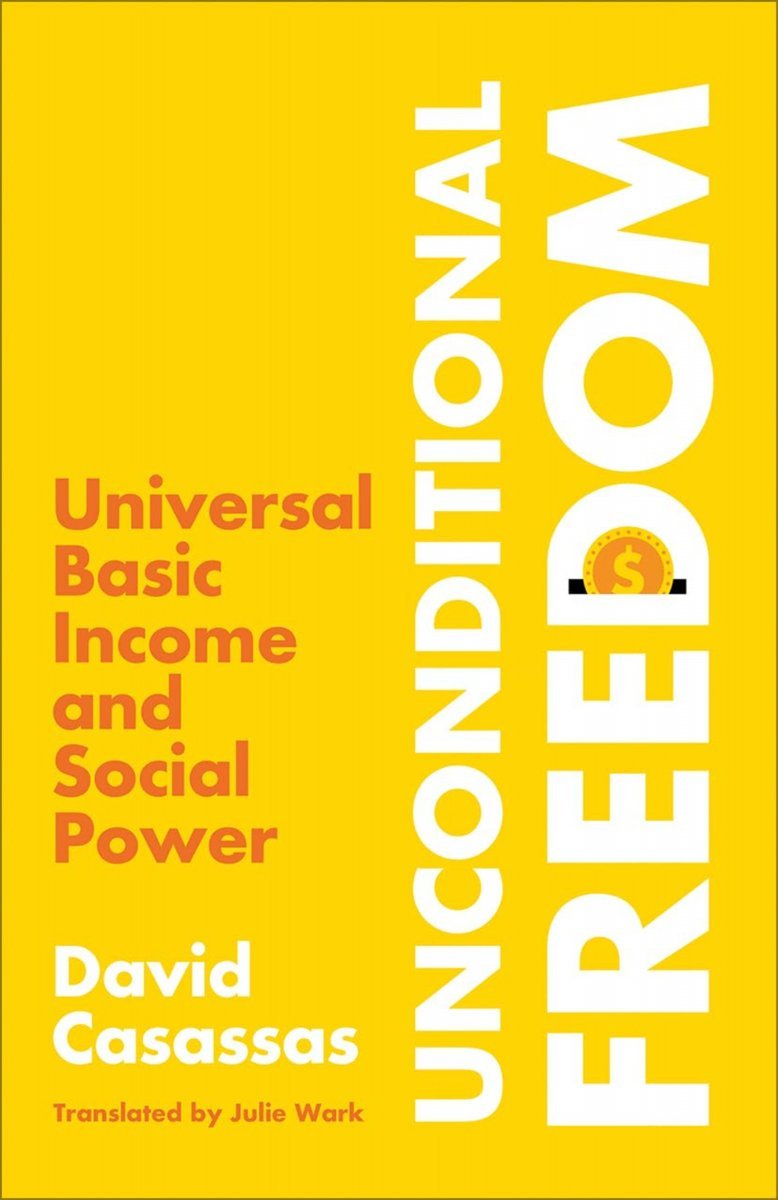
Julie Wark is the English translator of Unconditional Freedom: Universal Basic Income and Social Power, by David Casassas. The book argues that a universal basic income is essential for dismantling structural domination, liberating individuals from precarious employment, and strengthening democratic freedoms. It also outlines how unconditional resources empower people, fostering independence and transformation.


Gallery