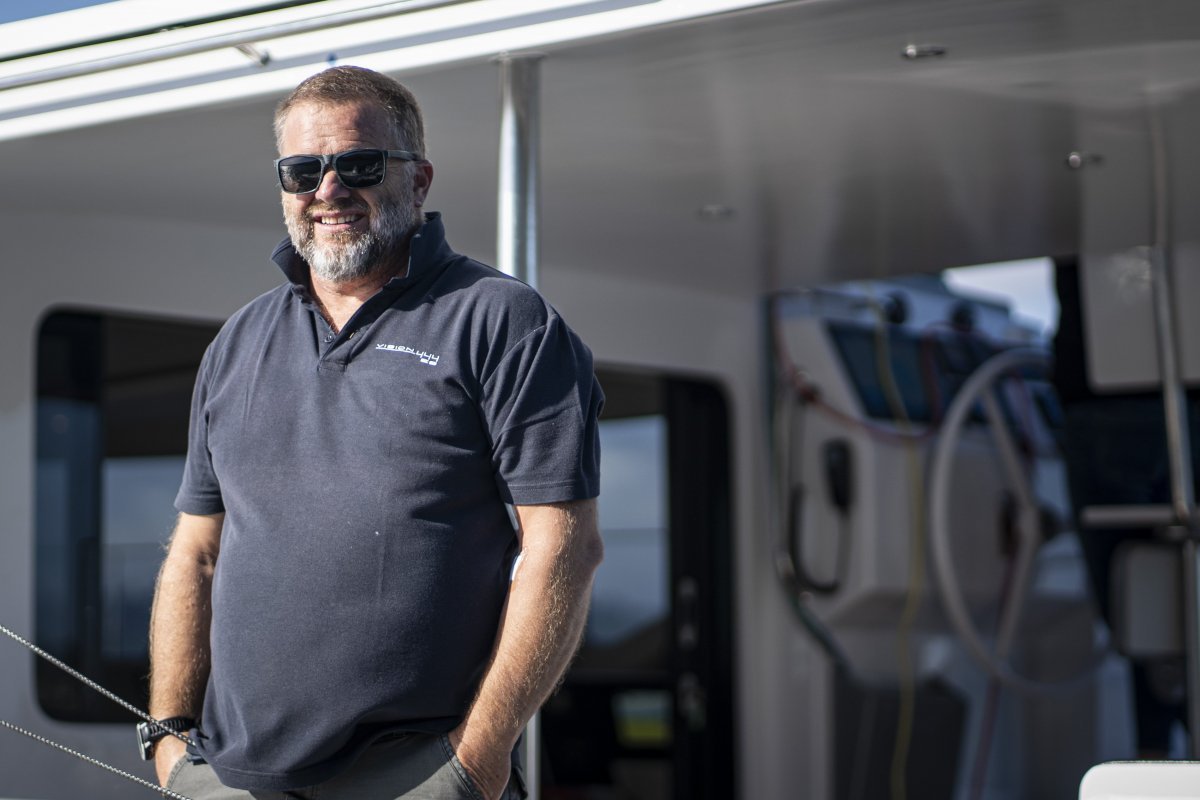

This is a story of how a South African yacht-building company won the coveted Boat of the Year Award at the Annapolis Boat Show last year. But to tell that tale, we must first start with the story of James Turner.
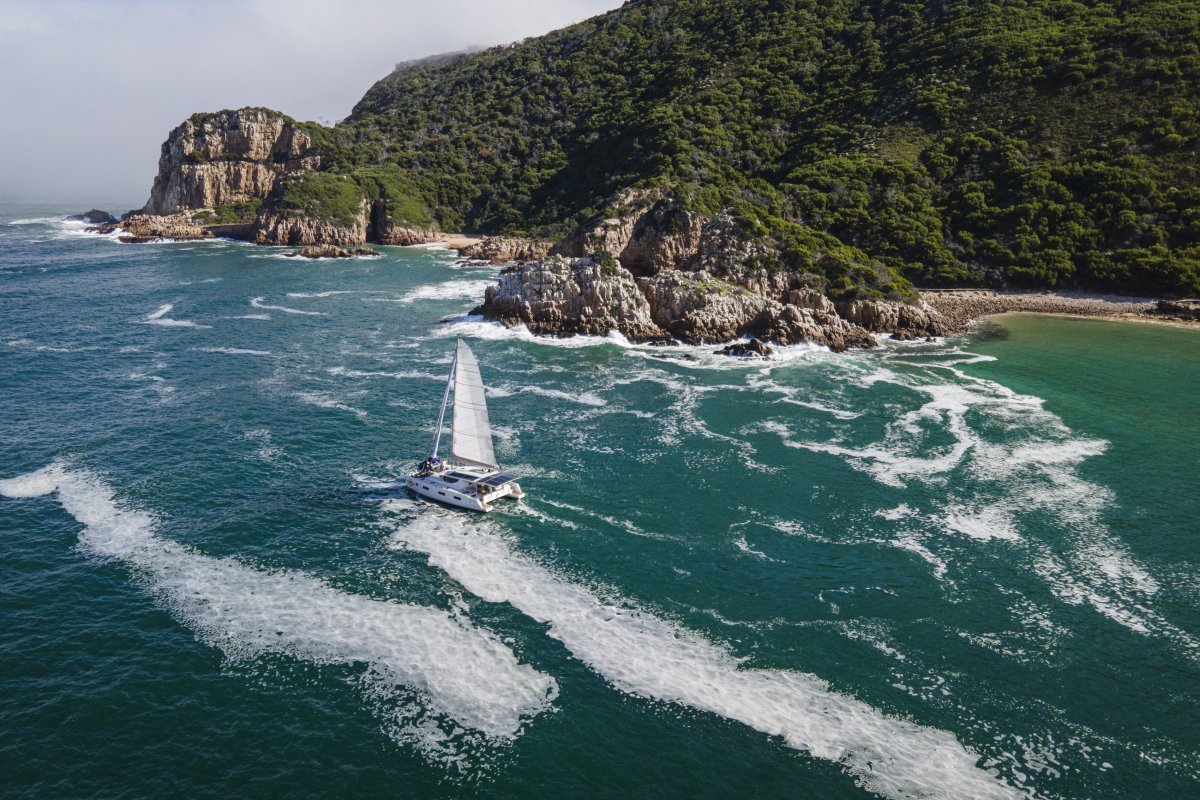
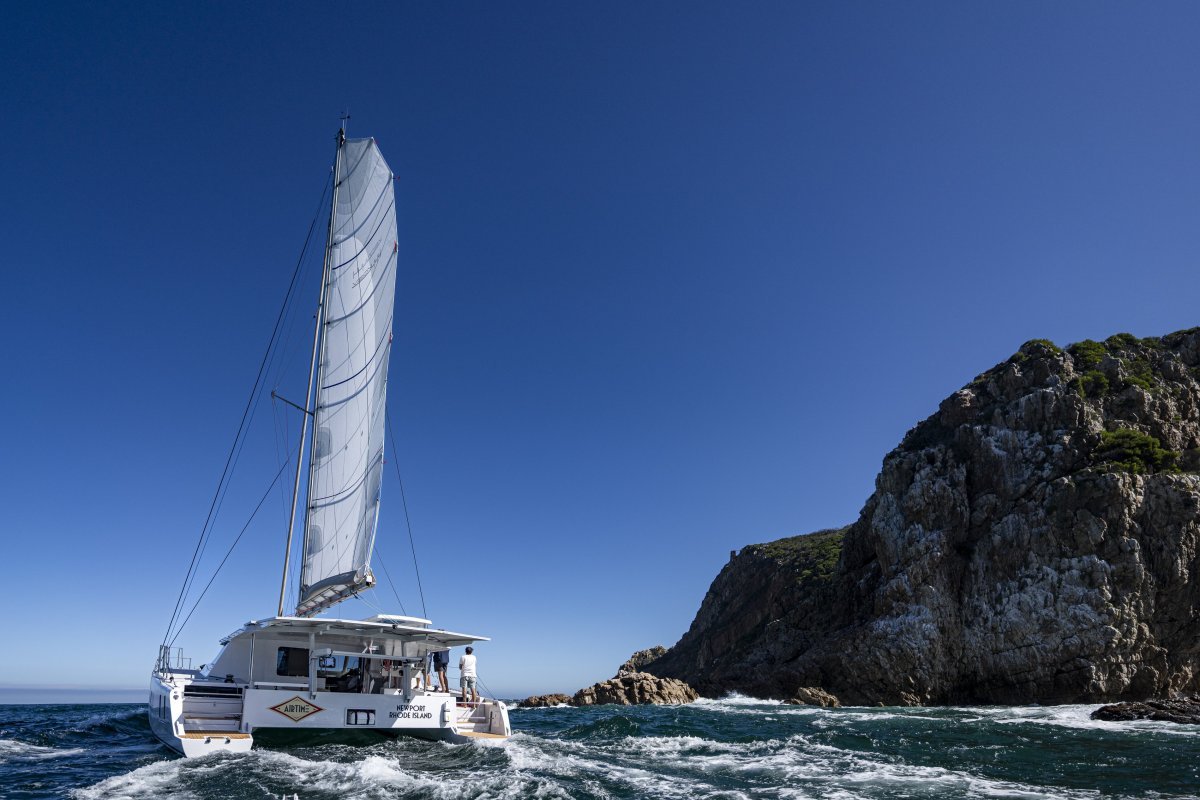
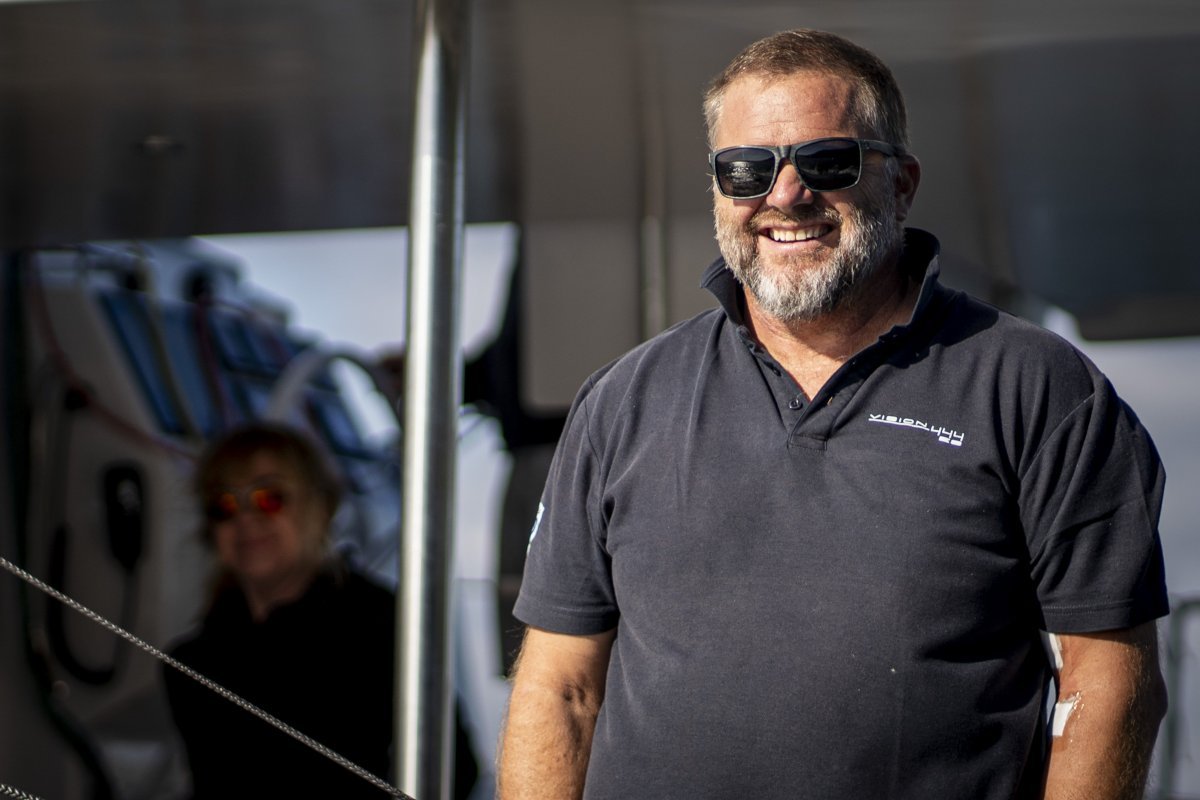
The problem is, James does not like to talk about himself. He tends to smile enigmatically behind his beard, and adeptly distract you by surfing his 44-ft Vision 4444ES along the storm swell through Knysna Heads. And this – as any salty old sea dog will know – takes a skipper with muy grande cojones. Nevertheless, here’s what I could glean from friends, family, and colleagues.
Dreaming reality
James was born in Knysna in 1974, and never doubted that he would one day be a boat builder. Knysna was still a tiny village in those days, and kids had free rein to roam along the edges of one of South Africa’s most scenic bodies of water.
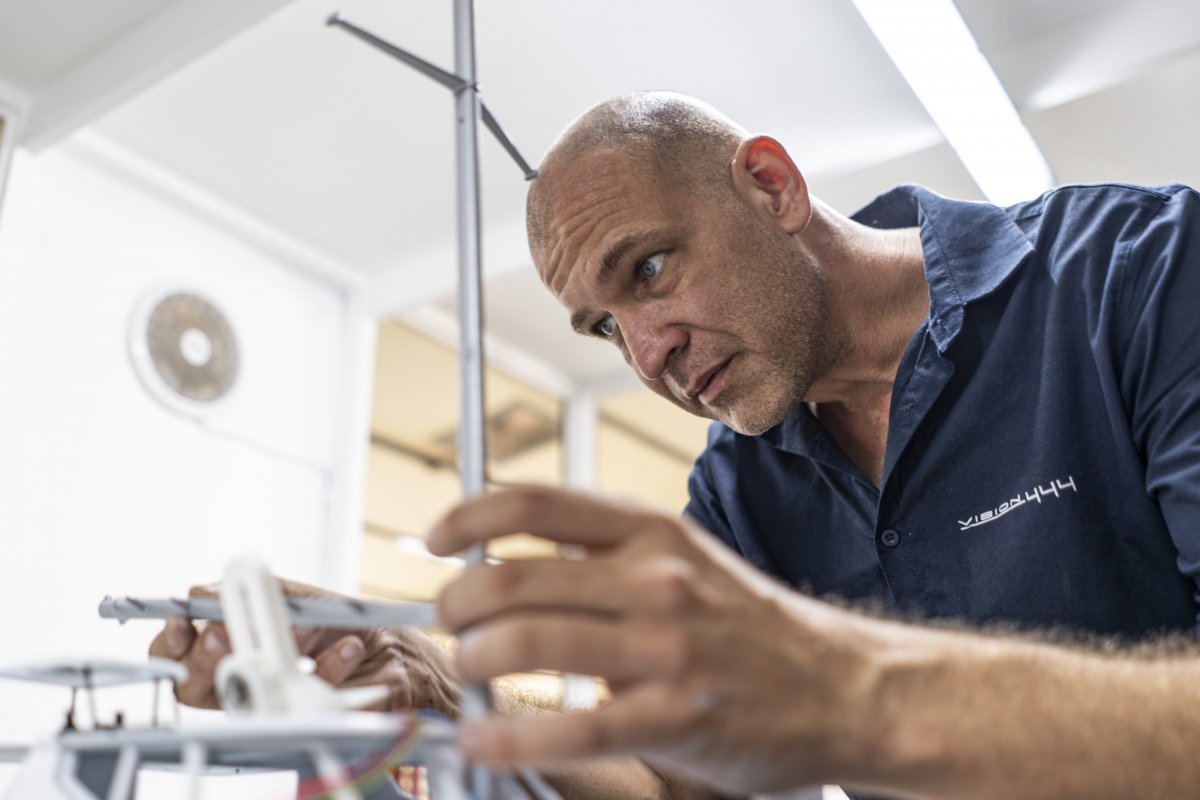
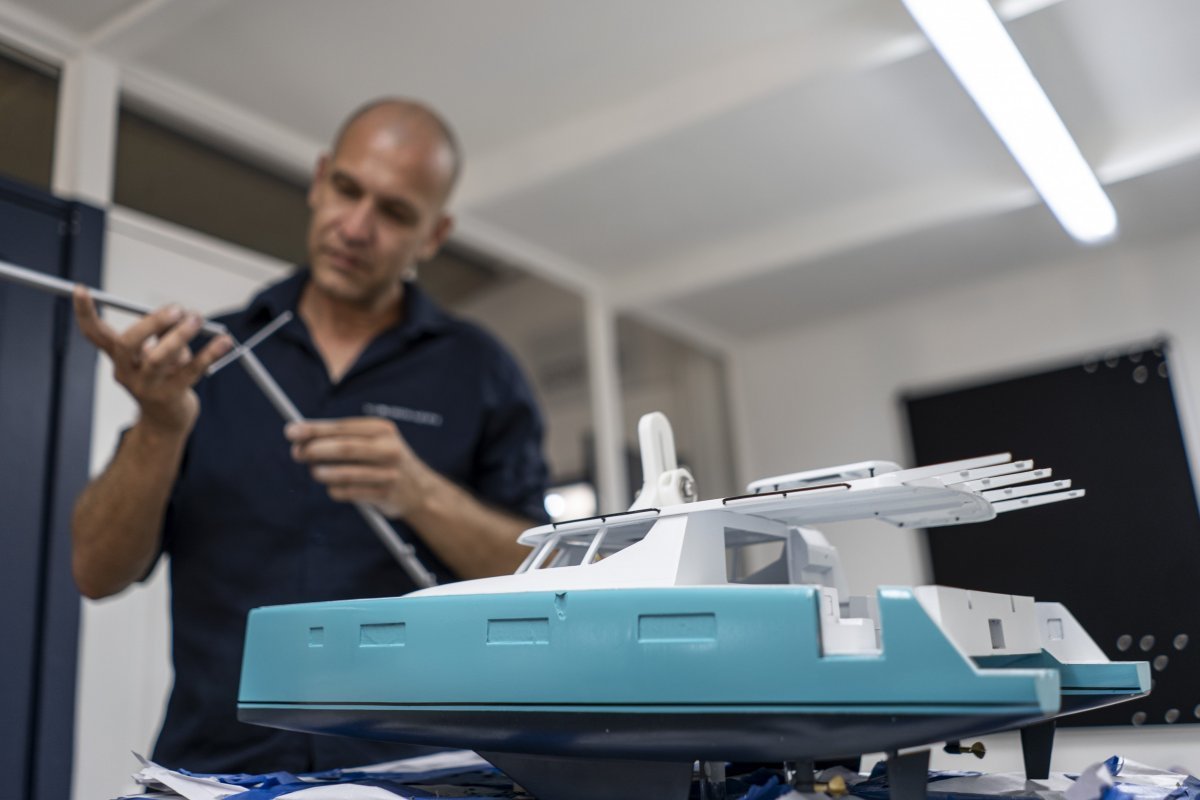
The younger James certainly had few complaints, and spent much of his childhood years dreaming up sailboat designs. Dreams alone did not float his proverbial boat, though, and he soon started crafting rough designs from polystyrene and wood when he wasn’t racing dinghies at one of the local sailing clubs.
“I remember those childhood days well,” shares James’ sister, Nikki Smit. “As the younger sibling, I was often expected to be a crash test dummy for his prototypes,” she laughs, “and of course, day after day of sanding, varnishing, and polishing an on-going series of handmade boats in our garage!”
Fortunately, James and Nikki both survived childhood, but they have a few scars to show and many stories to share. After school, Cape Town called and James set off to study engineering at the University of Cape Town. Working in the corporate world never featured in his dreams, though, but the Big Blue certainly did.
Signing up for off-shore yacht deliveries in the Pacific was a perfect way to hone his sailing skills and boat design dreams, all while making enough money to live a good life. His passion for sailing stood him in good stead as he cut his teeth as crew on everything from small cruisers to skippering multihulls in high-latitude conditions.
By then, James had grown frustrated that so few production catamarans married blue-water reliability to the sort of streamlined, solo-sailing vessel he craved. Seven years later and with nearly 100 000 nautical miles under his belt, Turner returned to South Africa with his vision in sharp focus.
A sailor’s boat, built by sailors
“That was when I finally figured out exactly what I wanted to do with the next stage of my life,” he explains. And when James Turner talks boats, you often still see that young boy with the shock of blonde hair from the early 1980s shine through. This was one of those times.
“I had decided I wanted to build a mid-sized catamaran that could deliver a lifetime of adventure without constant yard visits,” explains James. “I had taught myself CAD [computer-aided design] and the basics of composites, and set off to convince some of the local lofts and lamination workshops to collaborate.” He put together a small team of dedicated sailing aficionados, and set out to make history.
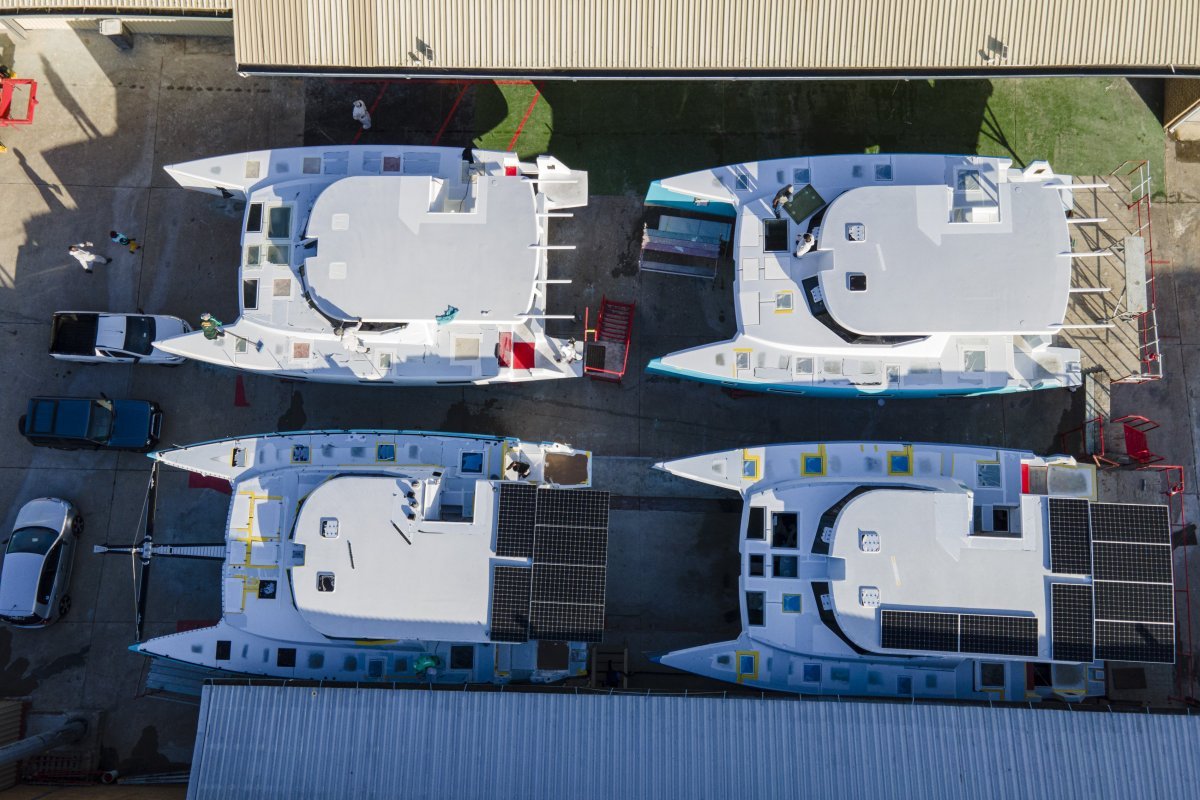
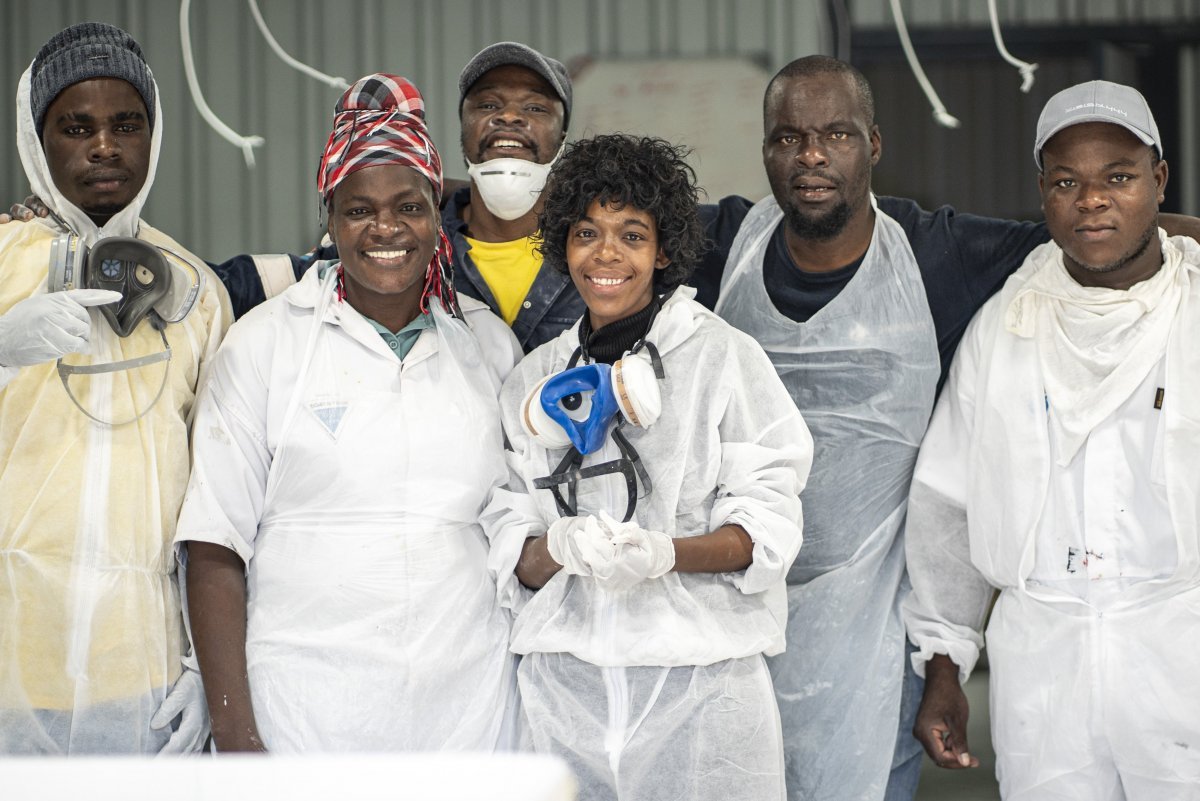
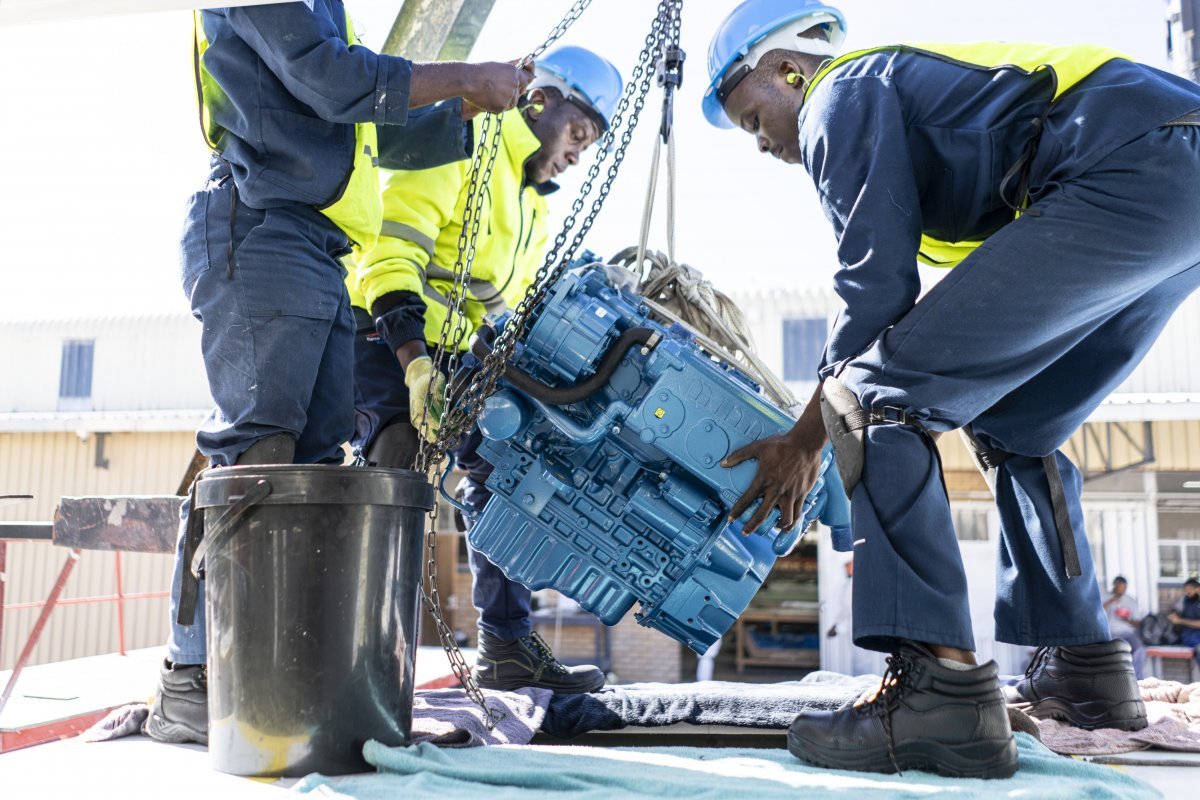
It took just on a decade, but that business – which began as a scrappy start-up in a converted workshop – now manufactures on average a dozen hulls every year, and operates from a purpose-built and climate-controlled state-of-the-art facility. To be sure, “plain sailing” does not fall in place overnight, though.
“What makes every one of our yachts stand out is that they are sailor’s boats, both built and designed by sailors,” Turner explains. Their original flagship model, the 44ft Vision 444, launched in 2019, exhibited 100% proof blue-water DNA in every facet of its construction.
The devil was in the detail, with groundbreaking mini-keels positioned to protect the hull and thus simplifying maintenance. Other revolutionary additions included a self-tacking, unobstructed jib and ergonomically bonded furniture that morphed into an extension of the hull for added structural integrity.
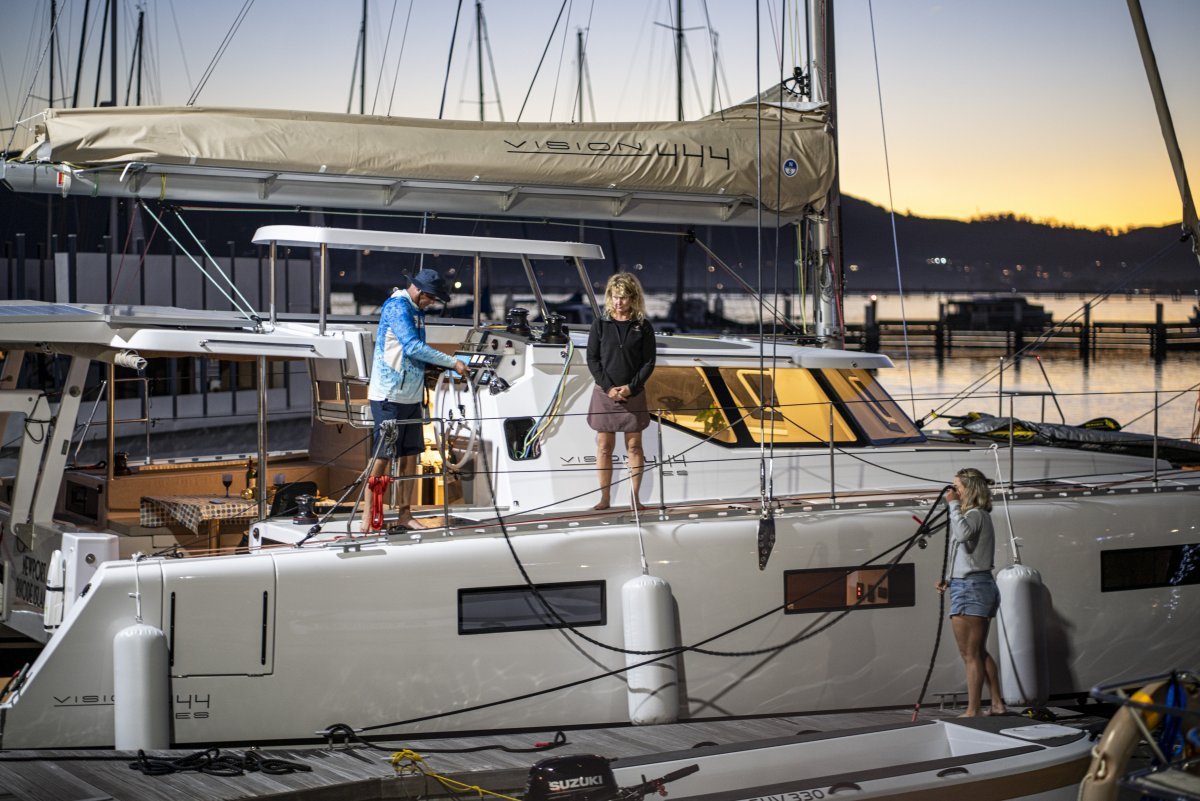
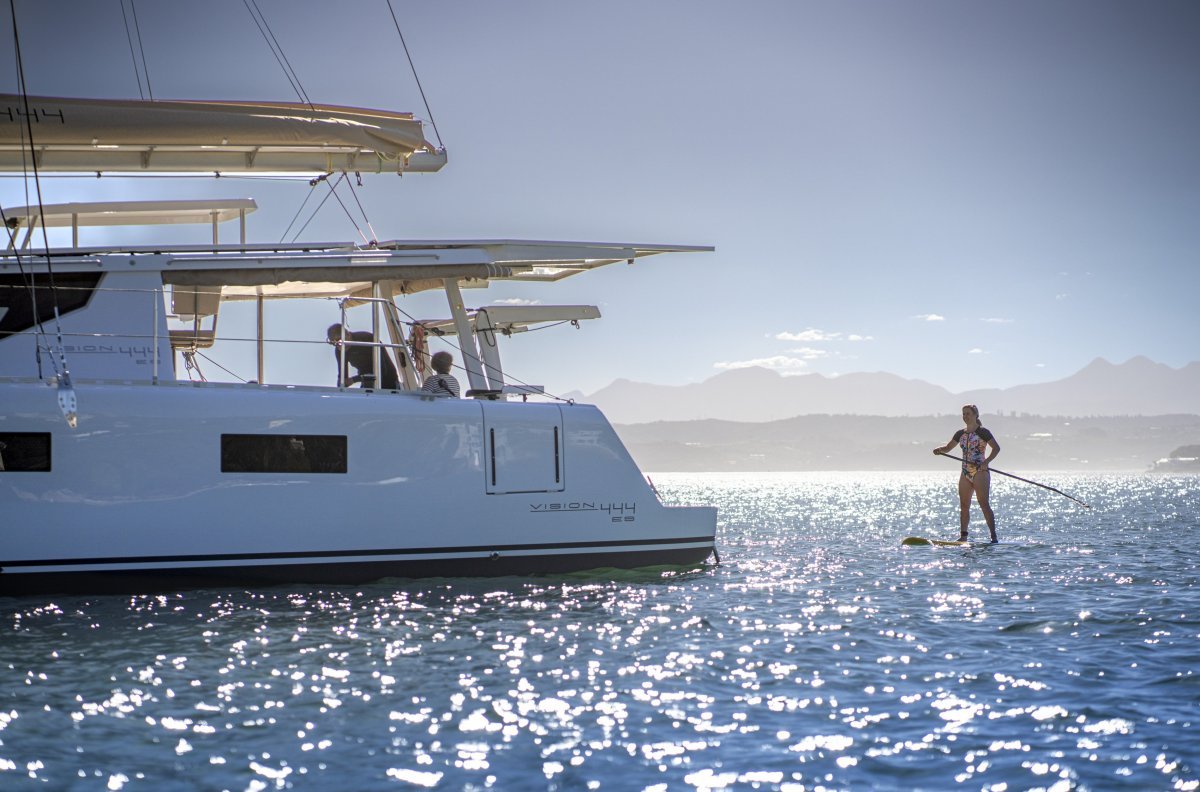
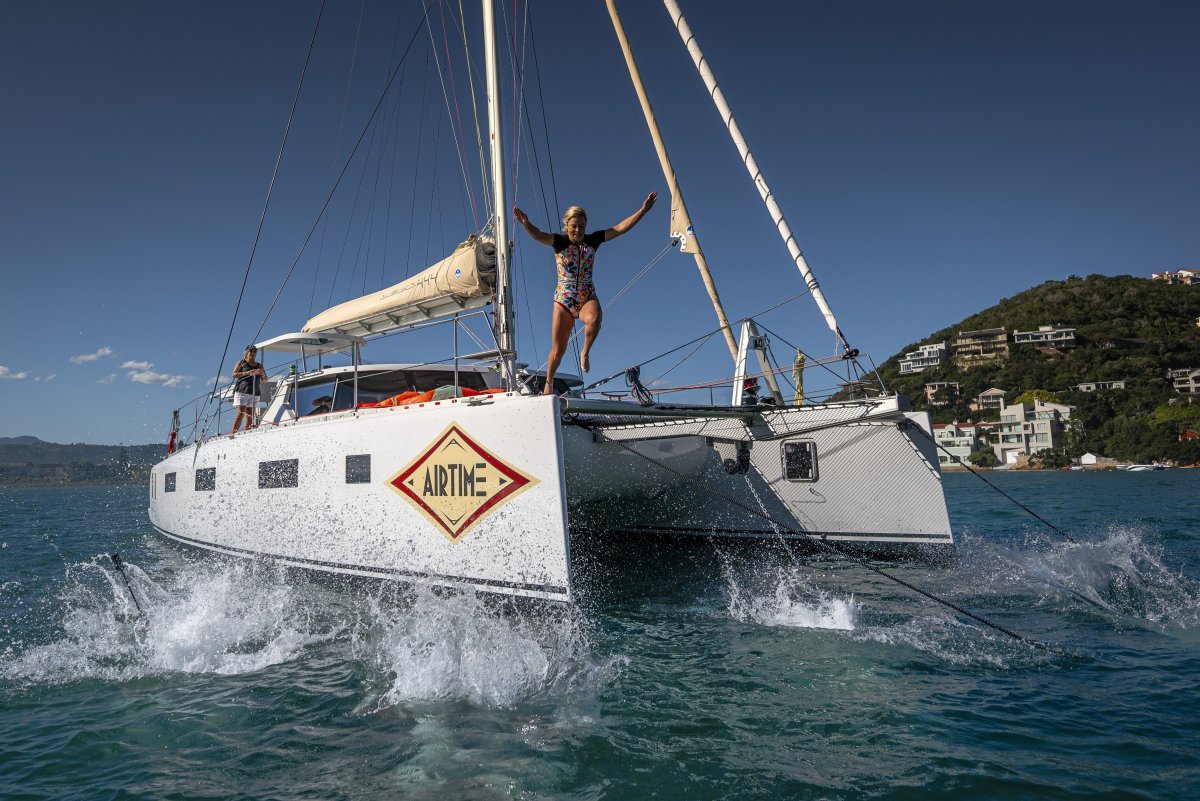
A functional workshop was added into the starboard bow, with an integrated vice and ample storage for spares. This meant open-ocean repairs were now well within the realms of possibility. In 2022, the design team added the Vision 444ES (Extended Scoop), lengthening the existing swim platform by 0.4m for easier boarding and tender stowage, without compromising performance.
There are around half a dozen other globally respected yacht builders in South Africa other than Vision, including Robertson and Caine, Balance, Southern Wind Shipyard, and Voyage. They all excel in craftsmanship (you certainly need to, if you want to compete in international markets).
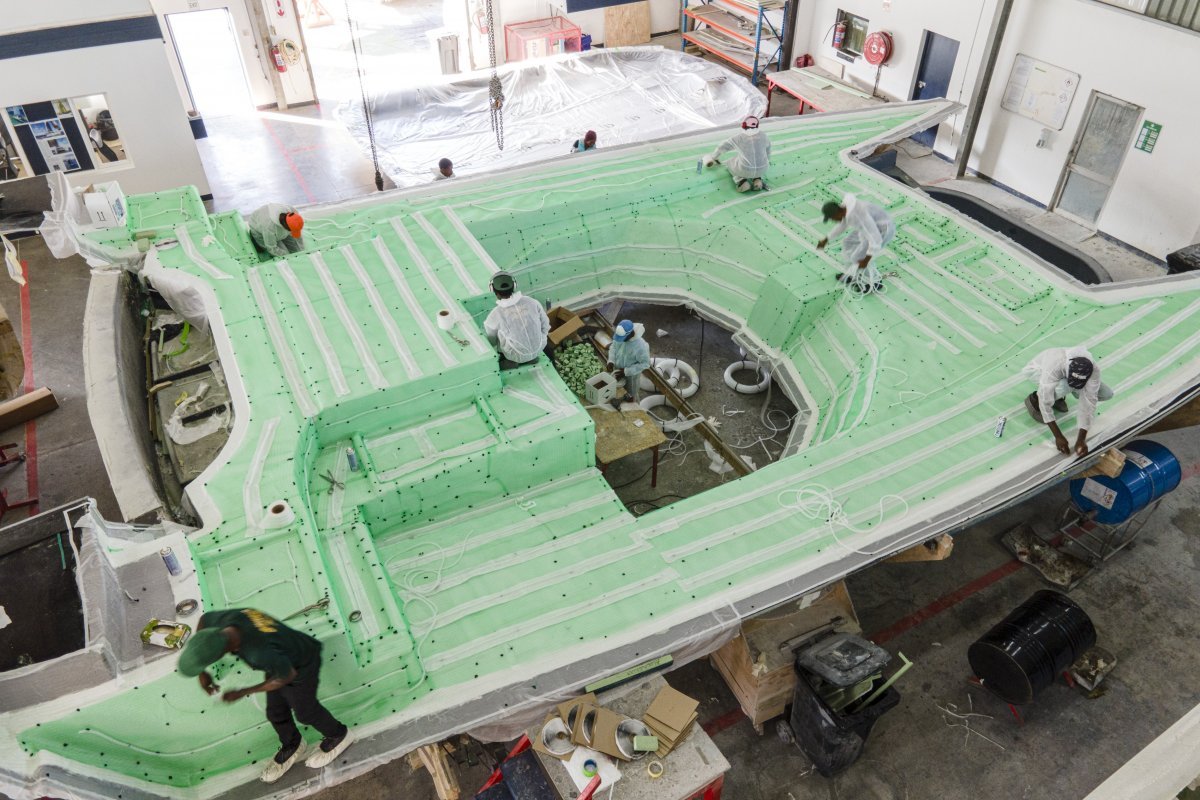
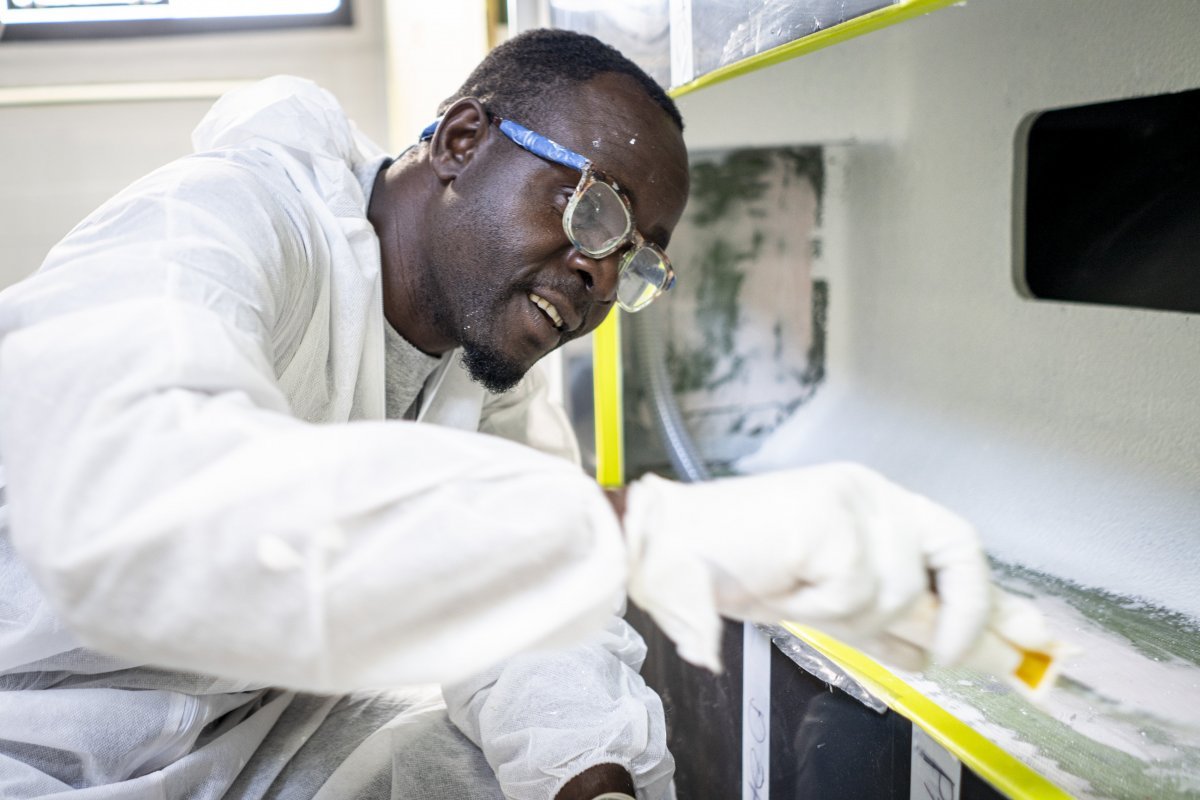
Composite innovation is another primary requirement, and Vision stands apart with hulls and decks that are both vacuum-infused and foam-sandwich composites, thus ensuring an incredible strength-to-weight ratio and robust stiffness.
The decks are made to resist UV sun damage and wear, yet remain lightweight at an industry-beating 8 005kg displacement to keep the 444ES nimble under sail. Interior finishing eschews showy looks in favour of lasting functionality, and pairs premium, quarter-sawn reconstructed-oak veneers with low-maintenance quartz countertops.
Another USP of any Vision Yacht is the guaranteed lifetime ownership support. Often, builders tend to disappear after the handover, but those manufacturers – like Vision – who guarantee after-sales service tend to go the distance.
Every new owner receives comprehensive training, a two-year parts replacement package, and a lifetime of digital support via the Vision Yachts App. This mobile application will track all maintenance schedules, spare inventories, and usage logging from anywhere in the world. “This simple promise stands our clients in good stead,” says James, “because it means that they will never be sailing alone.”
True-blue cruising
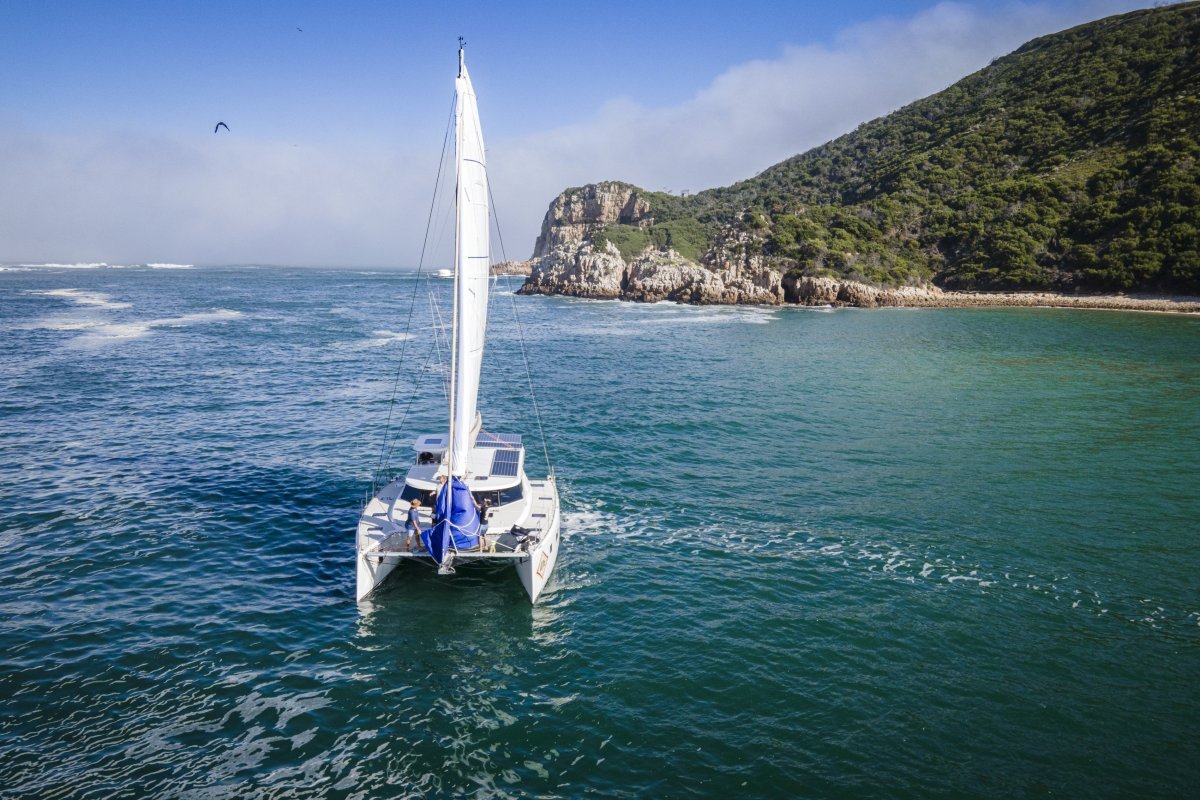
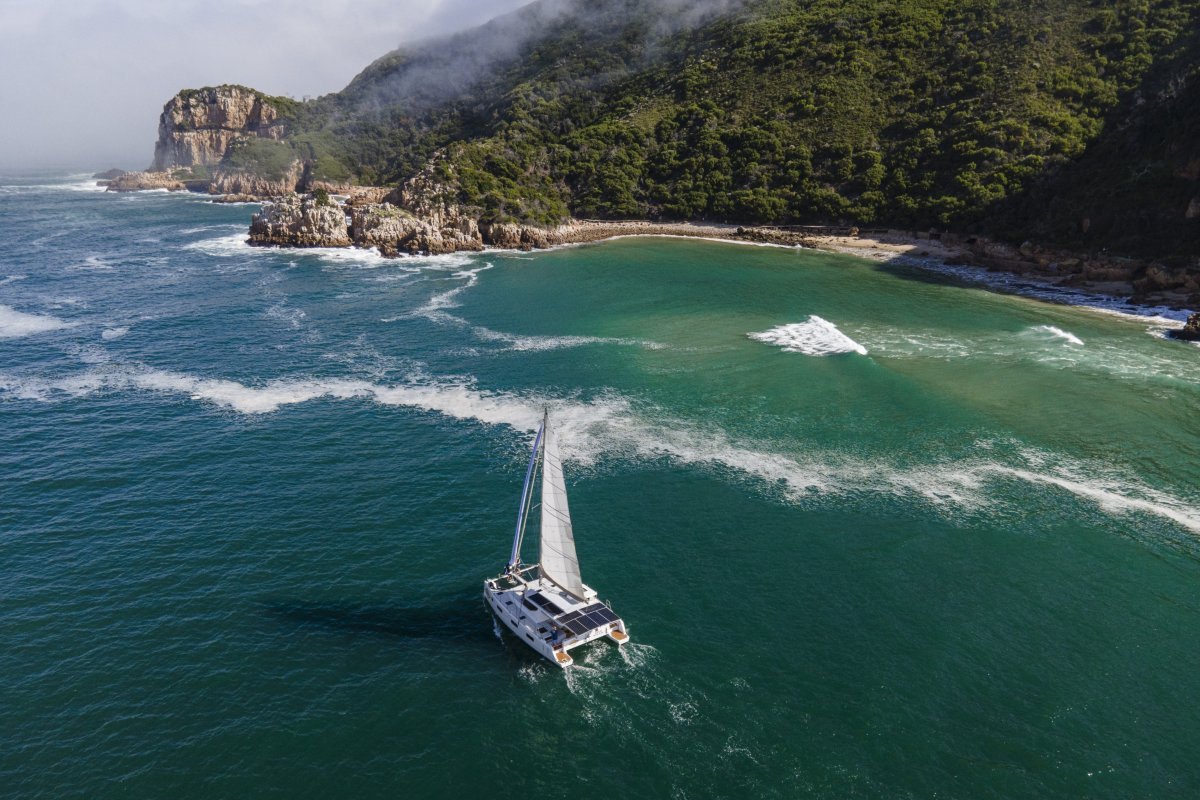
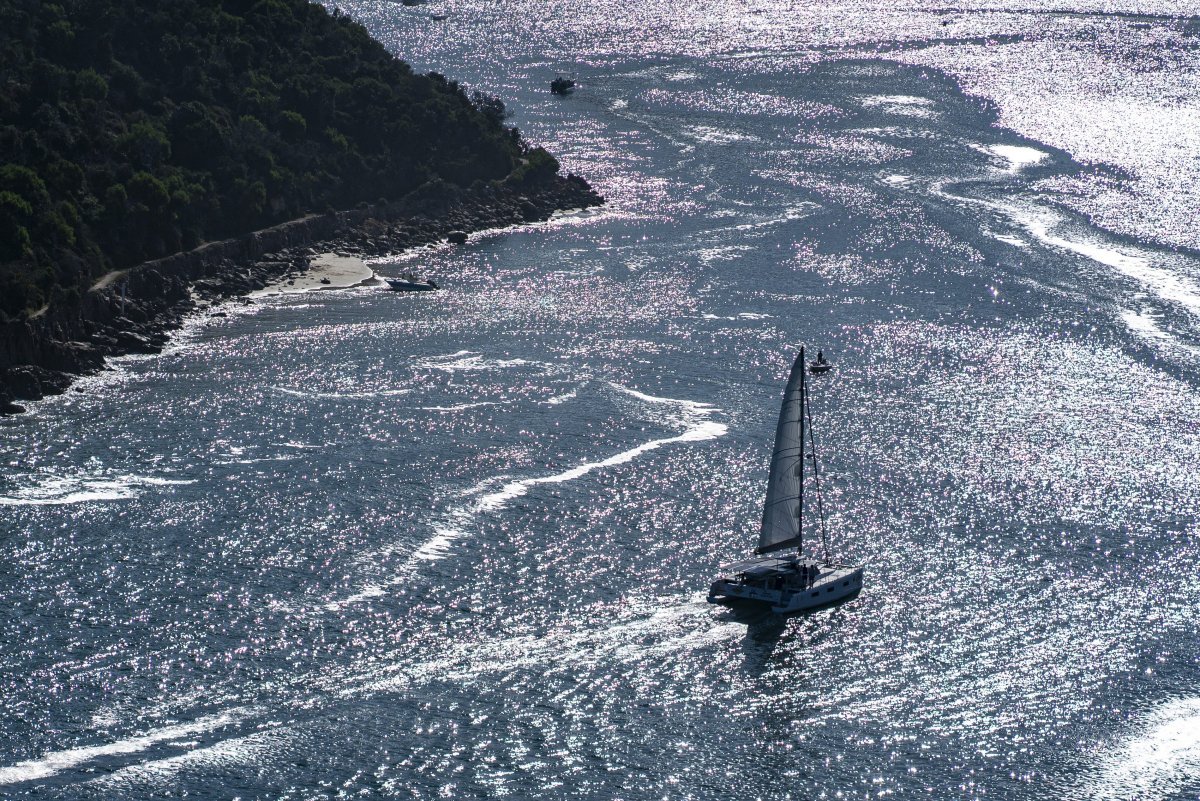
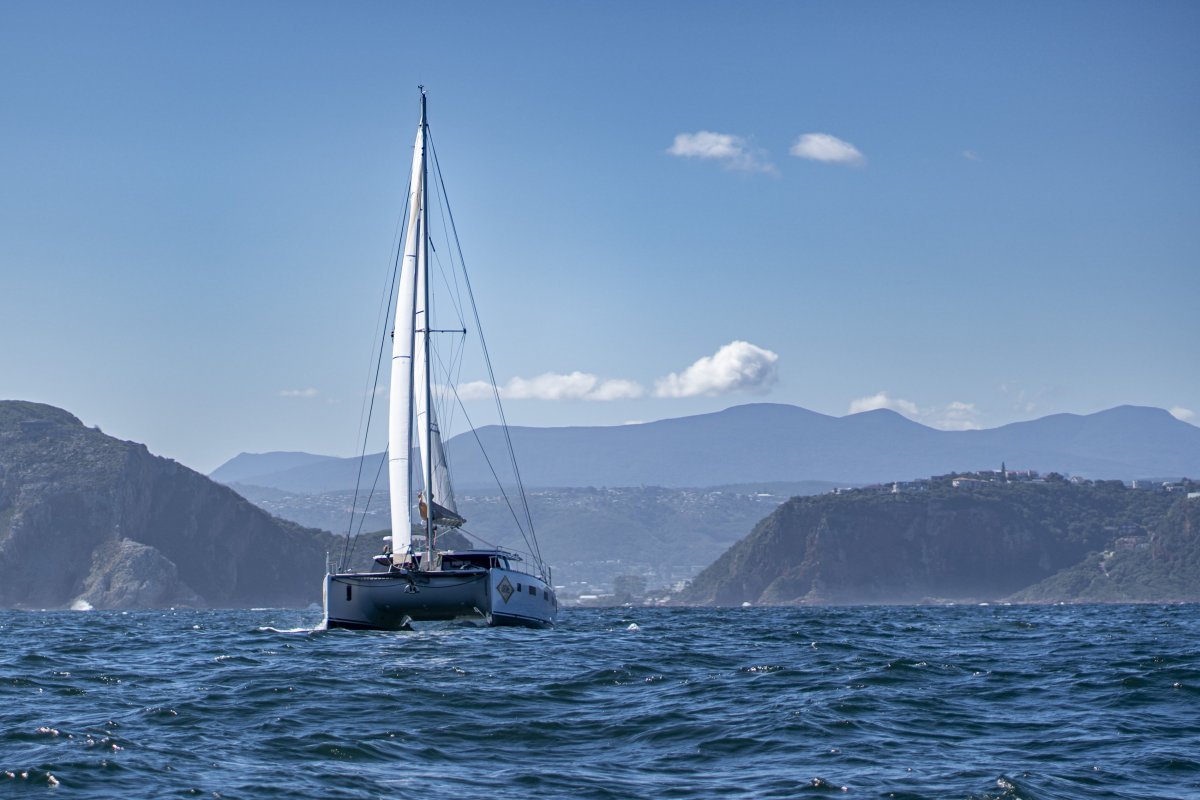
The proof of the pudding is in the eating (or shall we say, out in the open ocean), though. The first time I stepped onto a Vision yacht was on a corker of a Garden Route day, with early winter weather and in prime sailing conditions. The sun arced high above the Knysna Heads, with a 12-knot northwester whipping up flurries of spray along the estuary.
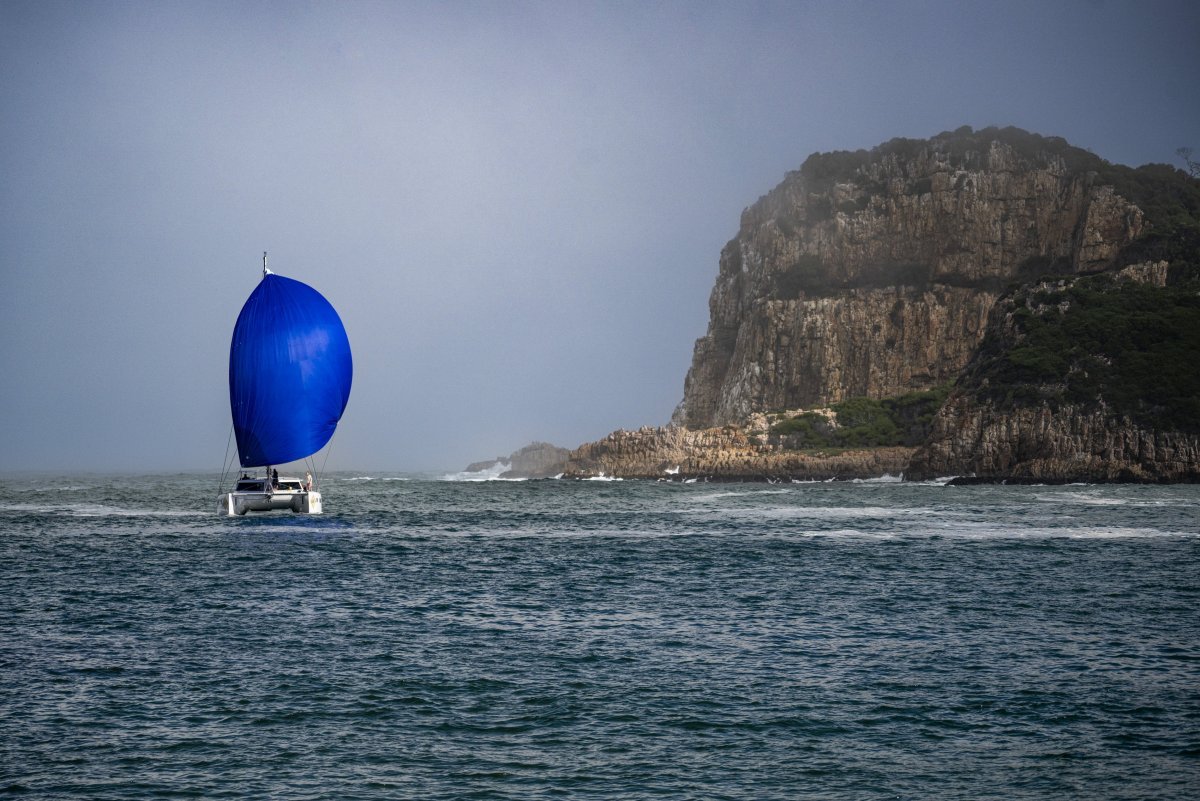
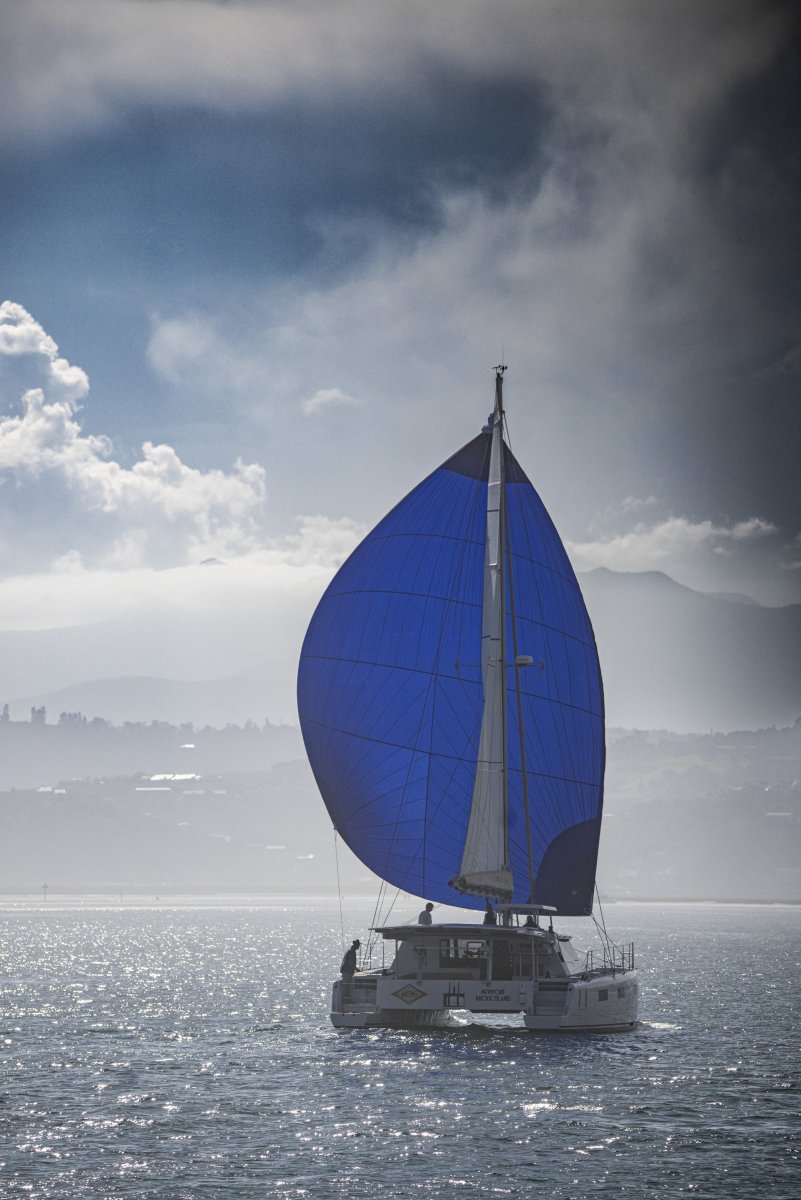
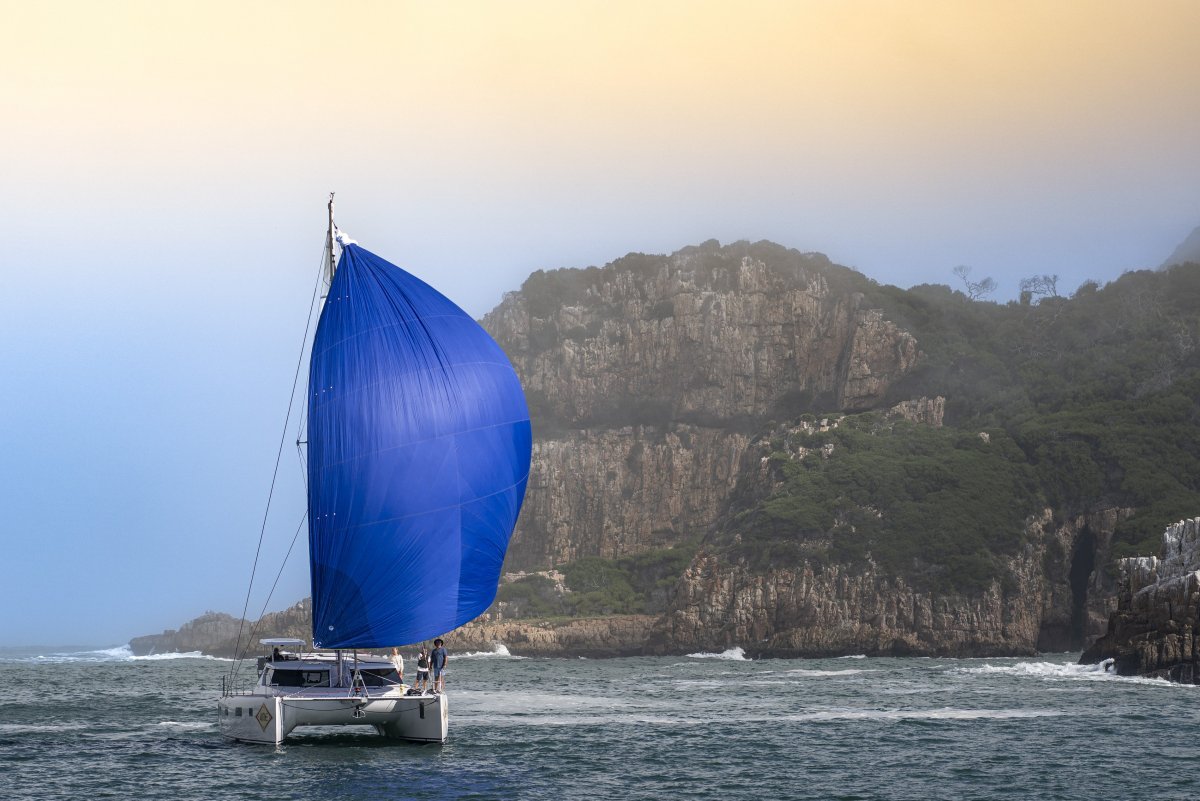
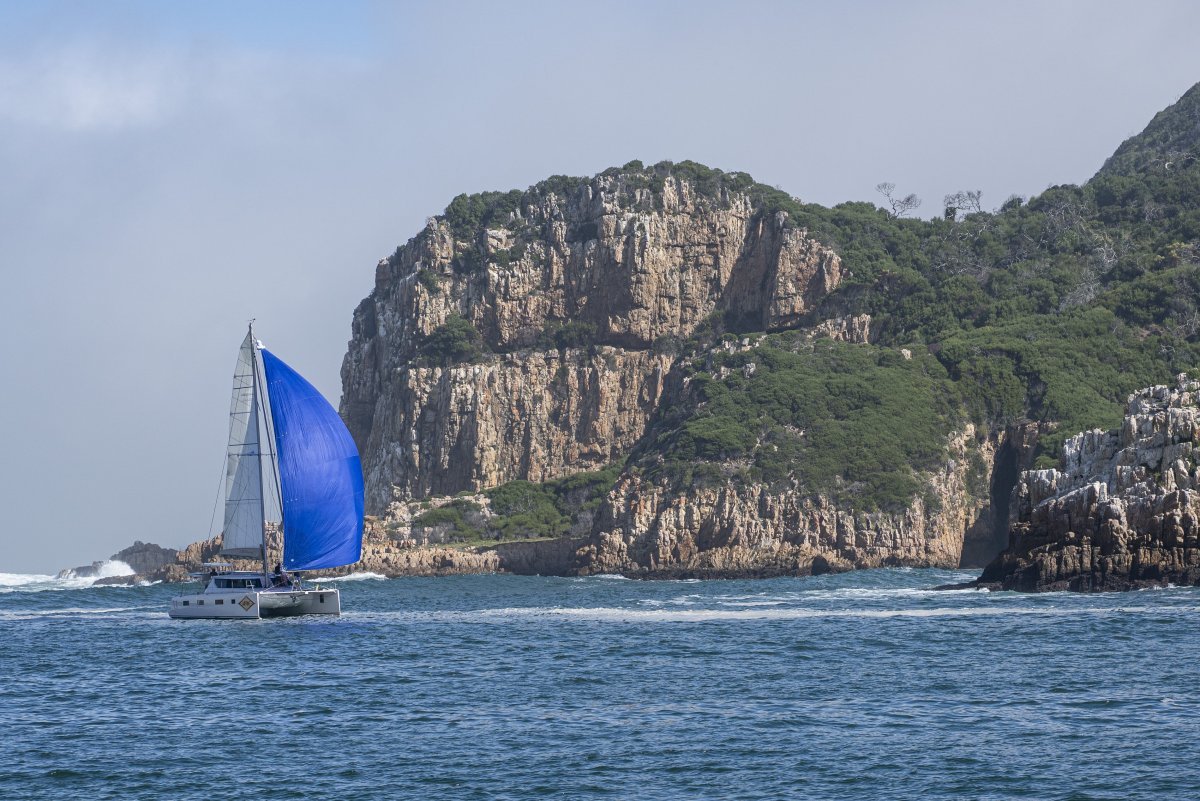
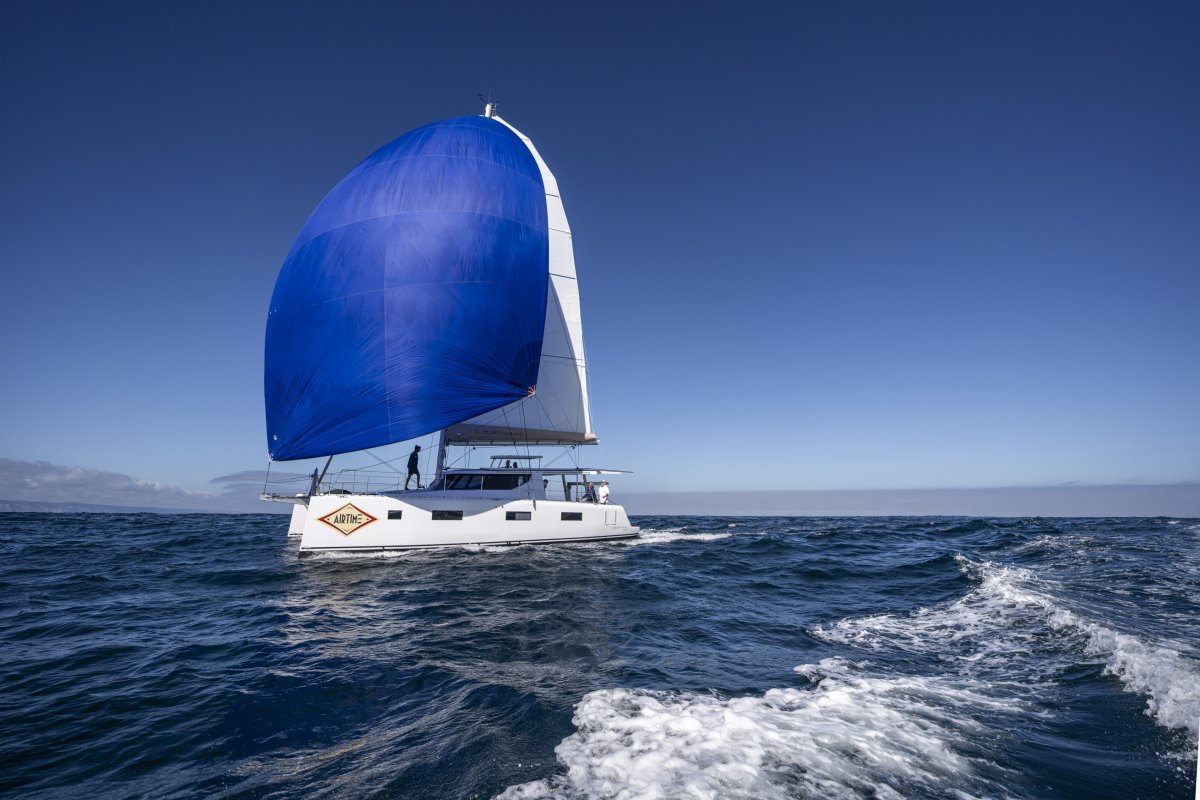
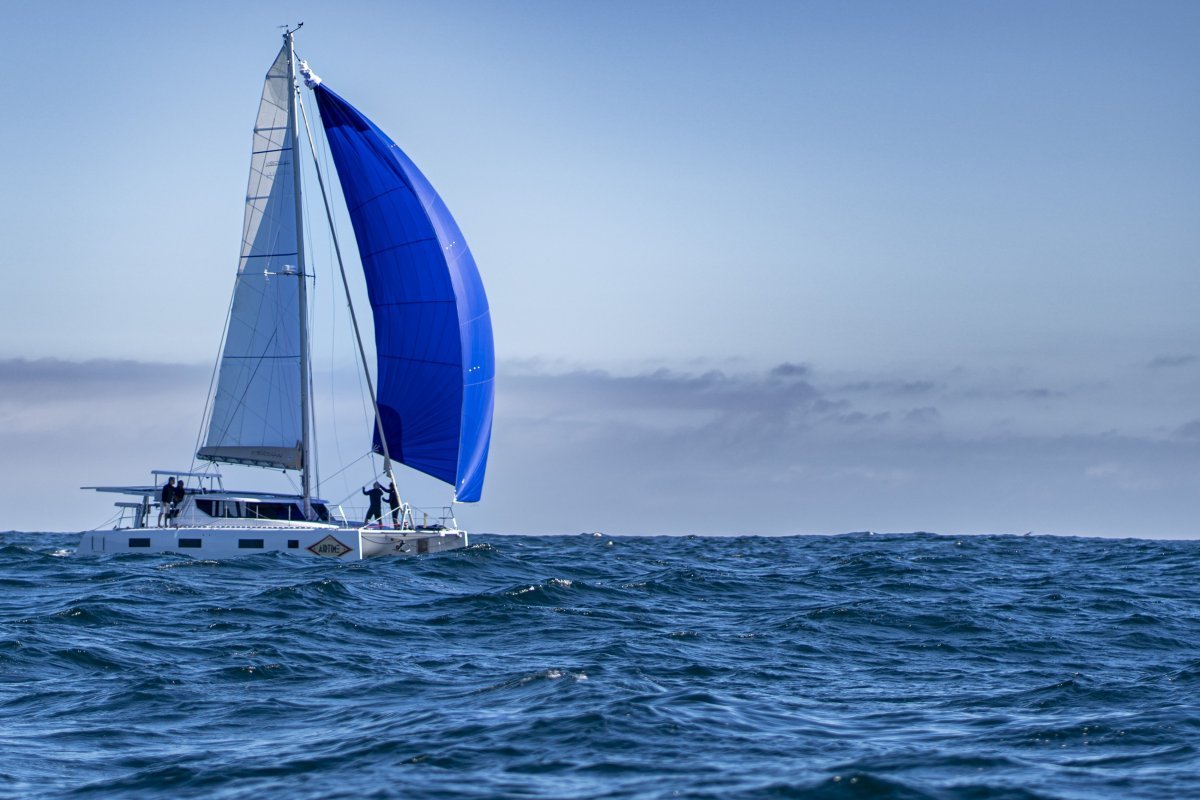
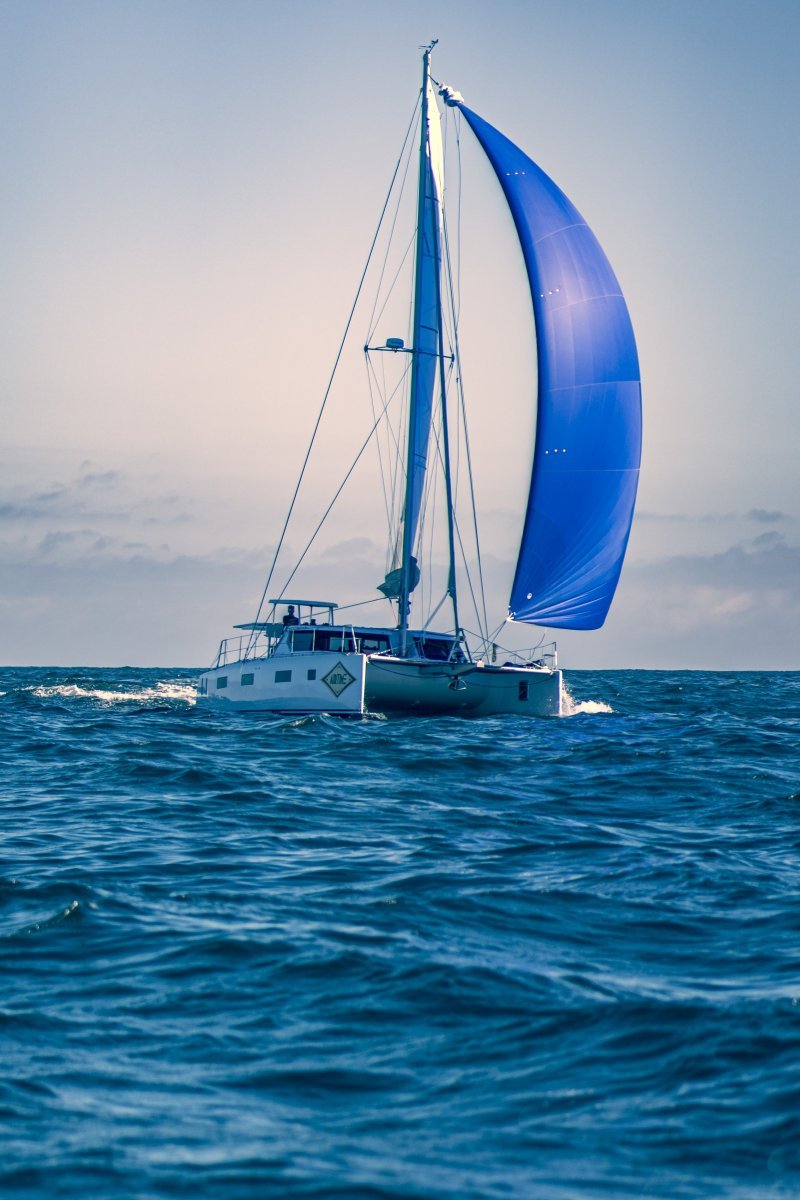
With James at the helm, we charged headlong into the tempestuous waves breaking via the exposed headland. The sails were up, with the spinnaker in full flight, as we hit the Indian Ocean, breaching through swell running at a solid six to eight feet.
The 444ES did not put a foot wrong, with every element aboard the vessel operating in complete harmony. An elevated steering position allowed James a commanding, 360-degree view of the yacht and its surrounds, allowing complete control as part of a fully immersive sailing experience.
The immaculately balanced hull performed like a true thoroughbred, swift and stable when reaching downwind, and super responsive when tacking or jibing. You instantly sensed the measured integration that made this yacht the well-deserved winner of the Boat of the Year Award at the International Annapolis Boat Show in 2023.
Every year in October, sailors from around the globe gather in downtown Annapolis for an annual celebration of everything sailing. Floating docks are lined with vessels from manufacturers around the world, featuring a full house of multihulls, monohulls, cruisers, racers, dinghies, and more.
Two years ago, the judges at the show were unanimous in their praise of the Vision 444ES when they awarded it the prize as Best Cruising Catamaran Under 50ft. They were especially impressed by the boat’s “pure cruising ethos” and noted that the build quality rated as “immaculate”.
Systems expert Tim Murphy noted: “Sailing the Vision 444ES with its owner revealed meticulous detailing and ease of use under solo sailing conditions.” In turn, editor Mark Pillsbury lauded an uncompromised crossover between private ownership and charter demands: “Every locker is accessible, and every component placed for real-world maintenance – this is a fine, robust catamaran.”
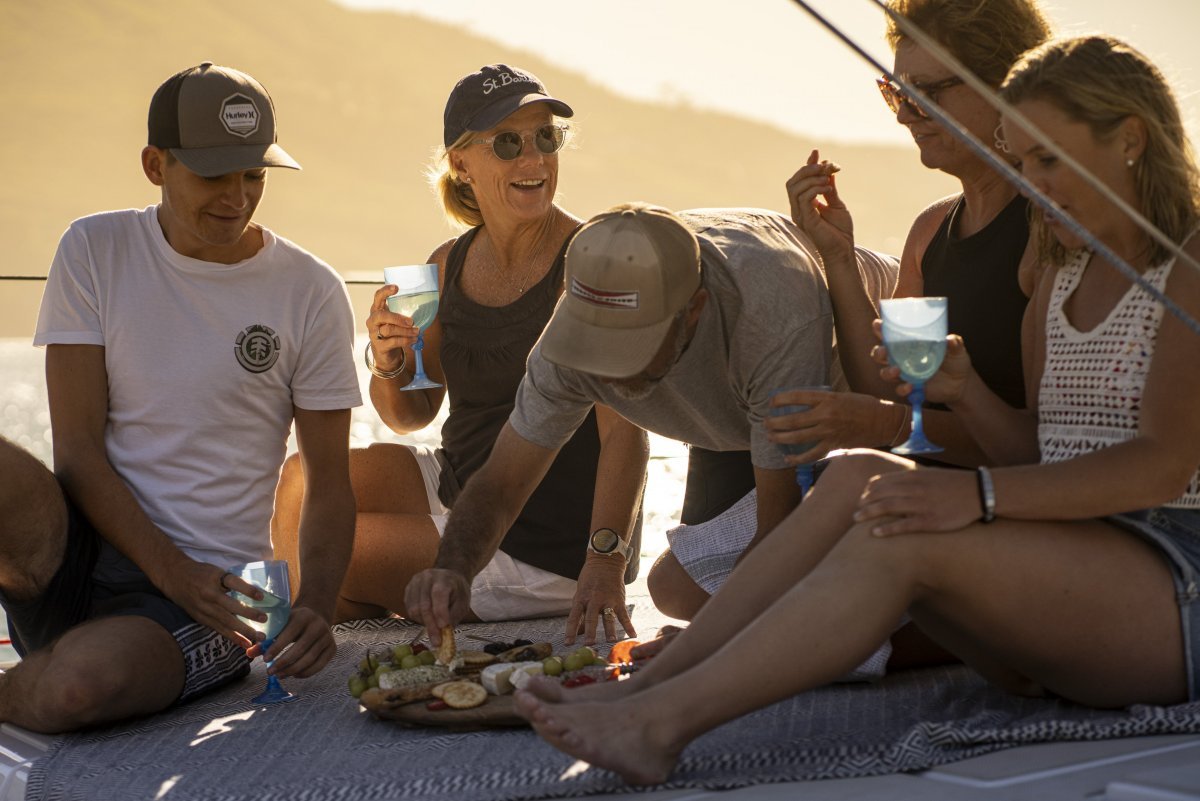
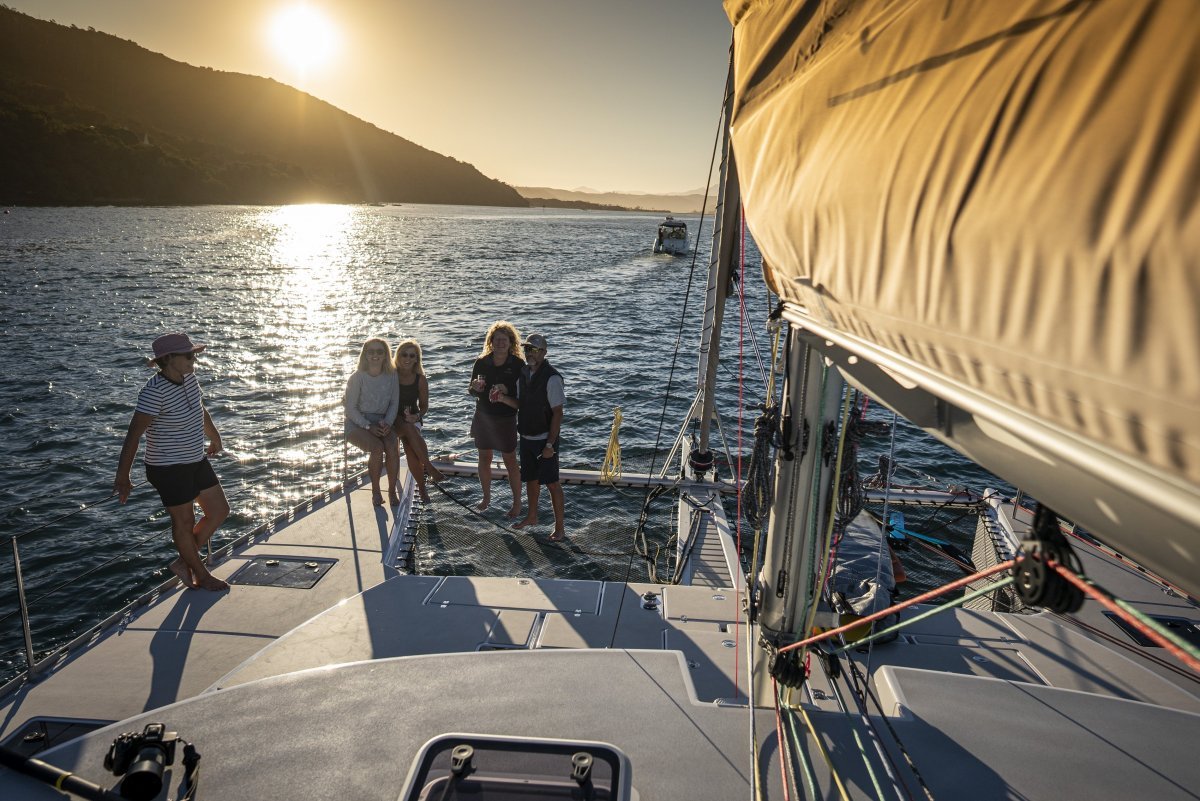
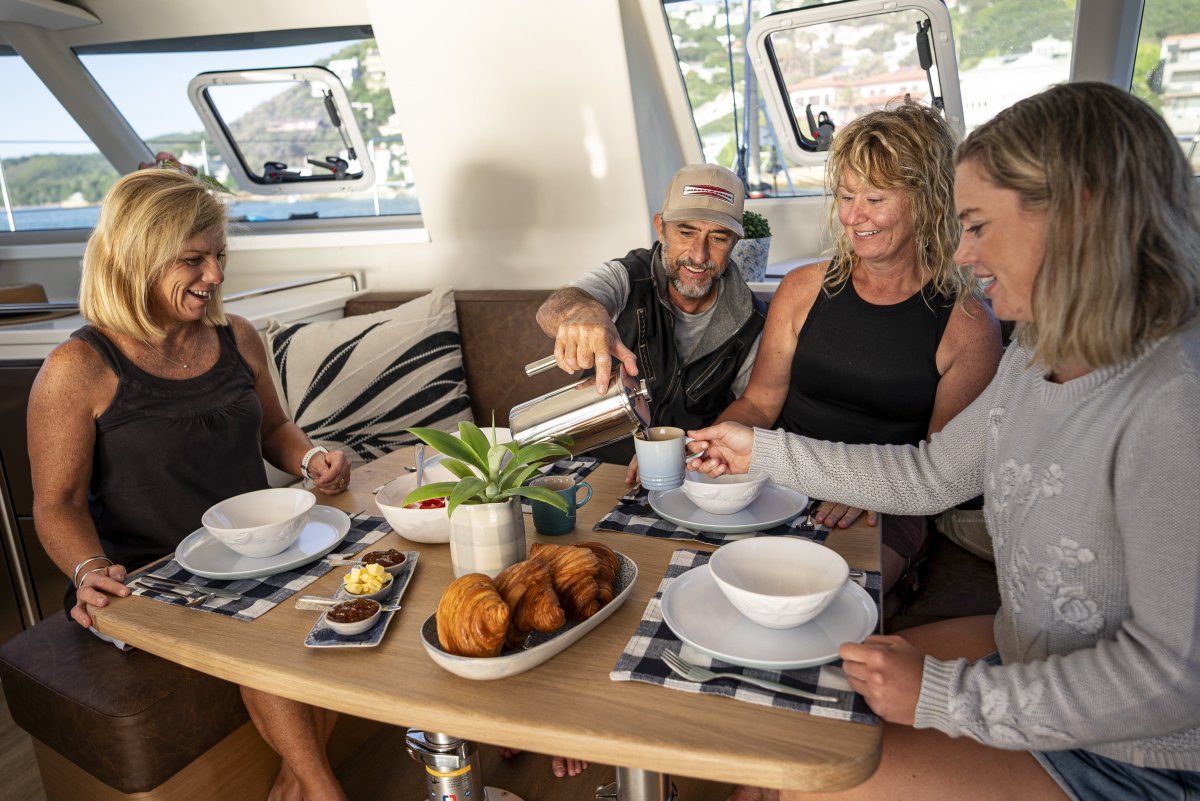
We returned from our bracing sail late that afternoon, with an amber sun shafting in across the Knysna estuary. We anchored to soak up the warm glow, relaxing in the aft cockpit with a gourmet spread of tapas and crudités, and a glass of prime South African shiraz on hand.
Like our local wines, the Vision brand had excelled, not only against top local peers, but also when compared to the best boat builders in the world. On paper and in the open ocean, the 444ES achieved the ultimate accolade, reminding us that innovation need not be born in Europe or the US, but will thrive wherever sailors with passion heed the call of the wind.
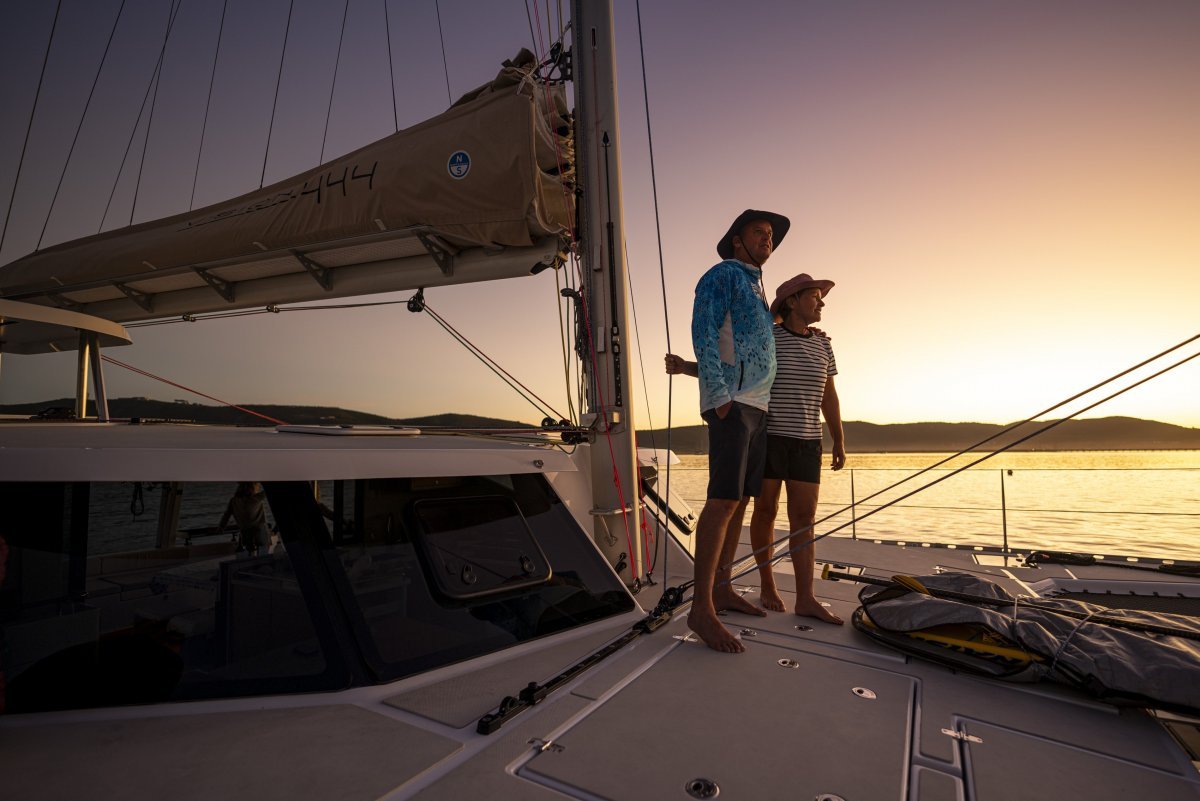
One thing was ultimately clear: James Turner’s childhood dream – to build a boat as seaworthy as it is simple to sail – had come true. The man himself had slipped away quietly, though, and was standing barefoot on the distinctive bow, contemplating the lights of his home town reflecting on the serene estuary.
Leading South African yacht builders
South Africa has established itself as one of the world’s leading boat-manufacturing countries, delivering an astounding array of vessel designs and sizes.
Robertson & Caine: Headquartered near Cape Town, Robertson & Caine is what Toyota is to the automobile industry: an export-driven production powerhouse. It produces and outfits more than 200 hulls per year and employs a staggering 1 700 staff, ranking second only to France in global volumes of catamaran hulls sold. Its legendary Leopard design stands front and centre to form the backbone of many a charter fleet, from the Caribbean to the Mediterranean.
Southern Wind Shipyard: This Cape Town operation started up in 1991 and soon gained an enviable reputation under Italian designer Willy Persico. Its focus is on high-performance super-yachts, and it only produces one or two vessels annually, but with these retailing near the R300-million mark. The company marries cutting-edge composites with premium maritime design, working from a discreet shipyard near Noordhoek. Its sleek SW100 and SW102 models annually attract attention on the seven seas as both charter and private vessels alike.
Voyage Yachts: Since 1994, this boutique yard has hand-built more than 150 hulls, crafting luxury, performance-oriented cruising catamarans from its bespoke facility in Cape Town. Voyage specialises in small-batch production, with exhaustive sea trials and meticulous attention to detail ensuring trusted longevity and charter readiness. Its flagship Voyage 590, at nearly 18m LOA (length overall), exemplifies this ethos, and went on to win Cruising World’s Best Charter Boat award.
Balance Catamarans: Another respected SA manufacturer, boasting twin factories along SA’s southern coastline. The first is in Cape Town, with another in St Francis Bay (in collaboration with Nexus Yachts) combining artisanal craftsmanship with a naval-architecture pedigree. Founded in 2013, the company strives for an elusive equilibrium between premium performance and live-aboard comfort. Its multi-award-winning Balance 482 is seen by many sailors as a category-defining craft.
The sailing economy
- Industry size: The global luxury yacht market was valued at $7.9 billion in 2023, and is forecast to reach $16.9 billion by 2032, growing at a CAGR (or compound annual growth rate) of 8.6%. A similar study by Global Market Insights expects the 2025 market at $14.93 billion, expanding to around $23.29 billion by 2030 (a 9.3% CAGR).
- Regional leaders: Europe remains the largest market, driven by France, Italy, and the UK. North America follows as the fastest-growing market, buoyed by rising ultra-high-net-worth individuals and charter demand.
- Vision Yachts: This South African niche catamaran builder occupies the premium blue-water performance segment, worth an annual nett $37 million or more in the multi-hull segment. Even though it has only delivered 15 units since 2019, its build rate is accelerating yearly, with orders backed up. Turner’s yard has claimed around 1–2% of the global sub-15m cruising catamaran market.
- Future trends (2025-35): Technological advancements are expected to focus on electrification and hybrid drivetrains, solar-integrated decks, AI-driven navigation and anchoring, and sustainable bio-resins and recyclable composites. In addition, there will be design advances around more ergonomic, remote-monitoring platforms to support single-handed operation and charter flexibility.


Gallery