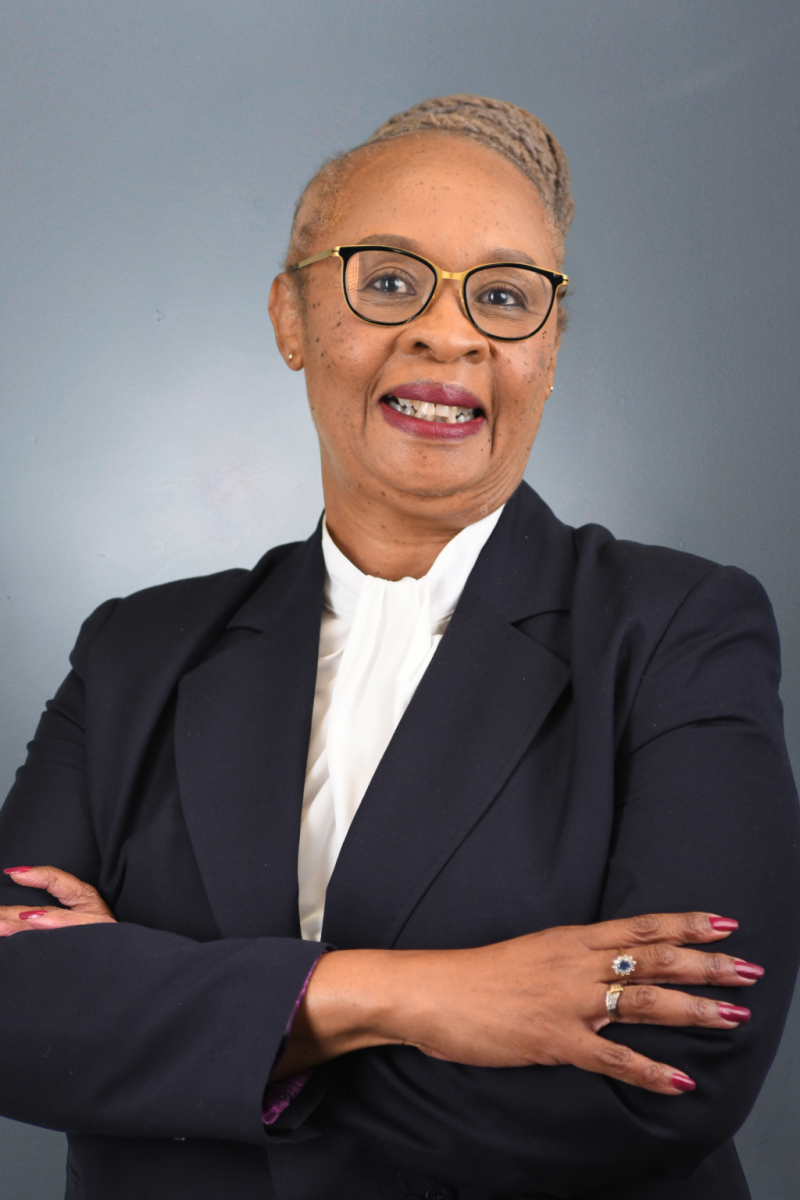
When she first joined GIBS, Professor Caren Scheepers remembers attending a “How to teach” training programme presented by none other than the school’s founding Dean, Professor Nick Binedell. “He used a local case study, and I thought, this is amazing,” Scheepers recalls.
Business schools around the world use case studies to help students apply theory to real-life scenarios and by so doing enhance their decision-making capabilities. For Scheepers, the idea of using locally created knowledge to teach evidently took hold in that initial workshop, because to date she has published 50 South African and African case studies.
“I did that because in my classroom I have students who cannot identify with American protagonists [in textbooks]. If you think of an American leading a blue-chip company, our students cannot necessarily identify with that person, especially if it’s a white male, so I started writing on local people,” Scheepers explains.
Asked which case study Binedell had used at that first workshop, Scheepers laughs and says, “I don’t remember, it was 17 years ago!”
Local case studies not only help students identify, but they also stimulate debate in class when students are asked what they would do in the protagonist’s shoes. For instance, Scheepers refers to a CEO who had to retrench employees, but also had a ski holiday planned and paid for. Ultimately, he decided to cancel the trip, saying he could not go skiing while people were losing their jobs. Asked what they would do in his position, students’ responses differ.
“Some will say it has nothing to do with me, my ski trip has been paid for. Others will say, no you cannot do that,” Scheepers says. It’s a wonderful decision-making exercise for her Moral and Ethical Leadership class, she adds. “In that debate they learn what their value system is, what they actually think and feel is mirrored to them.”
A case study Scheepers co-authored, Cultural and Organisational Integration at MMI: The Momentum and Metropolitan Merger, was published in the 11th edition of the American textbook Organization Development and Change by Thomas G Cummings and Christopher G Worley. Not only was it the first South African case to be published in the textbook but it was also the first case study outside the US territories to be included.
It came about when Scheepers saw Christopher Worley presenting in Chicago and approached him. She told him, “I love your book, but we need to write local cases because we cannot use your examples. Our students cannot identify [with the protagonists], they are not role models for them.” Worley asked if she had any case studies he could look at.
“At that point I had 13. He chose the MMI case study, but I had to rewrite it several times before he was happy with it. But then it was in the next edition, and I was so happy. It was worthwhile,” Scheepers says, smiling.
Award-winning collaborations
Scheepers often collaborates with colleagues on case studies. In fact, most of her colleagues at GIBS wrote their first case study with her, and then went on to write more on their own. It’s a source of pride for her. The most awarded case writer at GIBS is Professional Associate Amy Moore, who has won no less than 10 case study writing awards.
“Dr Tracey Toefy also wrote her first case with me. That case on SweepSouth won the European Foundation of Management Development EFMD’s first prize in the African cases category. The EFMD and The Case Centre also recognised my contribution to case studies as in 2020, I was awarded first prize for the most outstanding contribution to the case method globally,” she says.
“I workshopped and trained them, and they win prizes. I wrote three case studies with Amy, and from then on, she was just flying,” Scheepers beams.
On the process of case writing, she says, “There’s a bit of a recipe but you never know what will come out of the interviews. We find our way as we are doing it.”
The criteria are clearer when it comes to choosing the stories that become case studies.
“It must be an interesting story with an interesting dilemma. I start from what I am trying to teach. In terms of strategic implementation, for instance, I am looking for examples of companies implementing strategy and what they do to make it work, and the lessons they learn not just in terms of what they have done well, but also if they can tell us what they should not have done because sometimes you learn from a bad example.”
Value-added bestsellers
The Super Group contextual leadership case is another noteworthy collaboration. Scheepers worked with Emeritus Professor of Corporate Finance Mike Ward. She focused on the leadership decision-making, while Ward provided financials so students could work out ratios to determine if the company’s cash flow could sustain its investment strategy outside Africa, or if it ought to have delayed, given the company had previously nearly gone bankrupt. At the time, the CEO charged with turning the business around was concerned about the group’s concentration in Africa.
The financials, together with Ward’s exercise, are added extras that accompany the teaching note. Scheepers explains that the teaching note is a document to which the teaching faculty has access but the students don’t, because it details what happened in the case and in this specific case provides answers to Ward’s questions.
Scheepers’ cases are usually accompanied by slides because she believes faculty don’t have time to create them. “So the slides are another aspect of the teaching note. I think that’s why my cases sell well.”
Scheepers’ best-selling case was about Karabo Morule, who at the time was Old Mutual MD for personal finance. Morule has since left to start a new venture, but Scheepers is still receiving royalties for the case, which was also chosen as the best African case study, which was also chosen as the best-selling African case study by the Harvard Business School Case Centre.
Scheepers was prompted to write Morule’s case after she realised that up until then, the subjects of her case studies were all white men. She thought, “What about my black students and women? They cannot identify because it’s a different gender and race. So, I started writing on black women in leadership roles.”
Having successfully created and hosted the inaugural Aspiring Women in Boards programme in November 2024, Scheepers is now on the hunt for a case on board leadership. The programme aims to prepare and empower women who aspire to serve on boards with the requisite skills and knowledge.
Scheepers partnered with Krutham board member and St. Stithians Chair of Council Ntombi Langa-Royds, and with GIBS faculty member Ravi Pillay, to present the two-day programme. Pillay sits on several boards. The 29 participants were matched to nine existing board members for mentoring. Naturally, Langa-Royds was first choice for several mentees. Head-hunters were on hand to explain what they look for in aspiring board appointees.
GIBS Case Study Hub
GIBS has developed a capability for case study writing. In 2019 it established the GIBS Case Study Hub to improve case writing through mentorship and to regulate the quality of cases published under the GIBS name. Professor Albert Wöcke heads the hub and has a long list of case studies to his name, including four best-selling GIBS case studies and two bestsellers on the Harvard Business School Case Centre.
Wöcke says the hub has 200 case studies, 40 of which were published in 2024. Through a relationship with Canadian-based Ivey Publishing, GIBS case studies are sold to business schools the world over.
“About 20 000 copies of GIBS cases were taught across the world last year, including at Harvard, Yale and Cambridge, to mention a few. We have won lots of awards,” Wöcke says proudly.
Some case studies have even been translated into other languages, such as Mandarin. “We initially wrote the case studies for ourselves to use in our classrooms, now they are being used all over the world,” Scheepers says.
In partnership with Ivey Publishing, the hub hosted the inaugural two-day African Case Study Conference in April 2024. The conference drew about 50 delegates from mainly South African business schools and universities, who wanted to learn how to write cases. The feedback was positive and encouraging, and the hub is set to host the conference again in September 2025.
The growth of the GIBS Case Study Hub as well as case writing underscores the institutional values of excellence, innovative teaching approaches, and knowledge creation that is relevant both locally and internationally. It also points to a spirit of inclusivity that seeks to empower those who encounter it.
KEY TAKEAWAYS
- Case study teaching enables students to apply theory to real-life situations.
- Locally created knowledge helps students identify with the role players in the business case.
- An interesting story with an interesting dilemma makes for a great case study.
- Well-crafted case studies have proven relevant both locally and internationally.


Gallery