In January 2017, a new phrase entered the global lexicon that would fundamentally challenge how we understand reality itself. When political consultant and pollster Kellyanne Conway defended false statements about Donald Trump's inauguration crowd size by claiming the White House was presenting “alternative facts”, she wasn’t just spinning bad news. Instead, she was articulating a worldview that had been brewing in university classrooms for over half a century.
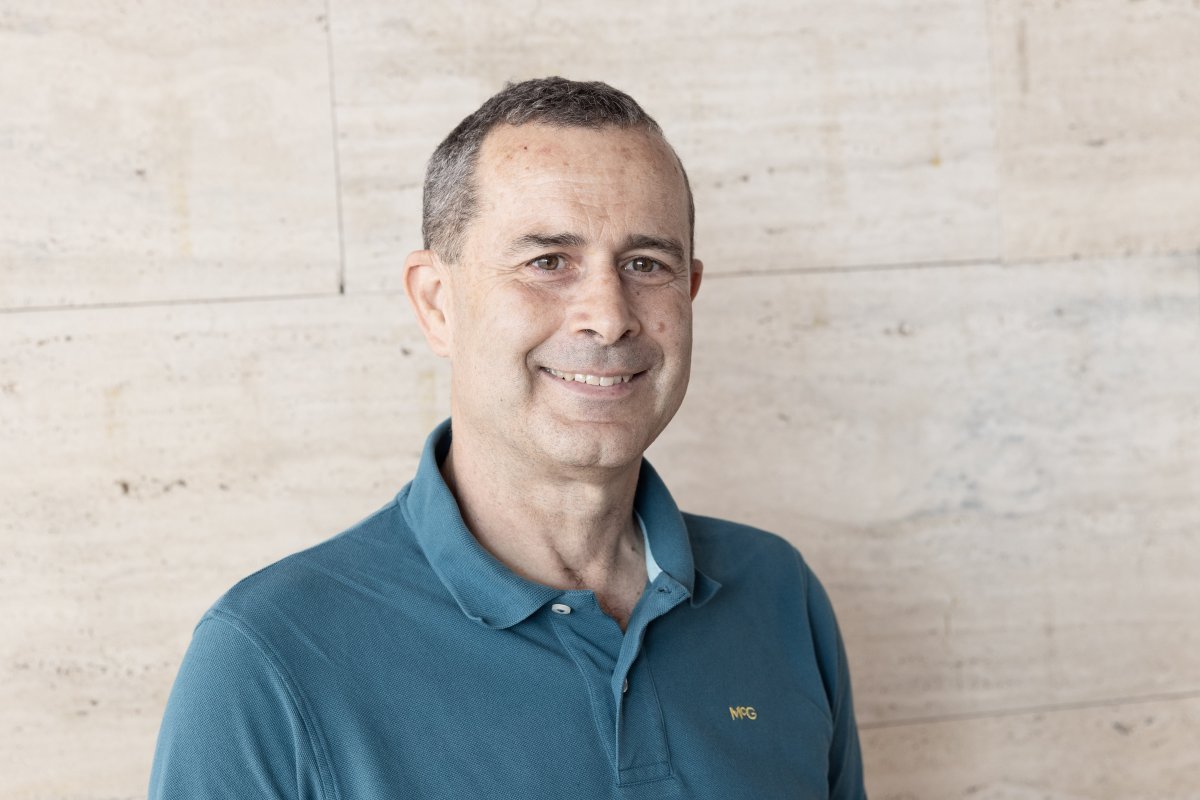
“Alternative facts are not facts,” says Carlos Elías, Professor of Journalism from Carlos III University, Madrid. “Alternative facts are falsehoods. But the question we need to ask is: how did we get to a point where someone could confidently make this statement and expect it to be taken seriously?”
Universities taught that science is just another story
According to Elías, who studies the intersection of science communication and media, the answer lies in the halls of academia itself. For more than 50 years, Western universities have been teaching students that “science is just another narrative” through postmodern philosophy courses. These ideas, once confined to obscure academic departments, have now filtered into communication, journalism, and business programmes. Unfortunately, these are exactly the fields that shape public discourse and corporate decision-making.
The shift represents a fundamental change in how universities approach truth. Pre-modern institutions were God-centred and viewed divine revelation as the source of absolute truth. The modern era brought scientific methodology and empirical reasoning. But the postmodern university embraces the idea that truth is created rather than discovered.
“We moved from seeking truth to creating truth,” Elías explains. “And this creates serious problems when students take these ideas into the real world.”
The philosopher who said ‘anything goes’
The intellectual foundations for this shift can be traced to specific thinkers whose work became required reading in university curricula. Paul Feyerabend, an Austrian philosopher of science, argued for “epistemological anarchism”, which is the idea that scientific methods have no special claim to truth. His famous principle was simple but radical: “Anything goes.”
In 1979, Science magazine published a profile describing Feyerabend as “the worst enemy of science” and noting his belief that “equal time should be given to competing avenues of knowledge, such as astrology, acupuncture, and witchcraft”. Yet his books became standard texts in university courses worldwide.
“Students read Feyerabend alongside other postmodern thinkers like Jean-François Lyotard, who argued that science is just a grand narrative among many others,” Elías says. “They learn about Jacques Derrida’s deconstruction philosophy, which challenges logical reasoning itself. These aren’t necessarily wrong ideas to explore, but when you teach them without context to students who will become journalists, communicators, and business leaders, you create problems.”
Economics professors can’t agree on basic facts
The real-world consequences of this intellectual shift become apparent when examining academic disciplines themselves. In 2013, the Sveriges Riksbank Prize in Economic Sciences in Memory of Alfred Nobel (commonly referred to as the Nobel Prize in Economics) was shared between Eugene Fama, who proved the rationality of markets, and Robert Shiller, who demonstrated exactly the opposite, i.e., that investors behave irrationally.
“Here we have two economists sharing the same prize for completely contradictory theories,” Elías observes. “How can students be expected to trust expert knowledge when experts fundamentally disagree about basic principles?”
This confusion extends beyond economics into other social sciences where competing paradigms coexist without resolution. While this intellectual diversity might be valuable in academic settings, it creates problems when graduates enter fields where clear decision-making is essential.
Communication replaced journalism’s commitment to truth
The shift from truth-seeking to narrative-creation has been particularly pronounced in media and communication fields. Traditional journalism operates under codes of ethics that prioritise seeking truth, minimising harm, acting independently, and maintaining accountability. But the rise of “communication” as a distinct discipline has different priorities.
“Communication is about persuasion, not truth,” Elías explains. “When Kellyanne Conway and [former White House press secretary and communications director] Sean Spicer presented alternative facts, they were acting as communication advisers, not journalists. They weren’t interested in truth; they were interested in shaping perception.”
This distinction matters because universities now produce far more communication graduates than journalism graduates. These professionals enter fields including corporate communications, public relations, political consulting, and digital marketing where they shape how information is presented to the public.
Business leaders operate in a post-truth environment
The practical implications for business are significant. When facts become negotiable and expertise loses authority, strategic decision-making becomes exponentially more difficult. Market research can be dismissed as “just one perspective”. Scientific evidence about climate risks gets treated as partisan opinion. And expert analysis loses credibility to social media influencers who claim to offer “alternative” viewpoints.
“We live in a society where people prefer to get their information from influencers rather than established institutions,” Elías says. “We’ve taught entire generations that all narratives are equally valid.”
This creates particular challenges in sectors like healthcare, environmental management, and financial services, where evidence-based decision-making is crucial. When employees have been educated to view scientific consensus as just another opinion, corporate risk assessment becomes nearly impossible.
The dangerous democratisation of expertise
The postmodern challenge to authority has created what Elías calls a “dangerous democratisation of expertise”. While questioning traditional power structures can be valuable, treating all knowledge as relative creates new problems. For example, if all perspectives are equally valid, a climate scientist’s analysis carries no more weight than a social media post from someone without relevant training.
“The university should teach critical thinking, but critical thinking doesn’t mean rejecting all authority,” Elías argues. “It means learning to evaluate sources, understand methodology, and distinguish between reliable and unreliable information. When we teach that everything is socially constructed, we remove students’ ability to make these distinctions.”
This has created fertile ground for conspiracy theories and misinformation campaigns. If truth is just a matter of perspective, then any alternative explanation becomes plausible, regardless of evidence.
Meta-narratives lose their binding power
Postmodern philosophy’s challenge to “grand narratives” – overarching stories that explain historical events or societal development – has had unintended consequences. While scepticism toward all-encompassing explanations can encourage critical thinking, it also contributes to a lack of trust in any shared framework for understanding reality.
“When people stop believing in common narratives, they become more susceptible to conspiracy theories and alternative facts,” Elías explains. “If you don’t trust traditional institutions to provide reliable information, you’re more likely to believe whatever confirms your existing beliefs.”
This fragmentation of shared reality poses challenges for business leaders who need to build consensus around strategic decisions. When team members approach the same data with fundamentally different assumptions, reaching agreement becomes nearly impossible.
Restoring faith in evidence-based thinking
Despite his critique of postmodern influence in universities, Elías doesn't advocate for abandoning critical inquiry. Instead, he argues for restoring the distinction between legitimate scepticism and wholesale relativism. Universities need to teach students how to evaluate evidence while maintaining intellectual humility about the limits of knowledge.
“The goal isn’t to return to an age of unquestioned authority,” he says. “It’s to help students develop the intellectual tools they need to navigate a complex world. That means understanding how science works, how to evaluate sources, and why some methods of inquiry are more reliable than others.”
For business education specifically, this means incorporating stronger foundations in scientific reasoning, statistical literacy, and evidence evaluation. Students need to understand not just how to communicate effectively, but how to distinguish between persuasion and truth-seeking.
“We have a responsibility to prepare students for a world where information is abundant but wisdom is scarce,” Elías concludes. “That means teaching them not just to question everything, but to question intelligently. The alternative is a world where facts become whatever we want them to be. And that’s a dangerous place for any society to find itself.”
Fighting fake facts on the frontlines
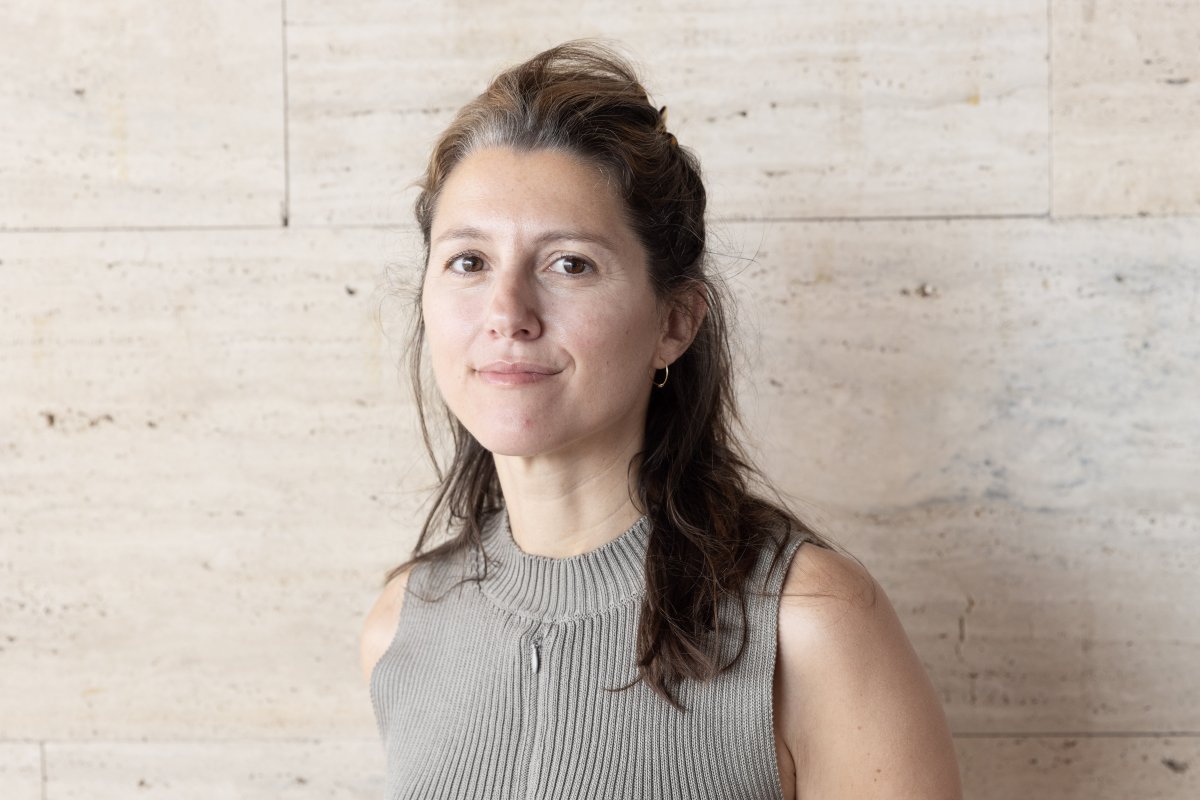
While Professor Carlos Elías traces the academic origins of our post-truth crisis, journalist Alba Tobella confronts its daily consequences. As director of Verificat, a Barcelona-based fact-checking agency, she spends her days debunking the kinds of “alternative facts” that proliferate across social media platforms and influence millions of people’s decisions.
“Most of the misinformation we encounter isn’t completely made up,” Tobella explains. “It’s based on some kernel of scientific truth that gets twisted, exaggerated, or taken completely out of context. That’s what makes it so dangerous and so hard to debunk.”
One typical case involved an Instagram advertisement promoting ashwagandha supplements that claimed to reduce stress “without visiting a doctor and without taking any chemical substances”. When Verificat investigated, they found minimal evidence that the herb works for anxiety or stress control, despite the company’s confident marketing claims.
“When we published our fact-check explaining there was no solid evidence, the company contacted us,” Tobella recalls. “They argued that millions of people suffer from stress worldwide, so it’s worth researching. Of course research is valuable, but it’s not worth selling unproven products to millions of stressed people.”
Perhaps nowhere is the weaponisation of doubt more dangerous than in climate science communication. Tobella’s team recently investigated a document signed by 1 107 “experts” claiming there was no climate emergency. Rather than simply dismissing it, they took a methodical approach.
“We started digging into who these experts actually were,” she says. “We found economists, geologists, and various other fields, but no actual climate experts. Then we put the number in context. One thousand people sounds impressive until you compare it to the entire scientific community.”
Unfortunately, even careful fact-checking struggles against the speed at which misinformation spreads. Social media algorithms prioritise engagement over truth, meaning outrageous claims spread faster than careful corrections. And this is before one considers how much of the world has become “political”.
“Making scientific knowledge seem tribal and debatable is the first step to denying it altogether,” Tobella warns. “But the fact that people still reach out to us through WhatsApp asking us to verify claims gives me hope that we haven’t completely lost the battle for truth.”


Gallery