
I do all of this to “play my part” in being a good eco-citizen. Yet I still feel guilty about my impact on the planet and depressed by the seeming pointlessness of my efforts in the face of an issue as big as climate change. Recently, I discovered there’s a name for this: eco-nihilism.
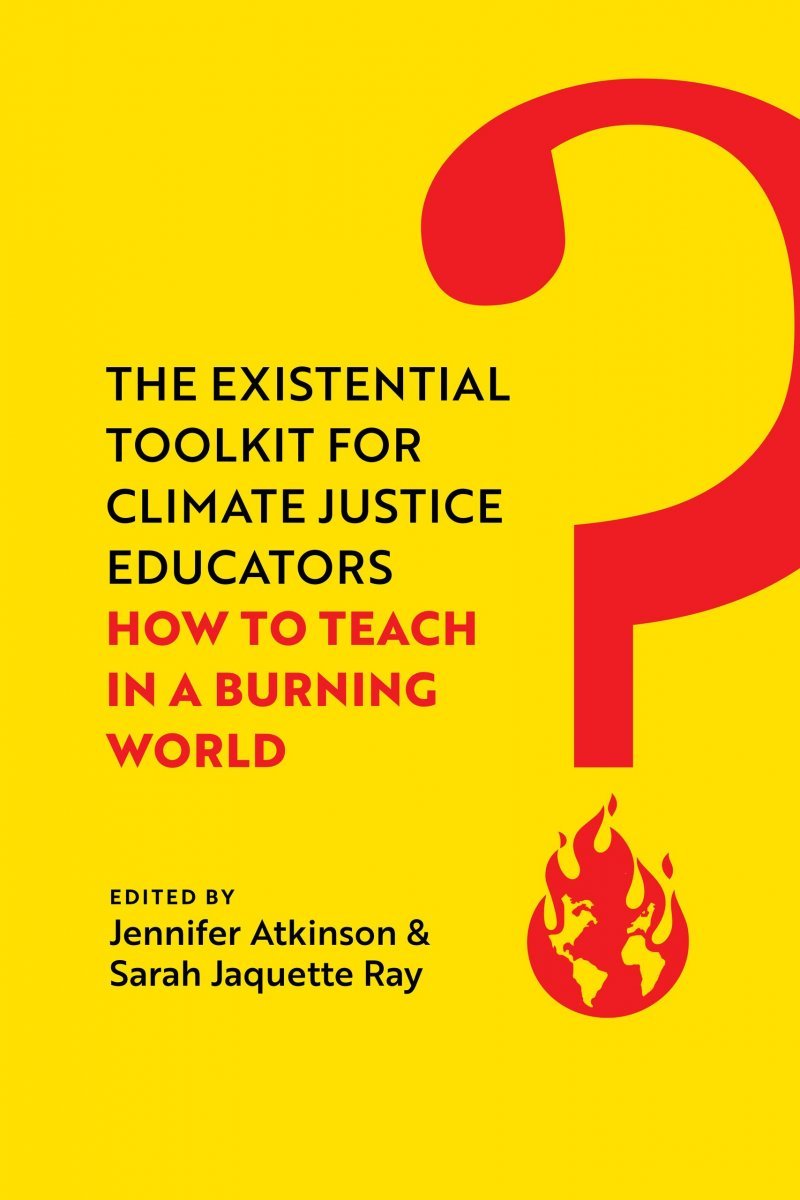
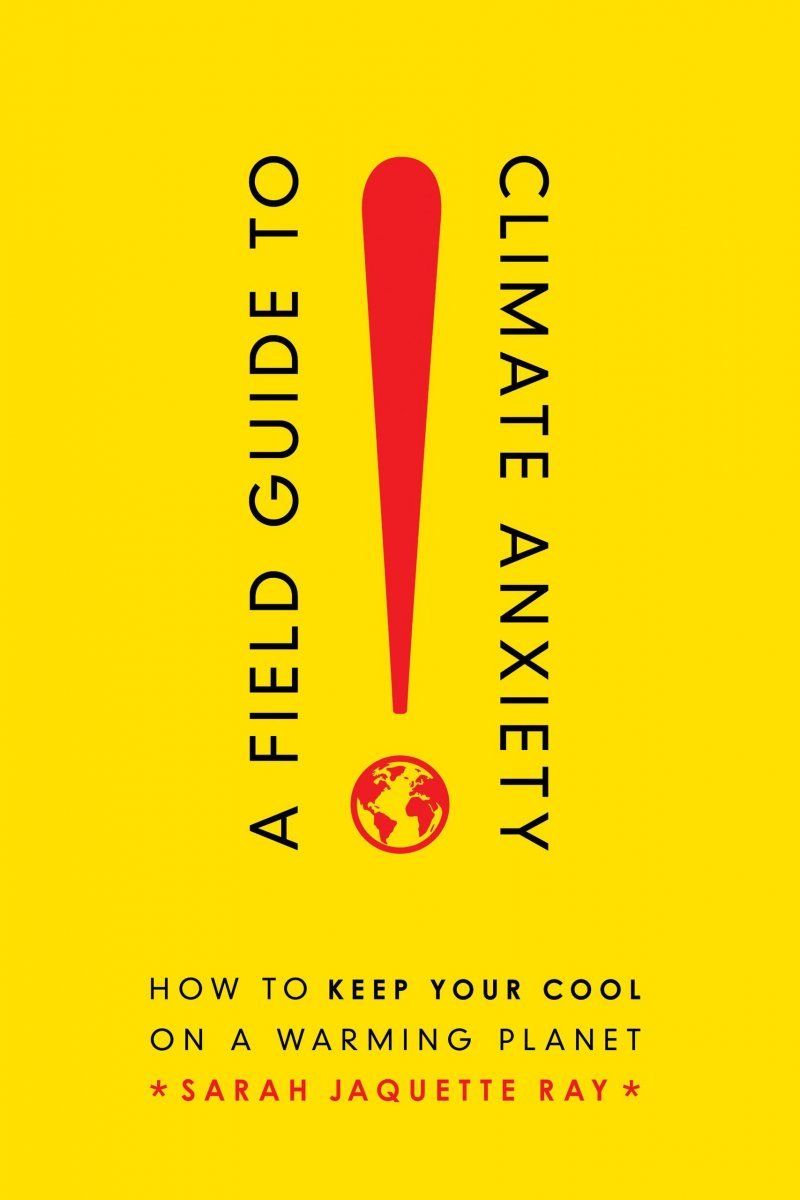
I first heard the term on the podcast Hidden Brain, where Dr. Sarah Jaquette Ray, who teaches environmental studies at Humboldt State University in California, spoke about how her students were experiencing climate despair. She’s written a whole book on the subject, A Field Guide to Climate Anxiety, which she describes as Gen Z’s first “existential toolkit” for combating eco-guilt and burnout while advocating for climate justice. Then she co-edited a book for educators too, The Existential Toolkit for Climate Justice Educators.
In her first book, Ray describes how she asked her students to imagine a climate-changed future in which all the positive results of their collective efforts had come to pass.
The result? Blank stares.
The students could not imagine a future at all – they were frozen by their fear and anxiety.
She uses the rest of the book to lay out practical ways to respond: cultivating climate wisdom; dismantling myths of individualism (“I can’t make a difference”) and instrumentalism (“only spectacular results matter”); replacing doom narratives with stories of transformation; collaborating across political divides; ditching guilt in favour of humour, joy and desire; resisting burnout; and “feeding what you want to grow”.
Encouraged by these strategies for overcoming climate grief (and guilt!) and reclaiming agency, I wondered how they might apply at business schools like GIBS. As a founding member of Business Schools for Climate Leadership (BS4CL) Africa, GIBS is part of the movement to integrate climate action into business education across the continent.
Frightening futures
I asked Dr. Roze Phillips, adjunct faculty and African futurist at GIBS, whether she was seeing eco-nihilism among her students – were they also picturing nothing but a blank canvas when faced with the future?
“I teach a two-day Futures Thinking course at GIBS. At the very start of the journey, we play a futures game that asks students to compare the state of the world today with thirty years ago. Almost unanimously, the responses are pessimistic: climate breakdown, inequality, corruption. It’s a sobering snapshot of the collective mood of despair and paralysis in the face of complexity and uncertainty. This feels different from earlier moments of upheaval, like the fall of the Berlin Wall or the collapse of the Soviet Union. Then, uncertainty carried with it a sense of liberation and hope.
"Today’s uncertainty is layered with climate grief and ecological collapse. Students don’t look at the horizon and see a blank canvas, rather they see a cliff edge. Our work in the classroom is to shift that perspective from paralysis to possibility,” says Phillips.
“That’s exactly what my students would say too, if they had the words. It’s the same paralysis, the same sense of falling,” says Ray. In addressing this, she believes we need to acknowledge that emotions matter as much as data.
Emotions – the elephant in the business school classroom?
Business (and by extension, business schools) loves to focus on data, hard science and facts. Emotions are generally less well received.
“But if business is serious about science, then it should also be serious about the science of emotions,” says Ray. “Human beings make decisions – big and small – based on feelings, not on optimised data. Silicon Valley is making billions exploiting our psychology. Why wouldn’t we use that same knowledge to tackle climate change?”
Phillips notes that young people feel eco-anxiety viscerally as the future they are inheriting.
“That anxiety is real, and rational. But it doesn’t have to end in paralysis. When students learn foresight methods – frameworks to explore alternative futures – the despair begins to shift. They realise the future is not a noun to be predicted but a verb to be practised. Agency is the tool, a tool we’ve too often outsourced to institutions like governments or corporations. Futures Thinking invites students to reclaim it.”
Some students express this shift through powerful metaphors: one said she was moving from a watering can – small, limited and local impact – to becoming the rain itself, abundant and system-shaping. Another described herself as a phoenix at rest: no longer consumed by flames, but steady, ready to build. “These images show eco-anxiety can be transformed into pragmatic, future-oriented energy,” says Phillips.
Re-storying the climate narrative
To shift from paralysis to agency, Ray suggests “hacking the story” – changing the narrative from “the great unravelling” to “the great turning.”
“The great unravelling is what we get on 24-hour doomscrolling,” she explains. “It’s a self-fulfilling prophecy. The more our negativity bias is fed, the more we believe collapse is inevitable. But businesses can rewrite the ‘business as usual’ story – reset the defaults and make sustainable choices the norm.”
She points to Rob Nixon’s Slow Violence and the Environmentalism of the Poor, which critiques the media’s obsession with sudden disasters while ignoring slow-burning causes and recoveries. Good news, she notes, rarely makes headlines. “Bad things can happen quickly, but good things aren’t built in a day, and as they unfold, they’ll be out of sync with the news cycle.”
Joanna Macy’s theoretical framework of the “great turning”, by contrast, is the transition from a doomed industrial-growth economy to a life-sustaining society. “This transition is already under way,” Ray says. “It acknowledges the work already happening.”
Phillips echoes this. “The simplest shift is to frame every discussion – a case study, a leadership talk, a strategy debate – with the question, ‘What alternative futures could emerge from this?’ It doesn’t take more time, but it changes the orientation from prediction to possibility. When students see live examples – African renewable energy leapfrogging fossil pathways, circular fashion start-ups, fintech platforms expanding inclusion – they realise agency is already at work. These ‘green swans’ make the future feel less like a cliff edge and more like a landscape that can be shaped.”
New motivators needed
Ray references Don’t Talk About Politics by Sarah Stein Lubrano, which cites research showing that talking about contentious things (like politics) doesn’t change people’s minds. Rather, people change their beliefs through taking action and through being affected by what people around them are doing.
In other words, action begets belief (whereas we tend to think it works the other way around).
“If a student joins a climate change protest, it’s not that the protest changes the world – it changes them,” explains Ray. “Their climate identity deepens with every action they take. Secondly, social approval is a powerful driver. When business leaders see their peers taking action, they’re far more likely to follow suit. Businesses are made up of people. Some of the people leading businesses or studying at a business school have powerful social locations where they can help create a positive culture and ethos. To say the individual has no power is to give up your power.”
What can we do differently?
Phillips says that eco-anxiety often shows up in the classroom as resignation. “Students express a despair that as citizens and current and future business leaders, they feel powerless. It is less about business as an abstract system, and more about their own perceived capacity to influence within it or from it,” she says.
“As educators, our task is not to erase eco-anxiety but to give it form, language, and direction. We are not there to cure trauma or offer clinical comfort, but to hold space for it, dignify it, and reframe it. The classroom becomes a space where fear is not dismissed as weakness but recognised as a signal of care, a way of sensing the future pressing in on the present. In Futures Thinking, eco-anxiety is treated not as something to be eliminated but as information to be translated into perspective and action. That is the work of foresight: moving students from paralysis into agency, not by dismissing anxiety or despair but by equipping them to re-story it into futures they can shape.”
Ray adds that students will not act unless they feel efficacious.
“Their emotional sense of agency should be the gold standard for every class. For business school educators, my advice would be to work with your futurists – teach radical imagination. If students can’t picture a better world, they’ll default to business as usual. Give them a compass.”
Leadership lights the path
Both Ray and Phillips emphasise that leadership, even in small acts, can break through eco-nihilism. “It’s not that we want manufactured defeatism, but in this moment of low expectations, even small acts of leadership can generate huge loyalty,” says Ray. “People are desperate for someone to show up.”
Phillips adds, “Eco-nihilism is seductive because it feels like realism. But despair is not the only alternative to rejection or indifference. The future doesn’t need our despair. It needs our imagination, and our willingness to act today. What business schools can do – and what I try to model in my teaching – is reframe narratives of collapse into practices of agency. Not naïve optimism, not sterile abstraction, but grounded foresight. Imagination is not escapism. It is the discipline of refusing inevitability.”
Take action
Five ways to resist eco-nihilism and lead with agency:
- Practise foresight
Treat the future as a verb, not a prediction. - Hack the story
Intentionally replace doom narratives with stories of transformation. Look for “green swans” in your industry. - Build your climate identity
Take action, however small. Join initiatives at work, support climate-positive ventures, or start your own. Action deepens commitment. - Model leadership
Show up. Even small acts of climate leadership earn trust and inspire others. - Guard against burnout
Find joy, humour, and resilience in the work. Sustained commitment needs nourishment, not guilt.


Gallery