
Will US President Donald Trump’s tariff wars succeed in relocating America’s manufacturing away from China and the rest of East Asia and back to America? How will the apparently endless tariff deluge affect other trading partners such as Europe, the UK and, of course, us here in South Africa? How inflationary will this be? How badly will consumers be hurt and in which country?
At the heart of Trump’s philosophy – if I can call it that – is protectionism. Throw up the barriers, keep the foreigners out of our markets, make everything we need ourselves. That way lies prosperity and security; we won’t support the greedy and the lazy elsewhere and no-one can hold us hostage.
Superficially, it’s an attractive proposition and one that has been used by many countries over the last several hundred years. Since the late 1800s, the chief proponent of tariffs – on and off – has been America, arguing first that its nascent industries could not compete with Britain and Europe’s well-established ones and, latterly, that those same industries, now very well-developed, cannot compete with the low wages paid in East Asia.
A parallel strand of that argument is that the America that has embraced free trade over the last 40-50 years is at a major disadvantage when foreign governments – China, in particular – throw heavy subsidies at key industries and companies. In this way, American competitors are always undercut. The cry goes up that such-and-such an industry must be “saved” – steel is a favourite, cars another.
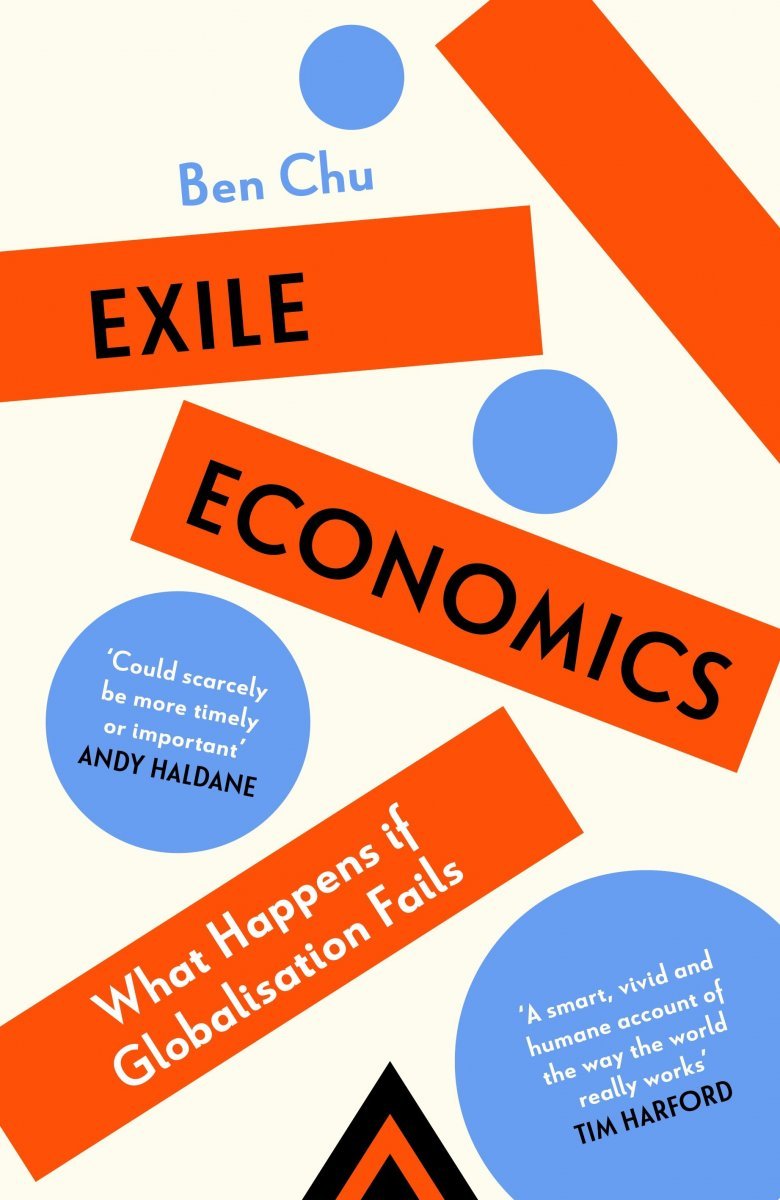
Exile Economics
Ben Chu
John Murray – R470
BBC Verify correspondent Ben Chu calls this exile economics – also the title of his new book on the subject. Exile economics, he tells us, is a rejection of interdependence, a downgrading of multilateral collaboration and a striving for greater national self-sufficiency. It is, in other words, the end of globalisation as we know it.
To explain the dangers of this approach and why it is doomed to failure, Chu takes six key areas of modern international trade – food, energy, silicon, people, steel, and medicine – and traces the movements of the commodities and people in each one. His picture is one of remarkably complex supply chains with equally convoluted interdependence on a global basis.
Yes, he says, “China has been more protectionist than the West when it comes to its domestic automotive industry. Yet it is worth bearing in mind that a large proportion of Chinese EV exports in 2023 were Chinese-built Teslas, emerging from Elon Musk’s Shanghai factory. The cars were assembled in China but the brand was American. So is a Tesla that’s imported from Shanghai and driven, for example, in London or Berlin a Chinese EV or an American EV?”
That’s a straightforward example, but Chu takes it a stage further when he notes that the US imports a fifth of all Chinese lithium-ion batteries. He tells us that most are used in EVs assembled in America and each one accounts for between a quarter and a third of the vehicle’s price. So, asks Chu, “were these US EVs or Chinese EVs?”
Steel is highly emotive and Chu refers to its “political fetishization”. But he reminds us that US tariffs on steel imports imposed in 2018 by the first Trump administration have had no effect on the preservation of jobs in America’s rust belt. He also cites the former capital of steel in that country, Pittsburgh, as a city that has successfully pivoted away from steel. Steel is still needed globally, and there is an acknowledged severe overcapacity in China. But Chu argues that the modern trend of using electric arc furnaces – mini-mills as they’re called in the US and here, too - to recycle old steel risks leaving Beijing with stranded assets. China’s strength in steel risks becoming a glaring weakness.
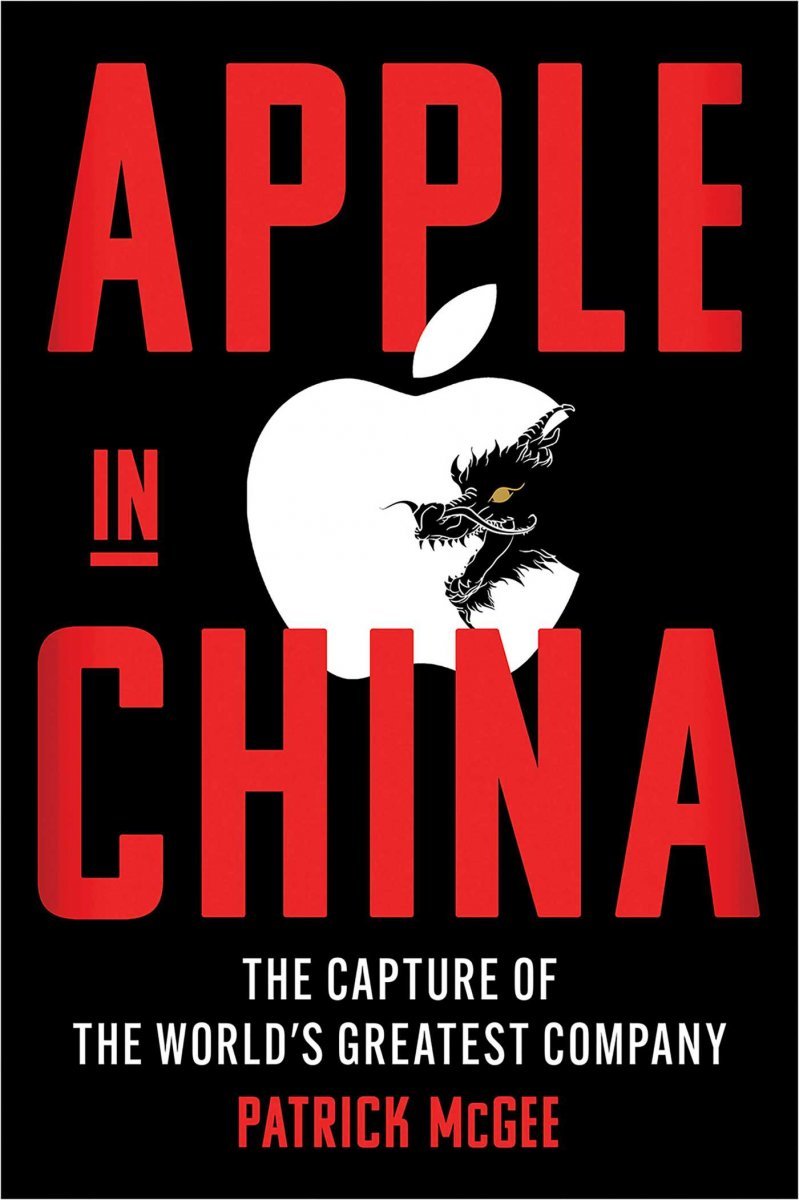
Apple in China
Patrick McGee
Simon and Schuster UK – R440
Patrick McGee, until recently the Financial Times’ principal Apple reporter, approaches the problem from a different angle. Apple in China is, essentially, a tale of globalisation gone wrong.
It charts the history of Apple’s manufacturing strategies from immediately before the return of founder Steve Jobs in 1997, when Apple was on the verge of bankruptcy, to the present day. Over time, a variety of suppliers were used to manufacture Apple’s increasingly successful product line-up, but one country and one company emerged head-and-shoulders above the rest. Taiwan was the country, Foxconn the company.
Unlike its rivals, Foxconn was prepared to drive costs down to unheard-of levels with unprecedented attention to detail. Where others said Apple’s extreme design demands were not possible at such low prices, Foxconn’s CEO Terry Gou worked with Apple’s executives, engineers and scientists to deliver Jobs’s “insanely great” devices. Gou had also spotted the benefits of using cheaper labour not in Taiwan, but in China’s rapidly growing Shenzhen city, just across from Hong Kong.
Apple was driving the process as much as Foxconn, flying planeloads of experts to Shenzhen to transfer knowledge and expertise to Foxconn’s teams. The strategy was wildly successful. As McGee puts it, “Apple was discovering how to be the world’s largest manufacturer without owning any factories.”
Then, in 2007, came the transformative iPhone. In China itself, the iPhone immediately became a massive status symbol, with demand far outstripping supply. By 2010, Terry Gou was able to offer a deal to Apple CEO Tim Cook (Jobs’s successor). Using his political savvy and contacts to secure national and provincial government support, Gou’s Foxconn would build two new campuses far from Shenzhen, in China’s interior. There, Foxconn would build exclusively for Apple – the iPhone4 and the new iPad. It was a very sweet prospect for both companies.
Fast forward to the present. There have been two developments in the interim: one is called Xi Jinping, president of China. The other was the Covid pandemic. During the pandemic, Xi shut China off from the rest of the world in a way that demonstrated very plainly how dependent Apple had become on a country led by a hardline authoritarian.
Apple is trying. It has begun switching iPhone production to India and has also promised Trump to build new factories in America. Privately, Apple executives quoted by McGee say the company has no chance of meaningful diversification away from China in the next five years. Hence McGee’s description of Apple being captured by China.
So, who is right? Ben Chu or Patrick McGee? Doesn’t Apple’s predicament underline the necessity for protectionist policies?
The answer is no. Read both books back-to-back (which is easy to do as they are both extremely well written) and you will find that globalisation has immense benefits, chief among which is the ability to drive down costs, as well the harnessing of diverse skill sets and workplace cultures. But as you globalise, don’t forget to build diversification and back-ups into your supply chain.
Attractive though a basket might appear, remember the old warning not to put all your eggs into it!


Gallery