Human beings are brimming with transformative potential and vast levels of creative consciousness that are activated by curiosity. This inquisitiveness unlocks something expansive and magical in the human psyche, and helps us flow with change.
Most of us don’t realise we have this latent ability, or we don’t trust ourselves to give our curious natures free rein to inspire our creativity. Instead, when confronted with external complexity and uncertainty, many of us just feel drained and overwhelmed. We withdraw, rather than tapping into our instinctive creativity to help us reimagine and respond: moulding this discomfort into something more expansive, positive, and even joyful.
Fortunately, this voyage of inspiration does not require expensive watercolour painting classes, guitar lessons or joining an amateur dramatics group (that is, unless you want to). What it does encourage is a process of creative self-discovery and agency. By exploring who you are and embracing facets of your multi-dimensionality, you give yourself scope to create more and become more.
Don’t blame complexity. Paint with it
The dominant narrative at the moment is that the world is becoming more complex. Just consider these two popular acronyms: VUCA and BANI. They frame a world that is either “volatile, uncertain, complex, and ambiguous” or “brittle, anxious, non-linear, and incomprehensible”.
However, complex systems physicist Yaneer Bar-Yam tells us that complexity is also a matter of perspective. Speaking on the Technoculture podcast, he said: “Because we are having more and more global interactions, the complexity of the scale of the world is increasing, and that comes along with various implications and complications that we need to understand when we think about what is going on in the world.”
From an individual perspective, complexity is also being heightened by time. Or the lack thereof. Before the advent of hyper-connected digital technologies, human beings had more time to reflect and make sense of emerging dynamics and inter-connections. That is increasingly no longer the case, which means our inner experience of the world is more complex and, at times, partially resolved. This can make daily life feel overwhelming for all of us, including leaders who are trying to provide some direction and clarity.
Fortunately, our experiences and interactions with leaders at PAL tell us that it is possible to help people navigate this change by introducing them to frameworks and strategies that encourage the consideration and holding of different perspectives. The starting point, however, is not a framework but a personal investment in harnessing your attention and creativity to unlock internal levels of complexity that already exist inside you.
How to leverage your inner human complexity
The first step is to know you have far more latent potential than you may be aware of or using. We all have so many facets to us, even if some are lying dormant; so the challenge is to provoke that potential into being.
Discovering – or in some cases rediscovering – these hidden depths inspires an outpouring of pure creativity. Sometimes, catalysing this discovery means doing something in a completely different way than usual and then, with an attitude of curiosity, discovering through feedback and the resulting experience what else lies within you. Another way, is to immerse yourself in a different world for a while, or listen intensively to someone describing an aspect of their reality. The more these perspectives differ, the more you need to activate additional parts of yourselves to foster understanding. Your daily life will be peppered with invitations and opportunities to learn from different cultures, peoples, views, disciplines and viewpoints and, in doing so, will implicitly draw out undiscovered parts of yourself.
As you embrace your inner multi-dimensionality, you can also begin to overlay this sense of self onto our multi-layered world. In the process, new actions and ideas will challenge old paradigms and (as long as you remain curious and learning) fresh perspectives will surface for consideration. Over time, you outgrow the uni-dimensional boxes we placed ourselves in, and become more like a multi-faceted diamond: capable of positively absorbing and reflecting far more of the multi-dimensions “out there”.
Fortunately, through the ongoing process of self-awareness and the application of creative thinking, it is possible to adapt more easily to external complexity. Once you start applying a creative lens, the world could even become an exciting place of possibilities.
For leaders, who must explore their own inner complexity and the multi-levels on which their organisation and industry operate, demonstrating creative curiosity and agency is critical for driving forward both the business and its people.
In fact, leadership development experts Robert J Anderson and William A Adams believe this level of awareness is the “operating system of performance”. They explain that performance, individually and collectively, is always consistent (and bounded by) our level of consciousness. “We cannot perform at a higher level of performance than is built into our operating system. Likewise, an organisation cannot perform at a higher level of performance than the collective consciousness of its leadership.”
And there’s more
Ultimately, we should all be seeking to advance our inner multi-dimensionality to stages of human development which some experts call “self-transforming” and “unitive”. These levels of being embody elements of the Ubuntu philosophy, which describes a state in which we are highly aware of ourselves as human individuals but equally aware of how we are connected to others. This realisation enables us to flex, suspend, or activate how we identify and operate on the basis of the higher good.
As therapists David Hartman and Diane Zimberoff explain, “People at the unitive stage no longer give the impression of trying to escape the inevitable contradictions and limitations of the rational, representational domain. They can embrace polar opposites on an effective level and not just cognitively. Good and evil, joy and regret, closeness and separateness are valued as natural and meaningful aspects in the dance of life, or as part of the eternal cycle of creation, destruction and recreation. Such an openness to ongoing experience combined with empathy for all beings at all stages of development distinguish the unitive from the previous stage.”
Can you imagine if more leaders with this general mental model were leading us through complexity, into a compassionate, inclusive future for the collective?
In practice the key to unlocking the unitive level of consciousness lies in actively looking beyond yourself to expand and incorporate new perspectives. It’s a never-ending process of expanding and creating your identity and integrating new facets into your being, which ultimately makes for a more multi-layered (not to mention creative, empathic, and joyful) person.
Where do you start?
As much as coaching, reading, and discovering can help guide the way, this is a person-centred process and a life-long commitment that starts with embracing the inner dynamism of your essence, and recognising that you are more than just the sum of your current beliefs, assumptions, and experiences. Therefore, the starting point is a depth of curious reflection which many people don’t quite have the stomach for – let alone leaders in society who still largely prefer to think and act in safer and easier binaries and stereotypes.
Neuroscience tells us that the human mind is not only predisposed to thinking in stereotypes as a way of dealing with complexities, but that we also tend towards negative associations and prejudice in our thinking. However, as individuals and leaders we cannot hope to understand a complex, modern world if we do not learn how to actively engage and absorb dissonance.
The next step is to go further than self-authoring, self-awareness, and self-acceptance by helping leaders to continuously expand their perspectives, take in new ideas and reflect on complexity. Anything less runs the risk of becoming psychologically (and literally) stuck at a time when effective leadership must embrace contradictions, including those we carry within ourselves.
There are rigorous psychological theories, tools, and methods one can tap into for working on sort of leadership competencies that provoke deep inner work, such as the Sustainability Mindset Indicator, The Leadership Circle Profile (LCP), Futures Literacy and the Inner Development Goals Framework. In a business context, the 360-degree LCP leadership assessment tool is important given that it links back to business outcomes and the generative behaviours required of leaders operating in a complex world. These tools help to create a pathway towards higher levels of thinking and being. They are intricate, and because they often involve unlearning some identity beliefs and closely held beliefs, it is critical to work with a professional coach and development expert.
As for the creativity, well, that’s up to you to discover and enact as you get to know yourself in all your wonderful, multi-layered glory.
A case of arrested development?
Psychologists have a clear roadmap for child development, from newborn into toddlerhood and the school years up to age 12. However, the remaining five decades of human life are covered by just four stages: adolescence (12-18), early adulthood (18-40), middle adulthood (40-65) and late adulthood (65+). Some studies simply group everything from age 18 upwards as “adulthood”, and leave it at that.
This approach assumes that human development just flatlines in adulthood as we cruise along on automatic pilot, taking in more information that interests us, but not necessarily changing ourselves intentionally. Sure, our cognitive brains get loads of input, but this view assumes that our emotional and social selves, as well as our innate internal knowledge about who we are, is largely left to chance and serendipity.
Fortunately, thanks to adult development specialists like Dr Robert Kegan, greater emphasis is now being placed on the importance of ongoing adult development stages. According to Kegan, about 58% of adults operate at the socialised mind level where we are locked into social, familial, cultural, and ideological ideals that shape our personal views.
About 35% of adults do make the leap to the next level, which Kegan calls self-authoring. This level of consciousness is reached when the individual has sufficient self-awareness and confidence in their own judgement to trust that they can make sound decisions without being buffeted by external influences.
In coaching and leadership development we certainly focus on self-authoring, but we should be helping our clients to shift gears once more. Right now, the self-transforming level is an enigma to all but about 1% of human adults, but as our complex world continues to gather speed we need to dramatically increase that percentage of interconnected and creatively evolving individuals.
A curious journey of delight
- Creativity is alive in all of us. We just need to tap into it.
- When we do, this growing sense of cognitive multi-dimensionality can be used to help spot and solve complex problems.
- Developing your emotional, social, and spiritual sides encourages empathy, compassion, and inclusivity, while bringing personal joy and expression.
- Through creative consciousness, we can all develop a more accountable, creative, active, and agentic sense of the word.
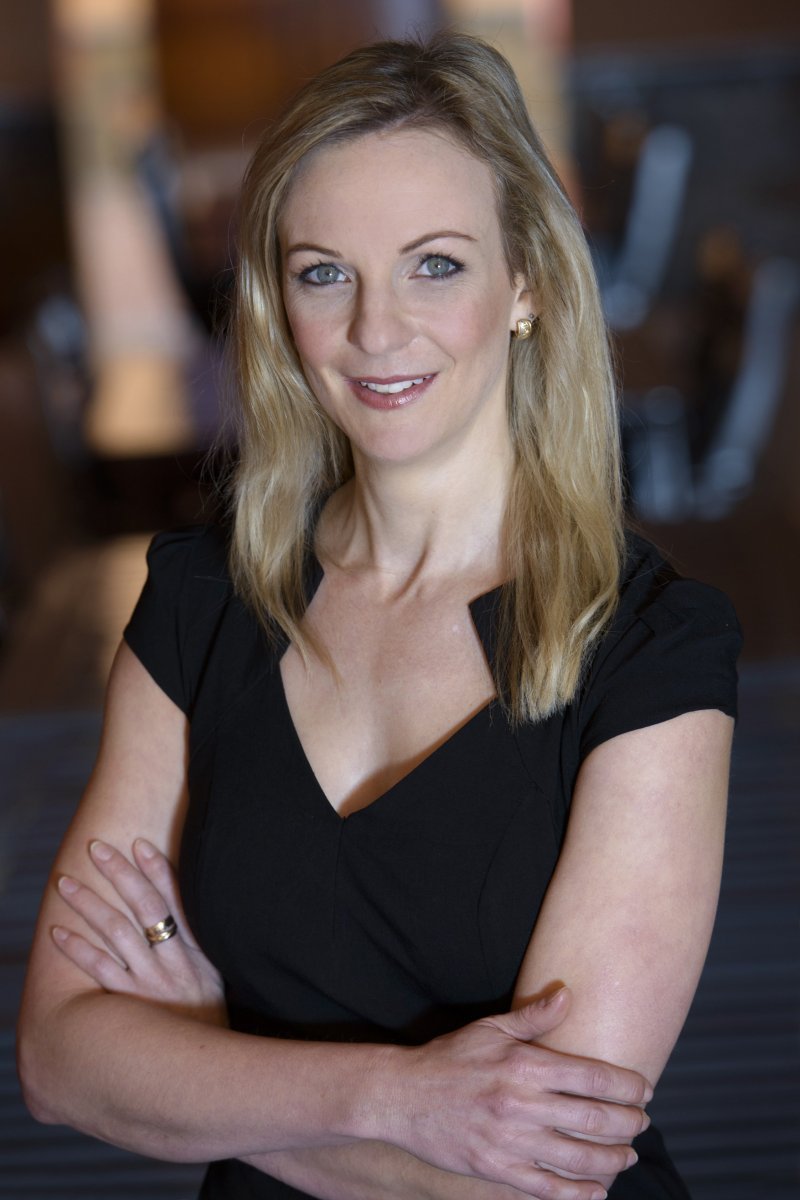
Alison Reid is director of Personal and Applied Learning (PAL) at GIBS. This centre focuses on developing the practice of management in GIBS delegates, alongside the science of business and management taught in the classrooms. PAL selects and manages 70 experts coaches and practice experts, as well as the solutions, resources, and thought leadership for the personalised and applied development processes which are used on more than 70% of GIBS programmes.


Gallery