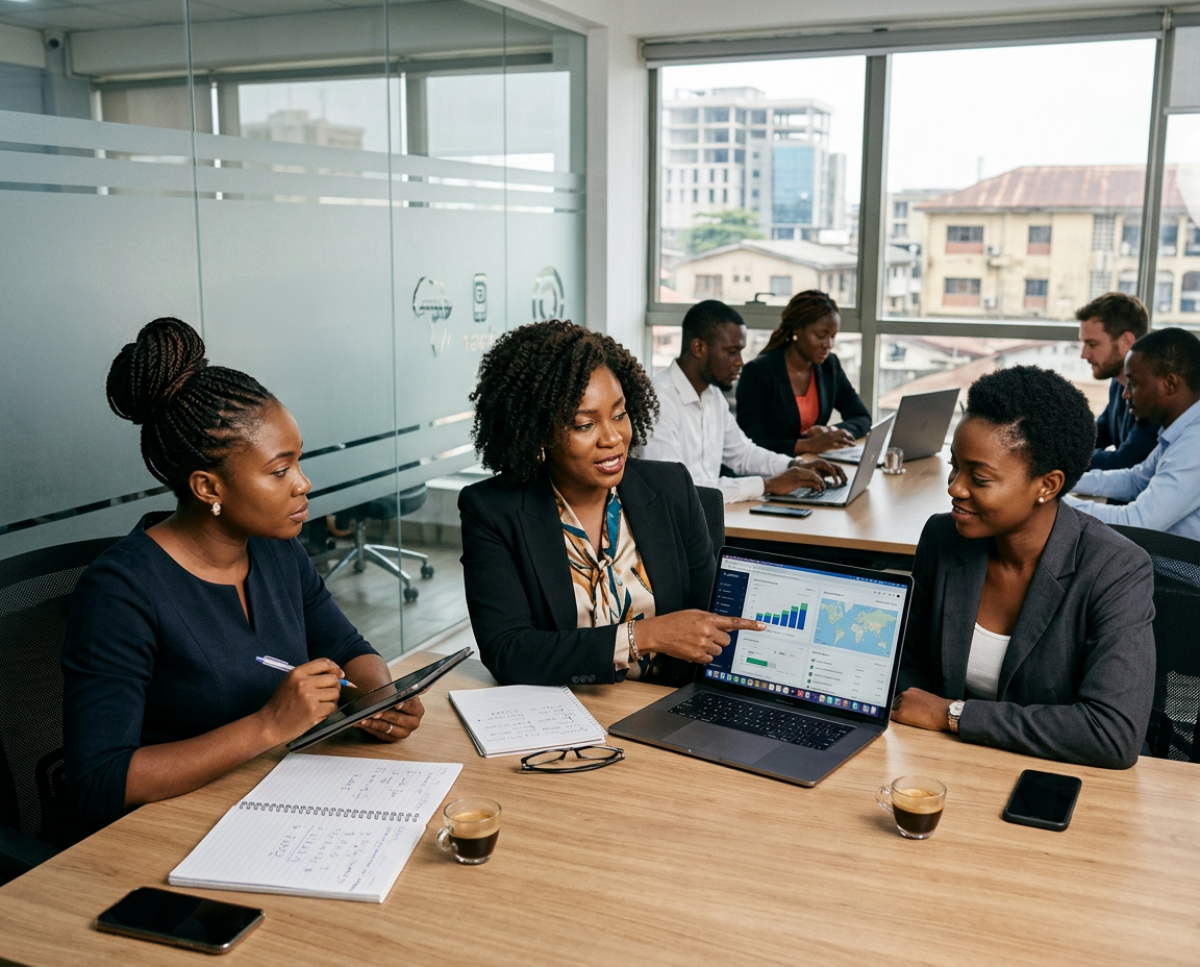
A report published in 2025 by the UN Trade and Development’s (UNCTAD’s) eTrade for Women initiative, in collaboration with GIBS and ESCP Business School, entitled Breaking Down Barriers for Women Digital Entrepreneurs: Insights from Africa, represents one of the most comprehensive studies to date of this segment with the aim of documenting and analysing the realities of Africa’s women digital entrepreneurs.
The eTrade for Women initiative, launched in 2019, empowers female digital entrepreneurs in developing countries to grow their businesses and influence policy. The initiative aims to bridge the digital gender divide and foster inclusive economic growth. While the report highlighted the challenges that we know all too well women face, including structural, infrastructural, and funding hurdles, through the report a more nuanced story emerged.
Who are Africa’s female tech entrepreneurs?
This story starts with the fact that as the digital economy shapes trade globally and across Africa, more African women are emerging as digital entrepreneurs. As such we undertook a global survey, including Latin America, Asia and Africa, to get a baseline before we zeroed in on African women’s lived experiences as tech entrepreneurs on the continent. What stood out about them was that their motivation to start businesses often stems from a societal need or challenge that they want to address.
This has a direct impact on how these women project themselves as entrepreneurs. As many are married with children, when they introduce themselves, they say they are mothers and wives before they mention that they are business founders. So, while they enjoy technology and the sectors in which they work, their real passion for their business also stems from a moral responsibility to their communities. This means that ultimately, the business is a means to an end.
Ironically, however, despite their motivations for starting a business being rooted in the need to address societal challenges, their primary business hurdles are often embedded in their traditional societal norms.
Beyond the economy – a fight for cultural change
The story of these women is therefore the fight for social and cultural change. Their potential is mostly being overlooked at a societal level, because as women, their perception is they are not taken as seriously as they should be when it comes to business.
While they are operating significant enterprises, some with turnovers upward of $500 000 per annum, many of them need to gain acceptance as an entrepreneur. This means a primary challenge centres around their gender. One of our respondents noted that to give her business legitimacy her husband has to be its face. These types of roadblocks are preventing them not only from fulfilling their personal mandates as entrepreneurs, but also from scaling their businesses.
The interviewed women also reported that they are being overwhelmed by their gender responsibilities as mothers and family caregivers. They believe that their contribution to society and their country’s economies could be exponentially enhanced if they were given the time to focus on growing their businesses. Yet, many women reported having to squeeze running their businesses in around their “work” as women of the home.
These businesses exist to make a difference. They are not informal enterprises; they are well entrenched, with 50% having been in operation for over four years. They are businesses that create employment and support multiple families through the jobs they provide. So what needs to change for these women to navigate the deeply entrenched cultural biases displayed towards them as business owners?
Solutions must move beyond government policy
Our research tells us that to be effective, policies or interventions from government need to take into account the gender dimension. This cultural issue has created a gap between government putting gender-equity policies in place and them actually being applied at grassroots level. The solutions therefore will be found in a shift in culture. We believe there are ways to achieve this.
1. Tell their stories
These entrepreneurs need their stories to be told. Women-led entrepreneurship must be made more evident, prominent, and visible so that people, men in particular, start to feel more comfortable doing business with their female peers. The narrative must be that women are not only starting mid-to-large entrepreneurial ventures, but that they are capable business owners, who are driving change within their communities, creating employment, and generating significant revenue.
2. Strengthening women’s entrepreneurial mindset
While many women entrepreneurs strongly identify as mothers and wives, we now need to ensure that they get support to strengthen their belief in themselves as successful entrepreneurs.
This shift must also create more flexibility in their models. Despite them wanting to grow and scale, our report found that some of these women are being driven by the impact they want to have in their communities. As such, many of them need to be comfortable with the idea that they need a thriving business in order to make an impact. For example, one woman was so focused on the impact she wanted to have that she turned down a funding opportunity because she felt it did not match her ideology. She said, “In hindsight, if I had been more business oriented or more emotionally balanced at the time, I might have been able to lead that conversation differently. Maybe I could have found a way to preserve our mission while still exploring the opportunity. But in that moment, standing by our purpose felt more important than the deal on the table.”
3. Women need to be more assertive about their value
It is not a secret, and the research shows, that women tend to underestimate their value, skills, and capabilities. Women need to be bolder and project the value that they bring through their businesses. Understanding this value means that they then carry the confidence forward to achieve the results that they want.
One of the more successful respondents told us that investors want to make money. So, when women present to investors, they need to convince them of the value they and their businesses are bringing to funders. She told us that if investors are reassured that there will be a return on their investment, they will pay less attention to the fact that the business is founded and being run by a woman.
A Kenyan founder indicated that she had to become bolder in her approach and network where business was being conducted. She explained that in Kenya, a lot of men cut deals over drinks at clubs in the evening. This was initially extremely uncomfortable for her as a single woman but she pushed herself to do it.
Another Kenyan entrepreneur had to “politely but firmly” assert herself when her male colleagues expected her to pour and serve tea for the men during a professional event. She said, “The simple act of standing my ground made a difference. It was a small shift, but a meaningful one.”
These examples, encouragingly, highlight that women entrepreneurs are recognising that they have to make their own internal shifts if they want things to change.
4. Encourage familial support
A standout finding of our research was that successful women entrepreneurs – those who have been able to scale meaningfully, build cross-border businesses, and woo big-ticket investors – have had the time to dedicate themselves to their businesses. They have all had extremely modern family environments, where they have supportive spouses and are not the only caregiver with the responsibility of raising children and looking after aging family members.
We also saw that women are raising their children with an awareness of the importance of supporting their mothers and other women in society as entrepreneurs, and encouraging them to do so. By acting as role models, they are making it normal, common, and a point of pride to have a mother as the founder of a successful entrepreneurial endeavour.
5. Encourage STEM-focused journeys
The more women who start businesses, the more normalised it will become. One woman noted that she was actively discouraged from embarking on a STEM career. Her parents wanted her to do a human resource management degree; she had her heart set on studying technology. As these women become more prominent within their roles as tech entrepreneurs, they will become important role models for women in their communities. Their example will help encourage these women to develop an interest in the STEM fields, such as data science, computer science, and engineering, and then participate in them.
Africa’s business schools can drive change
Despite the issues facing African women tech entrepreneurs, this research showed us that their stories are extremely positive, offering cause for optimism and hope. They are overcoming several cultural and structural barriers and creating successful businesses.
Prof. Marianne Matthee is a professor of economics at GIBS. She specialises in international trade, entrepreneurship, and inclusive economic development in Africa, with a particular focus on women entrepreneurs and exporting firms. Her research examines how trade, innovation, and entrepreneurship can expand economic opportunities in developing economies. She has collaborated with organisations including the WTO and UNCTAD on initiatives related to trade competitiveness, women’s economic empowerment, and digital entrepreneurship.
Prof. Alisa Sydow is an associate professor of entrepreneurship and innovation at ESCP Business School, specialising in entrepreneurship in emerging markets, particularly Kenya and South Africa, with a focus on technology and women’s entrepreneurship. Her research has been published in leading management journals. Selected for the 2025 Thinkers50 Radar cohort, she combines academic expertise with practice as founder of Nampelka, a start-up providing tailored and accessible support to African entrepreneurs and their ecosystem.


Gallery