
If ever there was a seminal moment where adaptability and cooperation saved the bacon of humans – Homo sapiens – it was during the Ice Age, around 50 000 years ago.
Outspoken and at times controversial Dutch historian Rutger Bregman describes our early Homo sapiens ancestors as “Homo Puppy” in his 2020 book Humankind: A Hopeful History. Homo Puppy is just that, small and cute and physically unremarkable and unthreatening compared to others in the neighbourhood at the time. “Our brains are smaller than those of our predecessors,” writes Bregman, “our teeth and jaws are more childlike and partly because of that we have become great in cooperating: we have become hypersocial learning machines.”
Indeed this may well reflect how the most dominant hominin species in the world at the time – the Neanderthals – regarded our Homo sapiens ancestors when they first struck out from Africa to explore lands to the north.
There were at least five human-like species existing simultaneously on Planet Earth around 50 000 years ago: Homo erectus, Homo floresiensis, Homo luzonensis, Homo Denisova, and Homo neanderthalensis. While many of these names remain virtually unknown outside of archaeological circles, the Neanderthals have become part of our day-to-day lingo. They are not always referenced in a kindly manner, and have been consistently depicted as big, brutish, and not that bright since the first Neanderthal fossils were found in the Neander Valley in Germany in 1856
Modern finds and archaeological discoveries are disproving this theory, pointing instead to an intentional, creative, and artistic species, who understood the nutritional and medicinal qualities of plants, and showed ritualistic behaviours. “This makes them tangibly human,” believes paleoanthropologist Ella Al-Shamahi, host of the 2025 BBC documentary Human.
Not only that, all the uniquely “human” characteristics that Homo sapiens have, over the years, lauded as setting us apart from the rest of the animal kingdom were also displayed by the Neanderthals and even earlier hominins such as Homo naledi in South Africa and Homo habilis and Homo erectus in Kenya. “As scientists continue to make new discoveries about Neanderthals, the growing consensus is that this species was astoundingly intelligent. They built fires and cooked food. They made clothing, musical instruments, jewellery, and cave art,” says Bregman.
Particles of pyrite, a mineral often associated with ancient fire-starting, unearthed in Britain show that the Neanderthals also deliberately started and controlled fire more than 400 000 years ago; long before Homo sapiens moved out of Africa. Evidence from South Africa’s Cradle of Humankind shows the diminutive Homo naledi was using fire for cooking and lighting cave tunnels some 230 000 to 330 000 years ago. In Kenya, evidence suggests that species such as Homo erectus were likely controlling fires as far back as 1.5 million years ago.
While behaviours were similar, there were stark differences between these hominin groups. As Al-Shamahi explains, the Neanderthals had evolved over hundreds of thousands of years to survive in the much cooler and more wooded environments of Eurasia. “They were shorter on average, about five foot five [about 166cm], they had bigger torsos but shorter limbs. They used a lot of brute force, because they were close-range hunters,” she explains. In contrast, Homo sapiens evolved for Africa, becoming taller and leaner.
On paper, if you had to pick a winner from these two you’d probably have bet on the Neanderthals, admits Al-Shamahi. Not Bregman’s Homo Puppy.
Certainly, the might of the Neanderthals made them the “proto-muscleman” of the time, “with biceps like Popeye after downing a can of spinach”, says Bregman. They boasted a brain roughly 15% bigger than ours – a super brain, as Bregman termed it. “We have a Macbook Air, and they got the Macbook Pro,” he explains.
Yet, while the Neanderthal brain was individually bigger than those of Homo sapiens, they lacked the human propensity to cooperate. This is the first lesson.
1. When times are tough, pull together
If ever there was a human superpower, it is our ability to collectively get behind a vision, an image of the future, and push forward together. This ability stems from a propensity to mirror those around us, to feel empathy and understanding, and get others onside. Used well, mirroring “fosters connections and good vibes, as when everybody’s grooving together on the dance floor”, writes Bregman. However, it’s also got a shadow side, notably the potential for reflecting back “negative emotions such as hatred, envy, and greed”.
The importance of cooperating is, however, one of the distinguishing differences between early humans and the long-extinct Neanderthals. As Victoria Travers, a anthropology student at Durham University in the UK, notes, “Under different conditions, it could have just as easily been another Homo species that persisted while we disappeared. The story of human evolution is not one of inevitable superiority. It is one of coexistence, interaction, and complexity.”
2. Don’t get too big for your boots
For almost 400 000 years the Neanderthals were the ascendent species in Europe. In Asia, the less well-known Denisovans were similarly dominant. As Homo sapiens first began venturing north, they would have encountered both of these species. Yet, by 30 000 years ago, Homo sapiens was the only surviving hominin species.
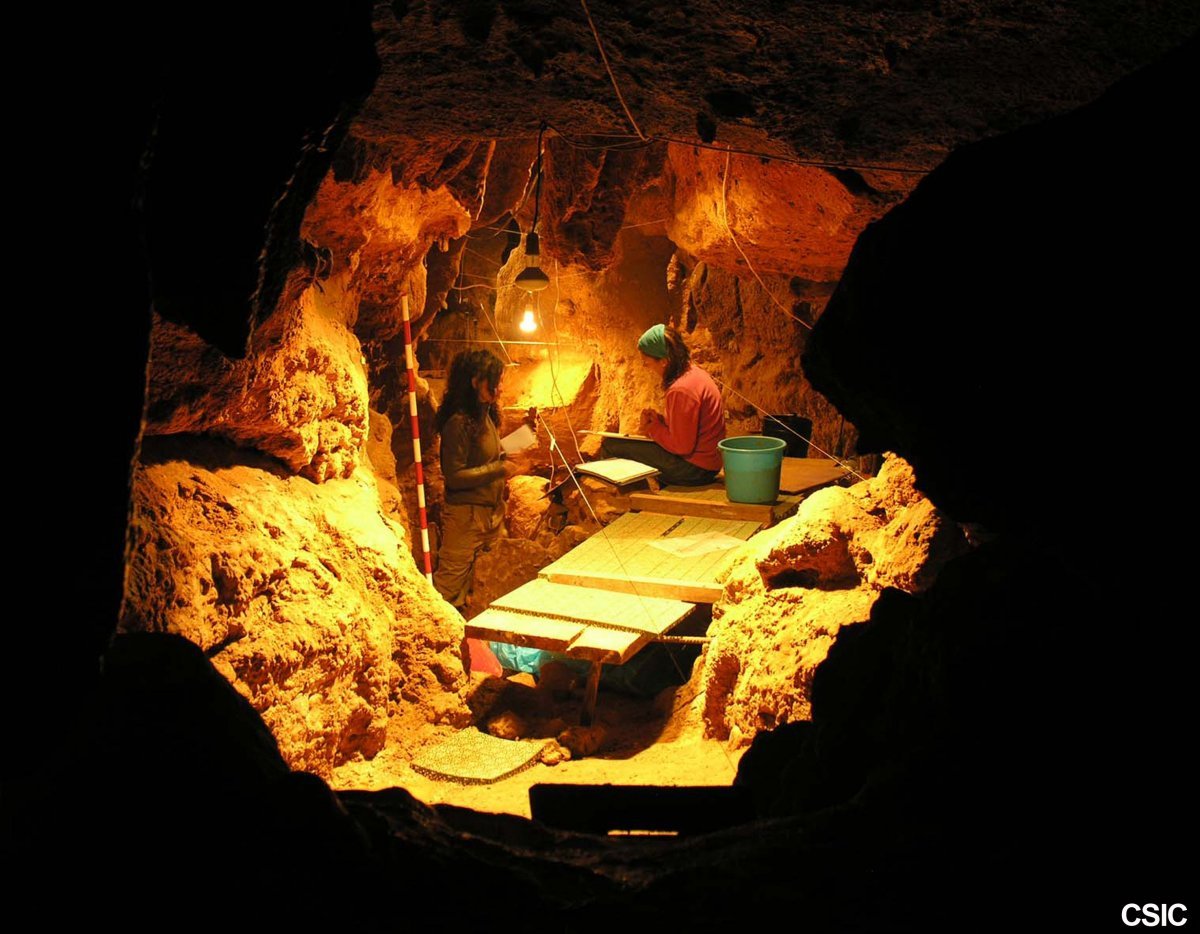
While we don’t know if violent conflict was behind this demise, we do know that the fight for dwindling resources during the Ice Age resulted in instances where Neanderthal groups were attacked by their own, and cannibalised. Many of these insights have been gathered by studying thousands of skeletal remains from around 13 individual Neanderthals found in Spain’s El Sidrón Cave and other European sites.
However, DNA also tells us that Neanderthals and Homo sapiens interbred, as did Homo sapiens and Denisovans. Today, most modern humans of Eurasian descent have between 1% to 4% Neanderthal DNA, although modern humans of African descent also show Neanderthal DNA due to human migrations. In Oceania, Denisovan DNA can contribute between 4% and 6% to modern genetic makeup in certain populations.
While these two ancient species were dominant for hundreds of thousands of years, today they live on only as a faction of the human genome. This reiterates that sometimes your time is up, and what changed the narrative for the Neanderthals was the Ice Age.
3. What happens in the world around you matters
The first evidence of Homo sapiens’ arrival in the northern hemisphere coincided with the onset of the Ice Age. As Al-Shamahi explains, “Europe was plunged into winter. Unrecognisable to us today, it would become a barren and hostile world. Rainfall in some areas fell to almost half its current level, and much of the continent became tundra. A vast, inhospitable plain.”
Food sources disappeared, animals migrated, and this forced hunters to shift out of their usual hunting grounds. “Entire ecosystems collapsed,” she adds. “Forests became barren plains, lakes dried up, and rivers froze over. The real enemy wasn’t cold, it was chaos.”
The Neanderthals were physically evolved to survive in the cold, with body fat advantages and nasal passages designed to warm icy air before it reached their lungs. These adaptations served them well until the harsh effects of a persistent Ice Age began to compound. Neanderthal populations became isolated and fractured, as they fought for turf and resources, the effects of interbreeding and large spells of starvation began to impact their health, and they became vulnerable to disease. In some cases they resorted to cannibalism.
4. Isolation isn’t the answer
Instead of banding together, the Neanderthals split into smaller groups. Ultimately this made them more vulnerable to demographic collapse, says Durham University’s Travers. “Most researchers now think there is no single cause [to the demise of the Neanderthals], but a combination of environmental instability, small population sizes, and repeated contact with other humans,” she says. “Competition, disease exchange, and gradual genetic assimilation likely all played roles.”
5. If at first you don’t succeed, innovate and try again
Moving northwards wasn’t a walk in the park for the early Homo sapiens pioneers either. Ice Age conditions were challenging, and they weren’t equipped to survive. However, around 9 000 years after the first band of Homo sapiens disappeared from Europe, new waves of migrants from Africa began moving north. It was still the Ice Age, but this time they were more prepared.
These early humans brought skills like weaving with them, so they could make warmer clothes, better shelters, and more effective hunting traps. This enabled Homo sapiens to stay alive, to thrive, and keep their children alive. As a result of these innovations, early human groups became better adapted to surviving in this harsh climatic environment. They began to grow in size and strength. This, in turn, gave them the edge against the once-dominant Neanderthals.
What has been billed as the last outpost of the last Neanderthals can be found in Gibraltar at the 28-hectare Gorham’s Cave Complex; a UNESCO World Heritage Site.
Rather than with a bang, this big, bold “Macbook Pro” of a species seemingly disappeared with a whimper; hanging on by living off marine animals and catching birds. Homo sapiens, meanwhile, pushed on, innovated, refined their hunting techniques, domesticated dogs, and capitalised on a stronger “resistance to pathogens” thanks to their African origins, notes Prof Axel Timmermann from the Centre for Climate Physics in South Korea. They assimilated – rather than interbred – and they kept adapting.
These are valuable lessons in a shifting world, where multiple risks lie just over the horizon.
In summary
- Around 50 000 years ago humans – Homo sapiens – shared the planet with at least five other hominins: Homo erectus, Home floresiensis, Homo luzonensis, Homo denisova and Homo neanderthalensis.
- By 30 000 years ago, we were the sole Homo species on Earth.
- What happened?


Gallery