The reason for this is biomimicry. A design and innovation process that looks to nature and biological forms for inspiration, then seeks to emulate their biology, patterns, and processes. For Janine Benyus, writing in her seminal book Biomimicry: Innovation Inspired by Nature, one of the key advantages of biomimicry is that “after 3.8 billion years of research and development, failures are fossils, and what surrounds us is the secret to our survival”.
Not just pie in the sky
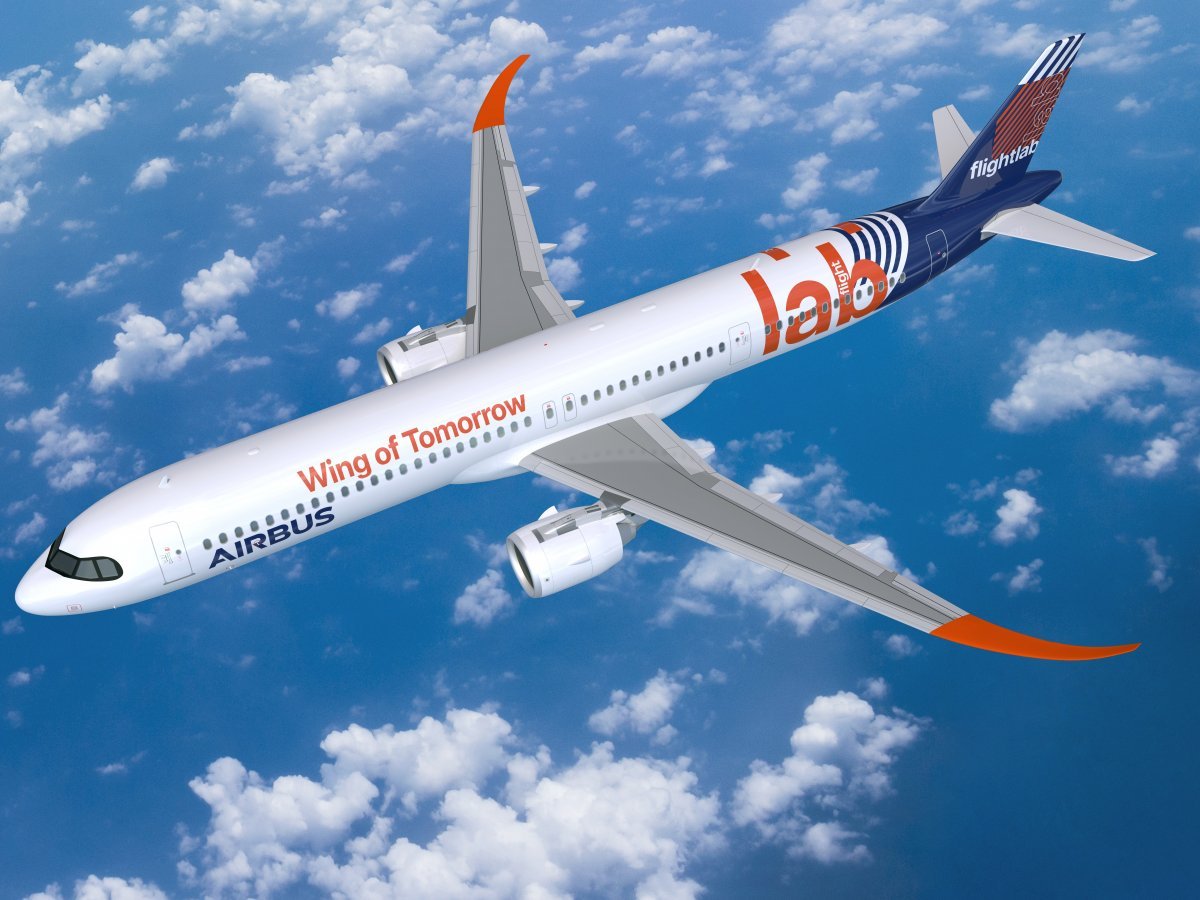
Airbus, for instance, is using biomimicry to solve some of aviation’s stickiest problems; specifically how to design lighter and more fuel-efficient planes. This means that Airbus engineers are studying the long-eared owl’s wing design for clues to reduce aircraft noise, and pondering how to lessen air drag by copying the goose’s “V” flying formation; which could save aircraft 5% to 10% on fuel costs per trip. They’ve already added “sharklets” inspired by the white shark to the A320’s wingtips, to reduce drag.
Most recently, Airbus announced a new three-year folding wing project as part of its Wing of Tomorrow programme. The concept would solve the future challenge of airport access for longer wingspan models, supporting the use of lighter, longer and more slender wings to “maximise aerodynamic efficiency and reduce fuel burn”. The inspiration for longer wings came from the albatross, which can soar without flapping its wings. The bend in the plane’s wings mirror the gull, which enjoys aerodynamic advantages and stability in the air but can tuck its wings neatly to its side on the ground.
Following from rival Boeing’s biomimetic redesign of its 777 aircraft wing, which has a folding tip, these examples point to the almost never-ending well of inspiration that designers and innovators can take from nature. As University of Pennsylvania professor Dr. Masoud Akbarzadeh, co-author of an article exploring the Boeing 777 wing redesign, told Technology Networks, “As we continue to peer into the intricate structures of the natural world for inspiration, who knows what other secrets we might unlock? From dragonflies to other winged animals, our journey of discovery is just beginning.”
Biomimetic innovation finds its voice
While the concept of biomimicry is not hard to grasp, understanding how to apply this sort of thinking in a modern business world can be challenging. This is why current examples from the likes of Airbus and Boeing are so crucial for demonstrating how biomimicry works in practice. Until fairly recently, the most cited examples included the 1940s invention of Velcro (inspired by the hooks of the burr) and Japan’s high-speed bullet trains of the 1990s (based on the streamlined dive of the kingfisher). Scratch the surface, however, and there’s a wealth of new nature-inspired innovations.
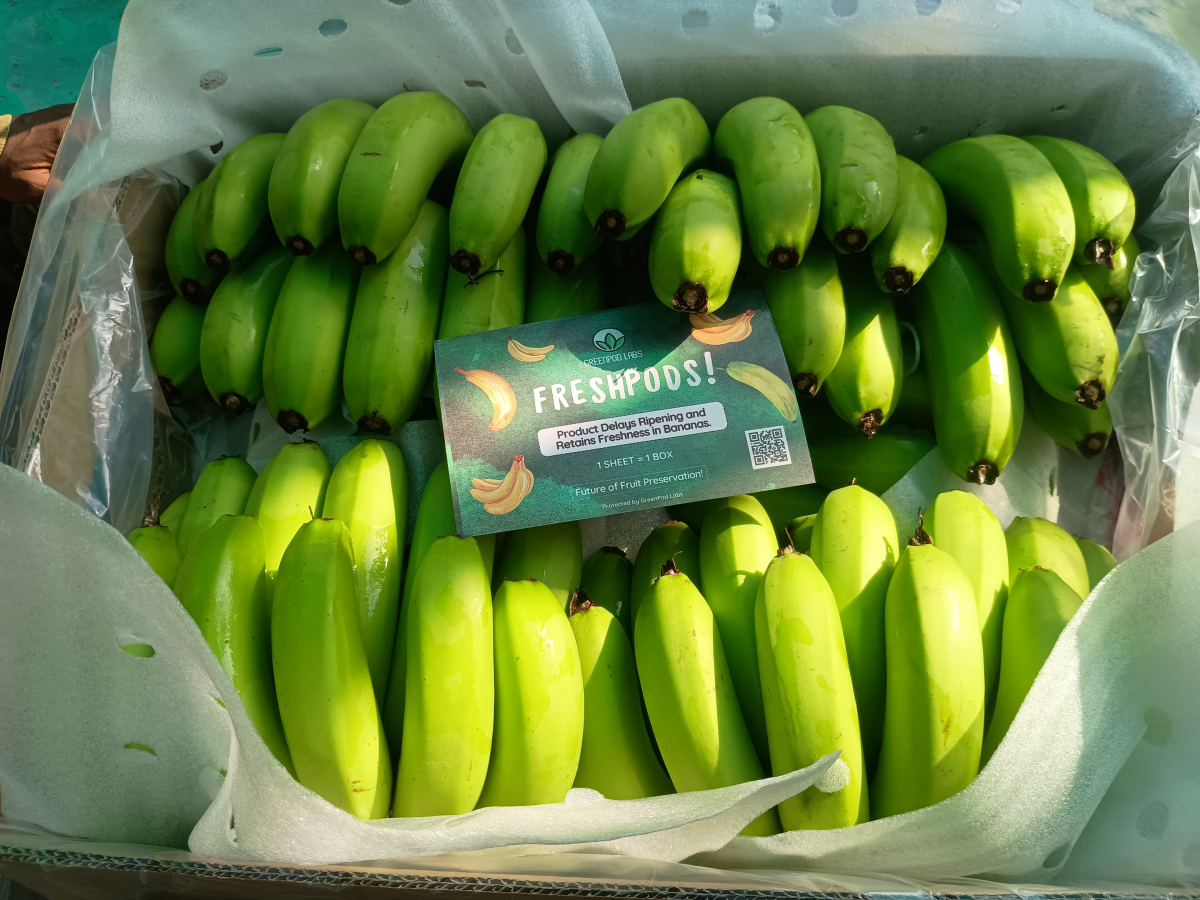
For instance, in late 2025 news broke of a promising new biomimetic bone “glue” from Zhejiang University in China. Dubbed Bone-02, this oyster-inspired bone glue can repair fractures in just minutes. Then there’s Indian agri-biotech firm GreenPod Labs’s food waste solution. Since natural plant pheromones signal to fruits and vegetables when it’s time to ripen, GreenPod’s packaging sachet can delay the ripening of produce, thereby reducing spoiling and damage in transit.
According to GreenPod Labs CEO Deepak Rajmohan, “Biomimicry-based innovation is the most critical strategy for new technologies in the current scenario. We can’t only think about the short-term impact and functionality of the products, but also deeply understand the long-term environmental impact of the solutions. Learning from nature would enable us to do this right.”
Bird-protection glass, which was launched commercially as Ornilux in 2006, is another quietly effective example from Germany. Inspired by the orb weaver spider, which stops birds flying into its webs by weaving UV-reflective threads into them, a transparent UV coating is applied to glass, thereby alerting birds to the threat while remaining invisible to humans. As biomimicry researcher Emily Kennedy said of the innovation, “The global uniqueness of the resulting product, Ornilux, allowed the company to enter the North American market. Since launching in North America in 2010, Ornilux has experienced consistent, year-over-year sales growth.”
Other big names looking to understand and capitalise on biomimicry’s potential to help solve tricky engineering and design problems include Microsoft, Ford, Hyundai, Unilever, Shell, the City of Amsterdam, and Levi’s. Countries and communities, too, can use biomimicry – which often goes hand-in-hand with ancestral knowledge – to address many of humankind’s most pressing problems.
Lessons for Africa
In South Africa, one of the strongest advocates for observing the natural world in action is engineer, author, and biomimicry expert Gamelihle Sibanda. He spreads the biomimicry message through articles, interviews and YouTube videos, and in his role as a biomimicry innovation adviser affiliated to the United Nations and Biomimicry South Africa. Sibanda’s 2024 book, Nature-Inspired Political Coalition Agreement: A Biomimicry Blueprint for Collaborative Governance, offers real-world examples of how leaders, governments, innovators, and citizens can learn from nature to find better ways of living and interacting.
Growing up in rural Zimbabwe, Sibanda continues to draw on his fascination with nature and local ancestral knowledge to solve structural and engineering challenges. “In nature the concept of waste does not exist, it’s a human construct,” he explains. “Everything in nature is recycled. Humans are part of nature and we need to fit in. This includes ensuring our designs can be recycled or broken down into benign constituents at the end of their useful economic life.”
Sibanda believes that by observing nature, human societies and industries can find a range of possible solutions that don’t necessitate stripping away from nature. Such approaches support long-term, regenerative thinking that supports all life in a given ecosystem.
“Biomimicry teaches us that, in nature, basic resilience is achieved through diversity, decentralisation, and redundancy,” explains Sibanda. “Diversity implies that a business should ideally not rely on a single customer. Decentralisation implies decisions should be implemented across various levels – from CEO to lowest-grade employee – in order for the organisation to be adaptive to challenges that need to be resolved before they fester. Redundancy implies there should not be a single point of failure. For example, if a train bridge collapses it should still be possible for the goods to be delivered by road.”
These principles from nature offer business leaders food for thought as they juggle the impacts of shifting geopolitical sands and rising climatic, social and economic challenges. It’s possible that nature may hold the key, says Sibanda. You just need to look.
Where does South Africa stand?
Retired finance and strategy professor Johan Marx, a strategist, futurist, and founder of IFS Consulting, is a keen champion of biomimicry. However, he believes the concept might still be “something for the future” and is an approach “that developed countries might find easier to implement. In Africa, it might take a bit longer.”
Referencing private South African healthcare providers such as Netcare and Cintocare, Marx notes that while many local organisations have shown interest in biomimicry, only a select few are really putting this into practice. Netcare is among this number. Earlier this year, Netcare Blaauwberg became South Africa’s first hospital to achieve a net-zero waste certification from the Green Building Council South Africa. Learning from nature, Netcare’s multifaceted waste management spans composting and on-site general waste sorting, to staff education, and collaborating with the likes of Adcock Ingram Critical Care to turn plastic waste such as IV bags and oxygen masks into school shoes.
While for Netcare, a circular economy approach has become something of a “differentiation strategy”, Marx doesn’t see biomimicry becoming mainstream in South Africa quite yet.
“What’s holding many local companies back are external variables like youth unemployment,” he says. Using medical aid funds as an example, Marx explains, “There just aren’t enough young people coming in to cross-subsidise older members. An enabling environment is needed. Until then, I don’t see the likes of private medical companies going ‘full in’ on projects such as water recirculation, simply because of the required return on investment.”
Until such time as environmental consciousness becomes pervasive, he adds, financial costs will continue to determine if biomimetic innovation has the support to take off at scale.
Where do you start?
For organisations hoping biomimicry can help them build sustainable ecosystems, Johan Marx explains that a systemic approach is crucial. This starts with understanding the ecosystem as it is, looking for areas in need of improvement, and then tackling each area within the context of the broader system. It is not dissimilar to the Kaizen loop that supports making small, meaningful changes to specific areas while always coming back to the interconnected system through ongoing feedback.
This contextual awareness is key, Gamelihle Sibanda stressed during a recent episode of The Biomimicry Institute’s Ask Nature podcast. He noted that not every natural observation can be successfully transplanted into a human-orientated solution. Take, for instance, Mercedes-Benz’s 2005 bionic concept car – modelled after the sturdy yellow box fish. The car never made it into production, in spite of expected aerodynamic efficiencies, because it failed to replicate the fish’s stable swimming style. This also affirms the importance of knowing what you hope to solve for, and being prepared to let ideas go if they don’t fix the desired context.
Bearing this in mind, Marx says the following four-step process is a good place to start a biomimetic journey:
- Conduct an environmental assessment – Consider the interactions between your operations and the surrounding environment. Map out possible areas for improvement. Make this assessment as comprehensive as you can.
- Draw all stakeholders into the process – Conduct a far-reaching and continuous consultation process that includes staff, local community leaders, suppliers, architects, and biomimicry experts. Transparency is key to getting buy-in and ensuring all stakeholders have an opportunity to be heard.
- Identify where to apply biomimetic design principles – Break down which key processes and systems would benefit. For instance, draw on the structure of a termite mound to inspire self-regulating ventilation or consider how natural coatings inspired by the lotus leaf can create more hygienic work surfaces, says Marx.
- Keep refining, adapting and monitoring – Consider how each biomimetic solution can be improved, where adjustments can be made, where interconnected elements can be improved and how the entire system can adjust using natural methods and solutions.
KEY TAKEAWAYS
- Biomimicry is the process of taking inspiration from natural designs to solve human challenges.
- This approach enables human innovators to benefit from millions of years of natural selection and evolutionary smarts.
- Companies such as Airbus, Boeing, Netcare, Microsoft, and Unilever are looking to understand and capitalise on biomimicry’s potential to help solve tricky engineering and design problems.
- Other innovations are emerging in the agri-tech space, as nature-inspired medical solutions, and even as a simple coating to stop birds colliding with all-glass skyscrapers.


Gallery